








Choosing a Ukulele? Here’s What You Need to Know
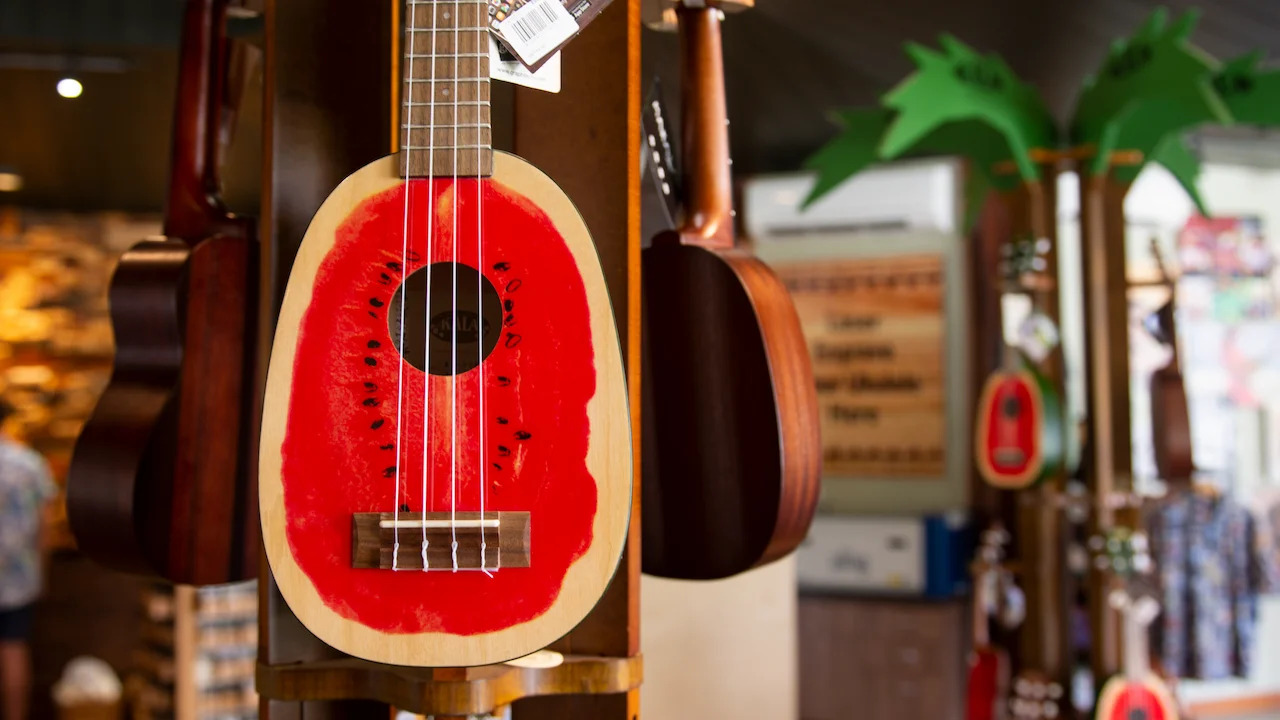
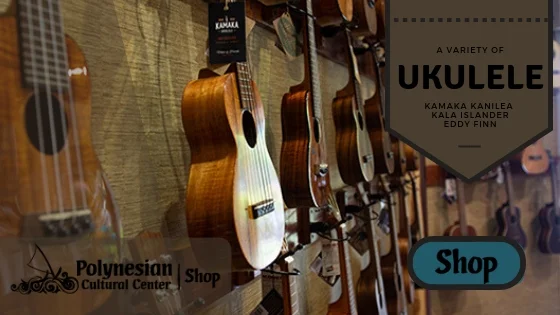
Ukuleles of various sizes and prices are available at the Polynesian Cultural Center. Many people seek advice on choosing their ukulele. To help you choose the perfect ukulele, we wanted to share some advice for the most common questions.
Wood
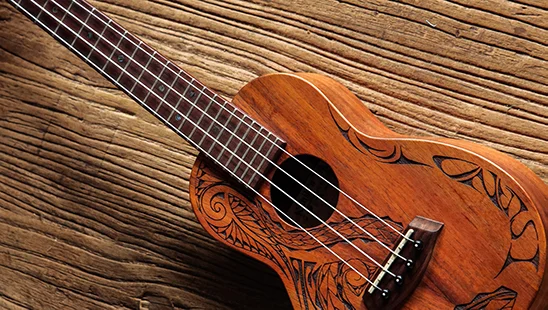
Koa is the highest-end wood from Hawaiʻi. It is beautiful in both appearance and sound. A lot of value is placed on the grade of koa wood, which depends on how close the wood is to the bottom of the tree. The wood closer to the base is a higher grade because it has withstood the Hawaiian trade winds longer, creating a curly or wavy grain.
Acacia is in the same tree family as koa and is also a durable and affordable hardwood.
Mahogany offers a warm and rich tone at an affordable price.
Spruce produces a lighter and brighter sound.
Other great wood options include cedar, redwood, and maple. Most ukuleles are layered with a laminate of these woods to prevent warping.
Size
The four progressive ukulele sizes are soprano, concert, tenor, and baritone. As the size increases, the sound becomes deeper. Many people consider their body size and tone preference when selecting a ukulele.
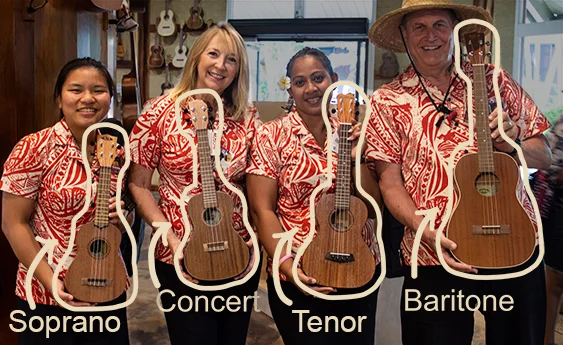
Note: The baritone ukulele is tuned B-D-G-E, while the other sizes use the common G-C-E-A tuning. Most beginners start with soprano or concert size.
Watch a brief overview of ukulele sizes from Austin Bazaar.
Gloss vs. Satin
Gloss finishes make an ukulele look elegant, but they can slightly muffle the sound and easily show fingerprints. However, gloss brings out the wood’s vibrant colors and adds a polished appearance.
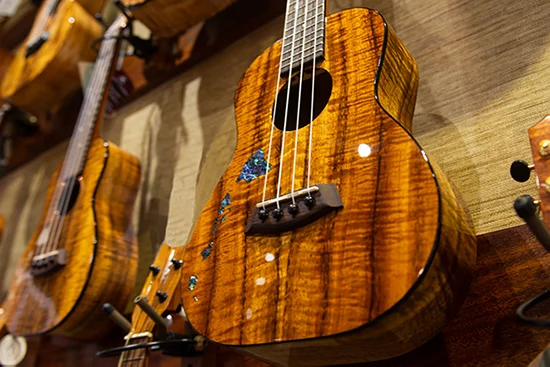
Satin finishes allow for better sound resonance and help protect the wood from environmental damage by sealing the pores.
Strings
Most ukulele strings are made of nylon or nylgut, producing the classic bright sound. Metal strings offer a sharper tone similar to a guitar, while gut strings (made from sheep skin) are more expensive and stretch easily.
Consider whether you prefer a high G or low G string for the first note. The most common tuning is high G. Read a comparison of both tunings from Hawaii Music Supply.
Recommended string brands for quality and affordability include:
- Aquila
- Kamaka
- D’Addario
The Ukulele in Hawaii

The ukulele was introduced to Hawaii in 1879 when Portuguese immigrants brought the four-stringed machete de braga. By 1886, craftsmen Augusto Dias, Manuel Nunes, and Jose do Espirito Santo opened instrument shops in Honolulu, and the instrument quickly gained popularity.
King Kalākaua, known as the “Merrie Monarch,” learned to play and make the instrument, helping it become a symbol of Hawaiian culture. The name ukulele comes from uku meaning flea, and lele meaning to jump or fly, referring to the quick movement of fingers when playing. It is pronounced oo-koo-lay-lay.
Artists such as Ernest Kaai, Roy Smeck, Bing Crosby, the Beatles, and Elvis Presley helped spread its popularity. One of Hawaii’s most beloved ukulele players was Israel “Braddah IZ” Kamakawiwoʻole, whose medley of “Over the Rainbow” and “What a Wonderful World” became a worldwide hit.
To explore albums by famous artists, visit shop.polynesia.com.
Learn How to Play
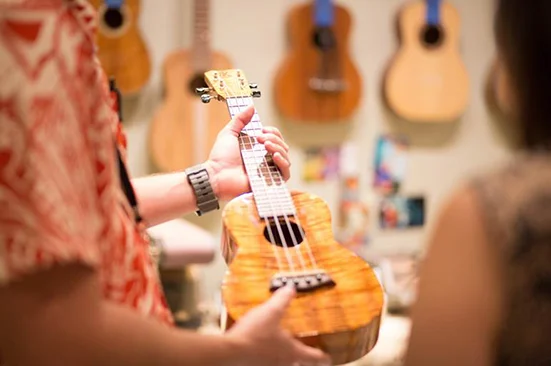
If you are visiting, stop by the Polynesian Cultural Center for a free lesson. For those off-island, try online tutorials on YouTube or Google. We recommend UkuLenny and Cynthia Lin for great beginner lessons.
Learn to play “Stand By Me” or “I Lava You” from the Pixar short film Lava. You can also use an easy ukulele chord chart from TrueFire.com.