








Hula Dancers Today: Preserving Tradition with Grass Skirts
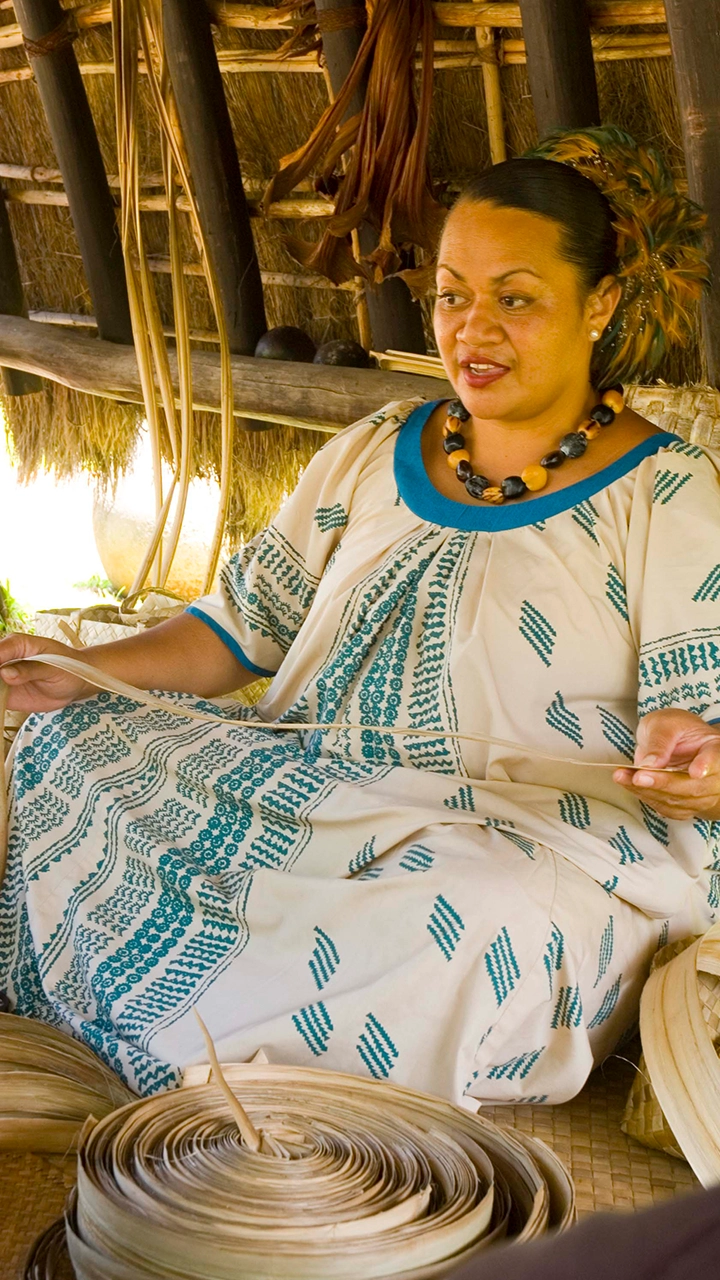
Grass Skirts, or Not?
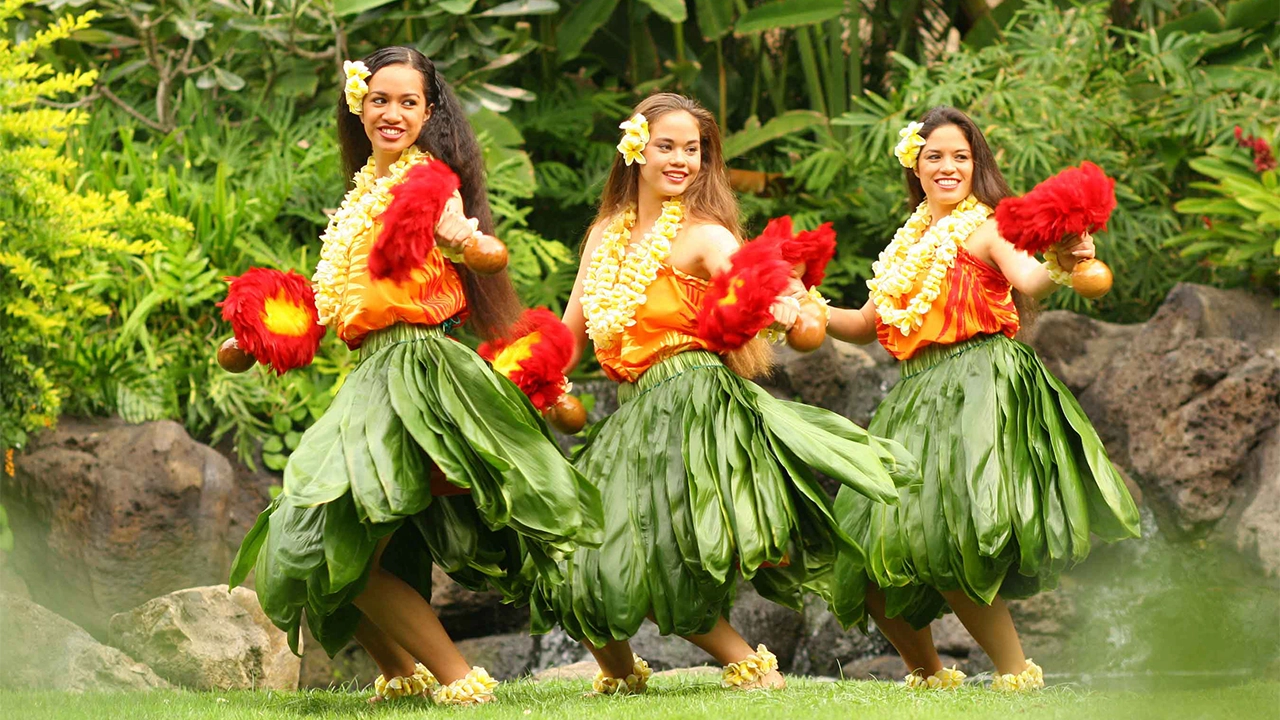
So-called “grass skirts” have always been a misnomer; however, Hawaiians and other Polynesians have traditionally used strips of natural fibers, barks, and other materials to create various skirts and adornments. The purpose of such skirts, beyond decoration, was — and is — always to accentuate the dancer’s movements.
For example, strips of the inner wild hibiscus bark — which Hawaiians and Tahitians call hau, and Samoans and Tongans call fau — are still collected today, cleaned and bleached in salt water, dried, and then strung together side-by-side to create a dance skirt.
How to Create a Dance Skirt
The basic method of doing this is actually easy:
- Start with an appropriate length of cord for the waist size of the dancer, leaving enough extra so the two ends can be tied together.
- Drape one end of a prepared hau strip over the waist cord, dangling a short length on the other side, and tie the two sides of the strip together under the waist cord.
- Repeat this over and over, cinching the strips of hau next to each other, until the skirt is long enough to encircle the dancer’s waist (again leaving enough cord so it can be tied off).
- Trim the bottom of the hau strips appropriately to the height of the dancer. Women’s skirts are traditionally longer, as long as down to the ankles, while men’s skirts are generally shorter.
Ti Leaf Skirts
The same or similar technique is used to make a Hawaiian tī-leaf skirt, although the thick end where the tī leaf attaches to the plant must first be stripped thinner by removing part of the mid-rib. This thin portion is then draped over the waist cord (and tied to itself underneath the cord).
Other Skirt Styles and Materials
Of course, there are many variations of this basic method throughout Polynesia:
- Tahitians sometimes add tassels to further accentuate the movements, as well as shells and/or flowers for further adornment.
- New Zealand Māori, for example, generally collected indigenous flax leaves — the wharariki or harakeke, which are not related to linen flax — and scraped most of each one down to the inner fiber. These were then boiled, twisted, and dyed to make their traditional, swinging piupiu skirts (by the usual method of draping one end over a waist belt).
- The Māori used wild flax leaves, like the other Polynesians living on tropical islands used pandanus leaves (lauhala) to weave into baskets and other various items. The Māori also used their wild flax fibers to weave and/or braid into clothing and cordage.
- Students in modern hula hālau or hula schools often learn to make their own “grass” and/or tī-leaf skirts, as well as other dance adornments, as part of their training.
Hale Pili
The description of traditional Hawaiian houses as “grass huts” or “grass shacks” is actually more correct than “grass skirts”: Most Hawaiian hale were “roofed” by tying clumps of pili grass in a row (similar to how modern homes are “shingled”), and then tying each succeeding, higher row so that it overlapped the one beneath, causing the rain to run off.