








Fijian Coconut Oil Demonstration: Process, Tradition & Cultural Significance
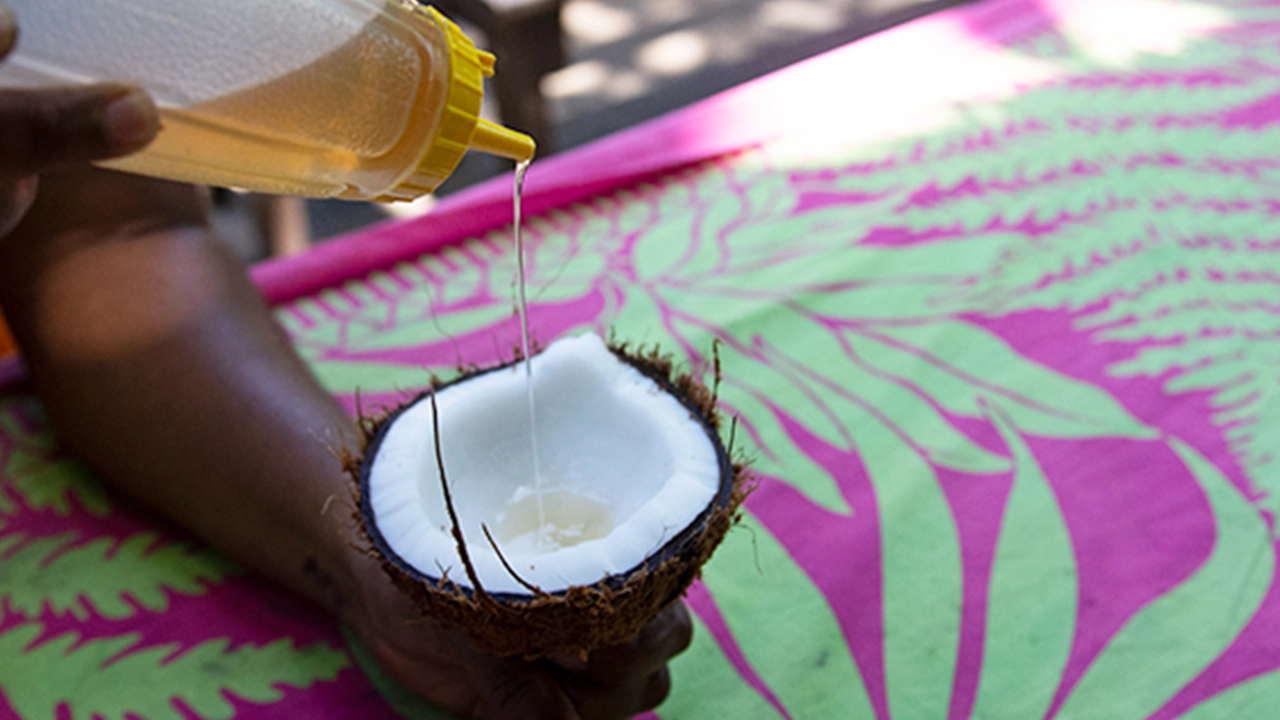
“The [coconut] oil is something we still use until today in different parts of Fiji for a lot of things in our culture — cooking, body lotion, medicine and healing wounds, among them. For example, our people mixed it with charcoal and used it to help tattoos heal faster,” said Kalivati Volavola, the Fijian cultural ambassador for the Polynesian Cultural Center.
Volavola, who is from Nabitu in the Tailevu district of Viti Levu, Fiji’s main island, first came to Laie in 2007 to attend Brigham Young University–Hawaii and now works full-time for the Center.
“We also oil our bodies to make them shiny before dancing,” Volavola continued. He added he also personally uses it at home to help moisturize his skin. “I was born and raised doing that. I use it once or twice a day, and my kids also use it. Some people also use waiwai on their hair.”
Young Fijians share how they make coconut oil at the PCC and use the oil to cook and to make a scented coconut oil that’s been used for health and beauty purposes across Polynesia for centuries. Fijians call the oil waiwai.
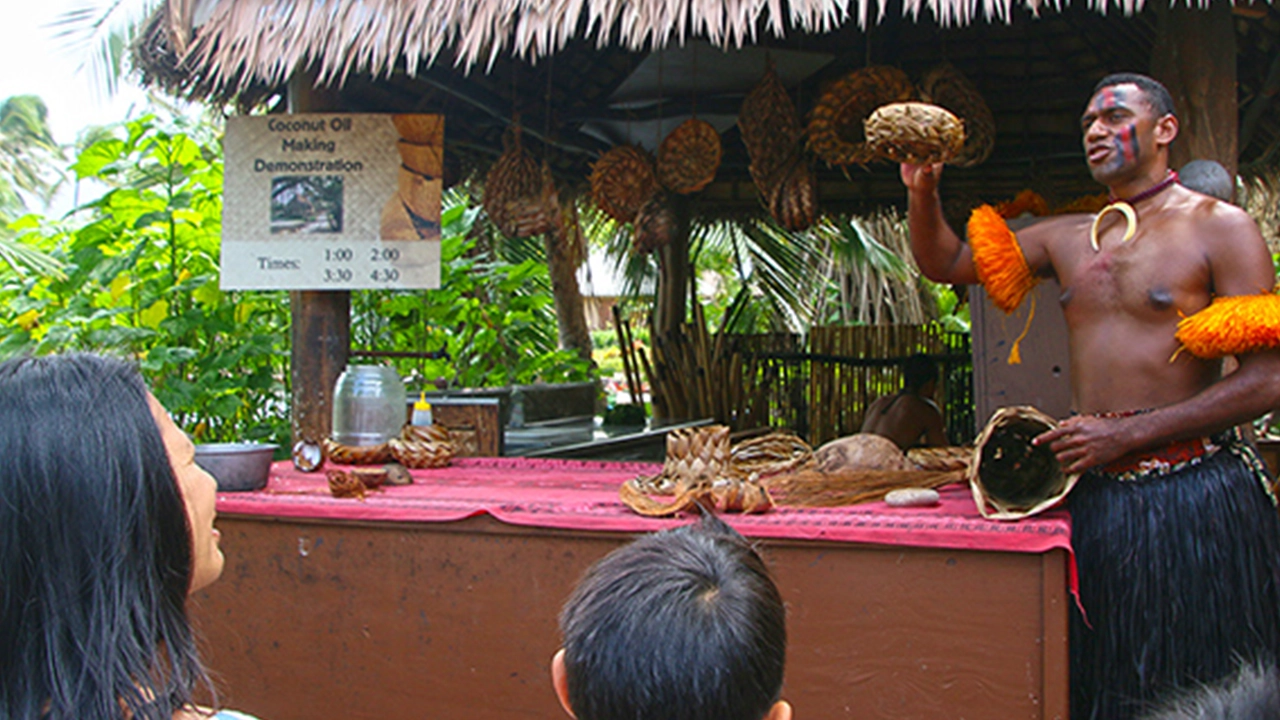
Waiwai smells good and has several health benefits. It’s sold in the markets in Fiji, but some Fijians still make theirs at home.
Volavola introduced Nunia Yadraca, one of the students in the village from Somosomo in Taveuni, Fiji, who is responsible for making waiwai.
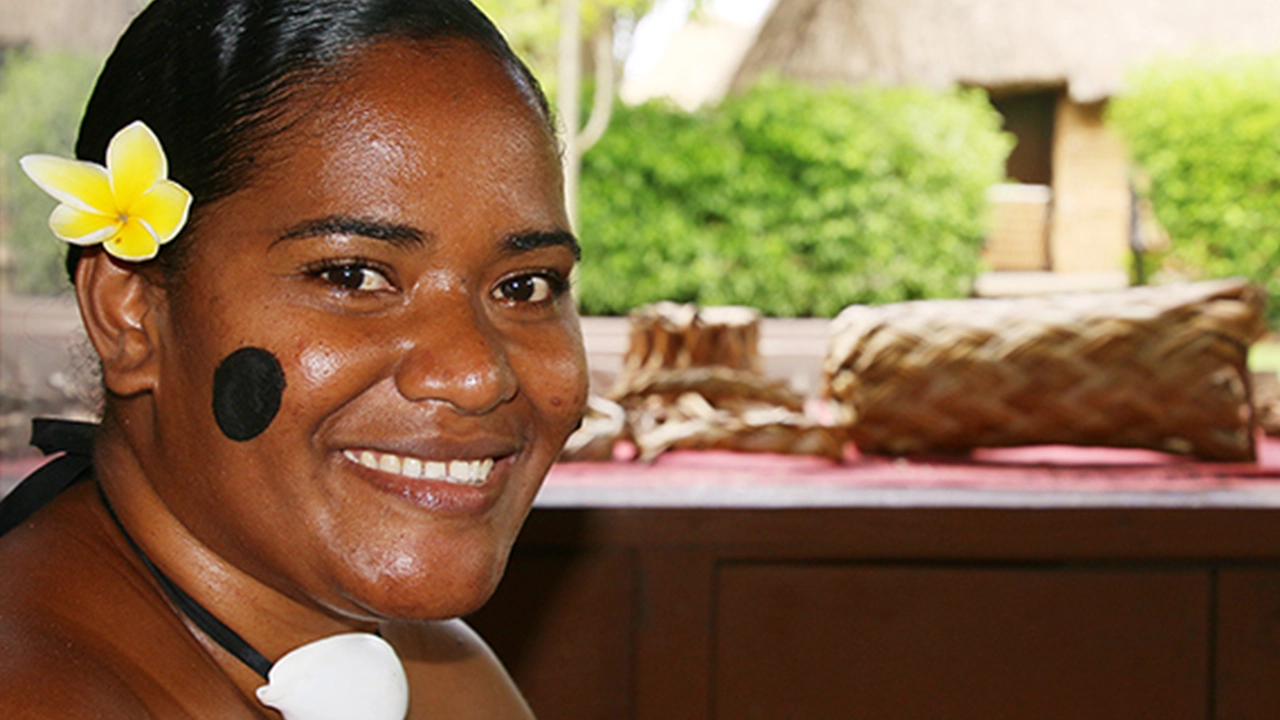
“I learned how to make waiwai when I was young from my grandmother and my mom. We made it often, not only for my family, but we also sold it. My family is still doing it.”
Steps in making Fijian-style coconut oil
- Collect mature (i.e. brown) coconuts. “We had a lot of coconuts on our farm. Both the boys and girls would gather them. We had a lot of fun doing that,” Nunia said.
- The coconuts need to be husked, cracked and scraped. “The finer you shred the meat, the more ‘milk’ it will give,” Volavola pointed out.
- The shredded coconut meat is squeezed through a cheesecloth to extract the creamy milk.
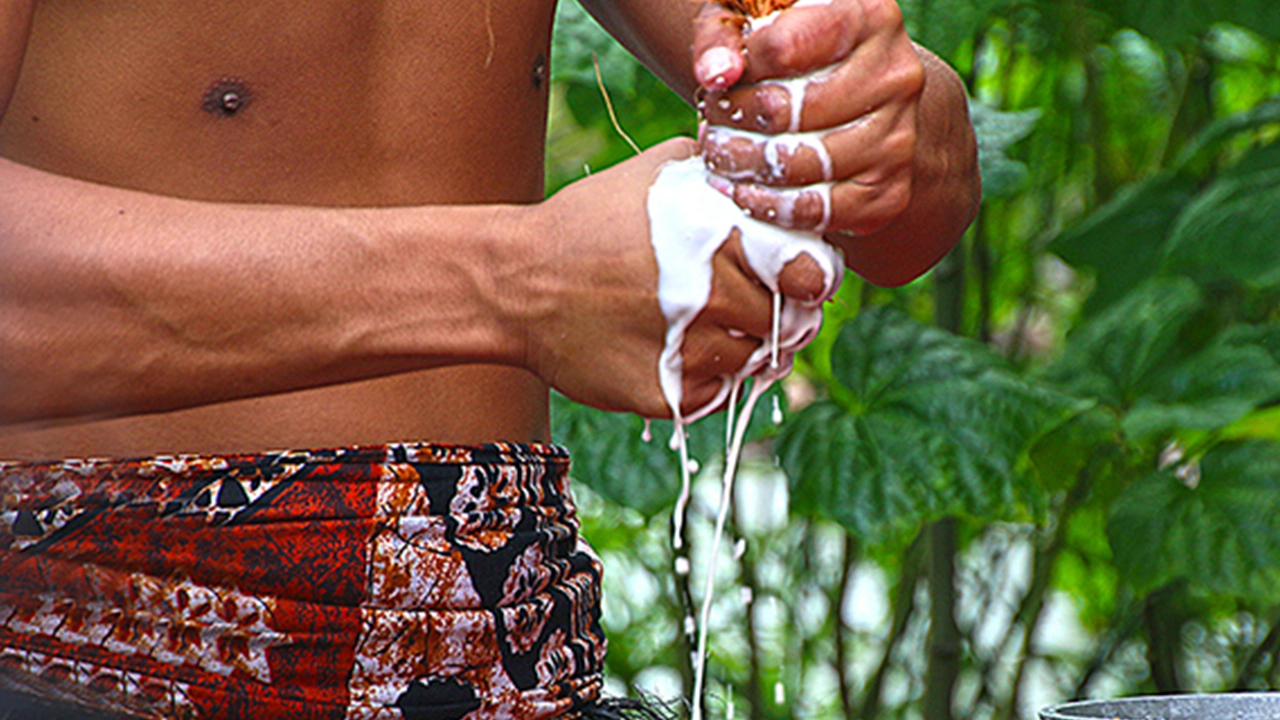
- “Collect this in a bottle and let it stand. The coconut oil, which is lighter than water, soon separates and rises to the top. After a while, it curdles.” Nunia said some people accomplish this phase in as little as one day by putting the coconut cream in the sun. Others let the separation process go on for up to two weeks, trying for some akin to “extra virgin” quality.
- “We next skim off the curdled coconut oil and put it in another bottle, and we discard the water,” Nunia continued.
- “Spoon the curdled oil into a pan and boil it for one-to-two hours over moderate heat (pictured below), so it doesn’t burn.” Note: “Add flowers during this stage to enhance the scent of the oil. If you burn the mix, that will change the smell,” Nunia said.
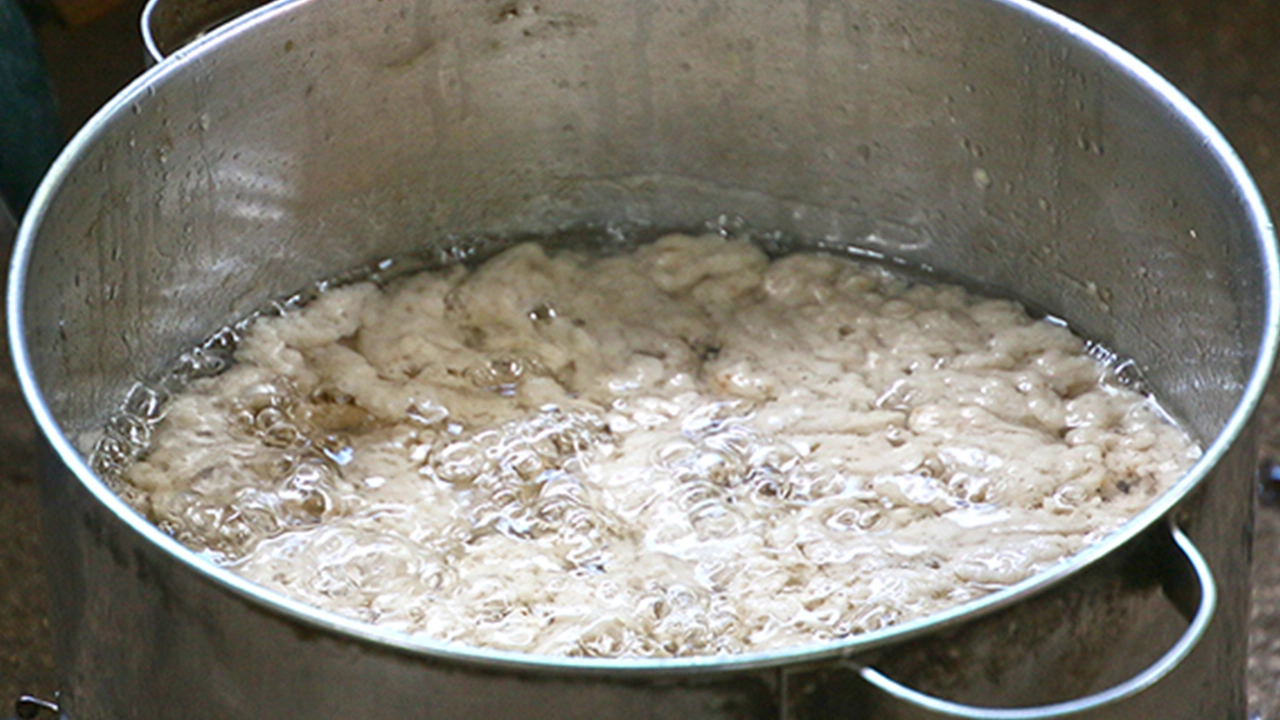
- Nunia indicated further separation takes place during the boiling phase. She then lets the clarified oil cool, and then strains it through cheesecloth into another container.
- “At this point, it’s ready to use. No refrigeration is required,” she said. “We mostly use it as a body lotion or hair oil.”
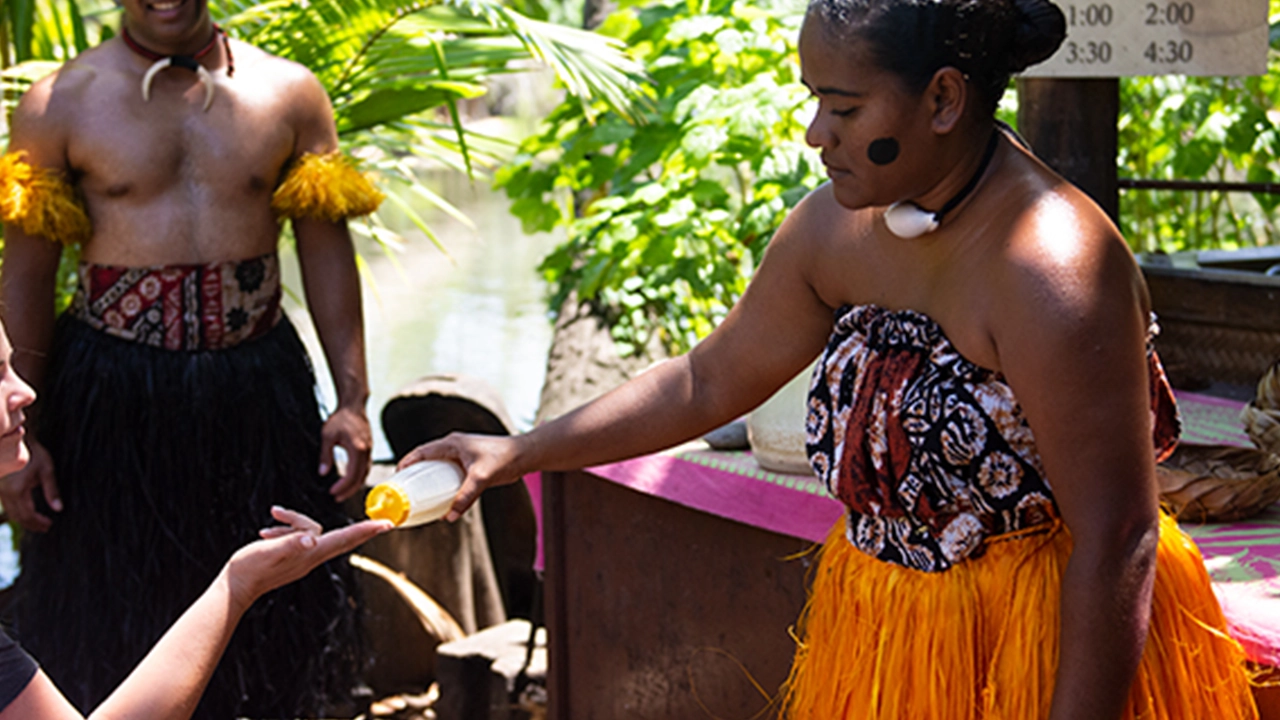
Try Polynesian coconut body oil for yourself
Visitors can sample waiwai at the Fijian Village demonstration when visiting. Demos are at 1:00 PM, 2:00 PM, 3:30 PM, and 4:30 PM.