








How Four Oʻahu Natives Went on to Change the World
The quiet little town of Lāʻie sits on the northern shores of Oʻahu, far from the hustle and bustle of Honolulu. With only about a dozen roads, Lāʻie has traditionally been a classic example of small-town Hawaiʻi. But a few great historical figures have emerged from this tiny town, putting their permanent fingerprints on Hawaiian culture and creating pop culture influences recognized around the world.
You may not know these people by name, but you are certainly familiar with their accomplishments. Have you ever heard the music of the steel guitar? Have you ever flashed the "hang loose" hand sign (the shaka in Hawaiʻi)? These and many other contributions to popular culture come from Lāʻie and its native sons and daughters, whose impact stretches well beyond the small town’s borders.
Joseph Kekuku (1874-1932)
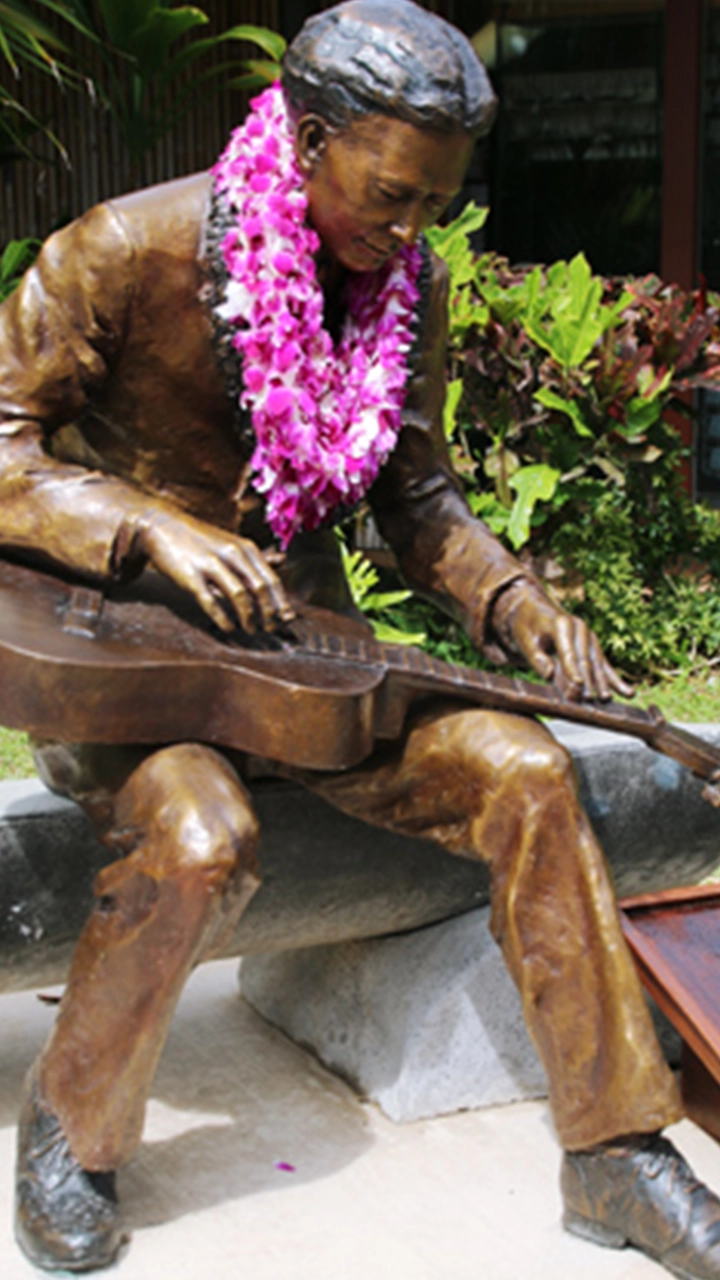
The inventor of the steel guitar, the twangy instrument used in island music and honky-tonk songs, is Hawaiian music legend and Lāʻie native Joseph Kekuku. He invented it when he was just 13 years old.
As a teenager in rural ʻOahu in 1889, Kekuku was walking down a dirt road with his guitar and saw a rusted steel bolt on the ground. He picked it up but accidentally knocked it against one of the guitar strings and fell in love with the sound it made. He practiced again using pocket knives, steel combs, and other metal objects while holding the guitar on his lap. He eventually invented the steel bar still used today and the style in which the steel guitar is played.
Kekuku went on to great fame and toured the world with his group, Kekuku’s Hawaiian Quintet, in the 1920s and 1930s. The invention of the electric guitar in the 1930s led to increased interest in the steel guitar. While popular in Hawaiian and surf music, the steel guitar is also often heard in country and Western music.
If you are not familiar with the sound, listen to the 1959 classic "Sleep Walk" by Santo and Johnny, which has been covered by dozens of musicians and used in countless commercials. A statue of Kekuku sits in Lāʻie, depicting him seated with the guitar on his lap. Visitors can sit next to him and take photos with the man who invented the steel guitar.
Hamana Kalili (1882-1958)
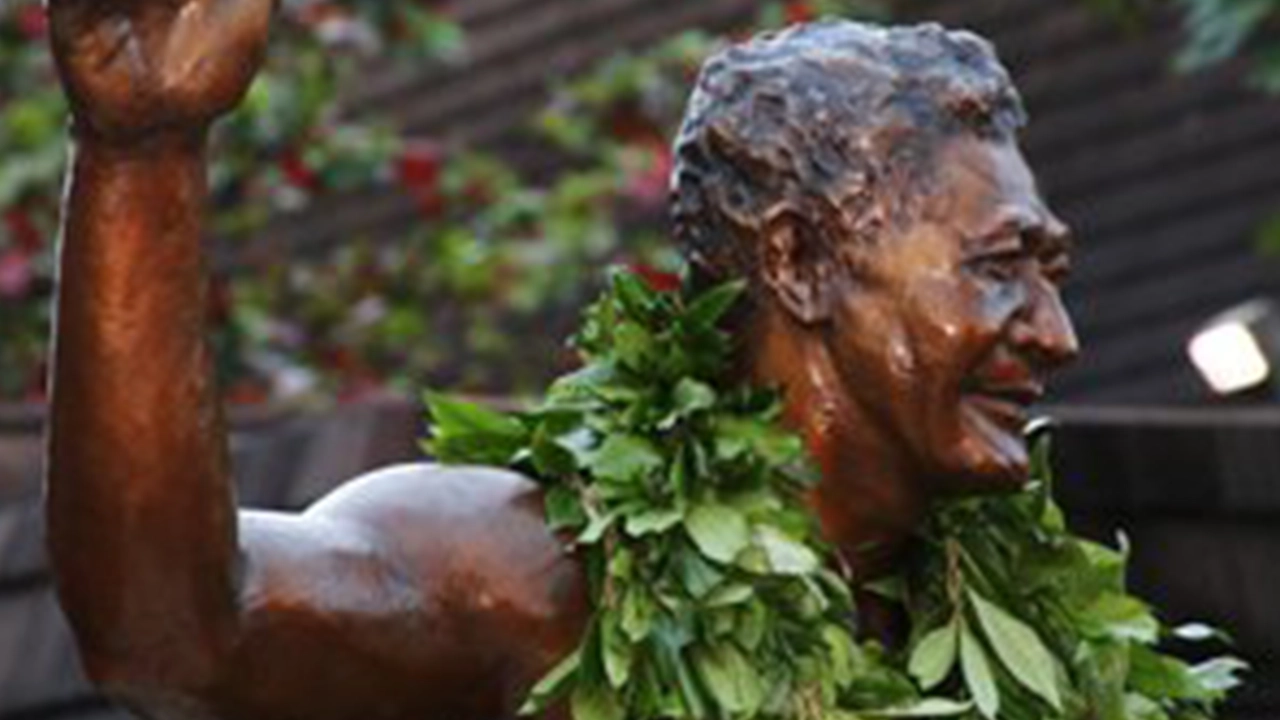
The shaka, or "hang loose" sign, is attributed to legendary fisherman Hamana Kalili. The sign has become a universal symbol of aloha, friendliness, and happiness.
But Kalili’s original reason for giving the shaka was not happy. He lost his three middle fingers in a sugar mill accident. Despite this, he remained positive and used his thumb-and-pinky gesture as a friendly hello. Local kids picked it up, and soon tourists began flashing the shaka after World War II.
The gesture is now seen everywhere in Hawaiʻi. Kalili also has a statue in Lāʻie.
Charles C. K. "Charlie" Goo (1915-2010)
Charlie Goo ran the most popular grocery store in Lāʻie during the 1950s. His store, called Goo’s Store or the Old Plantation Store, served as the lifeblood of the community in the pre-supermarket era.
Goo let the poorest residents of Lāʻie pay on credit, knowing many could never repay him. He lost money but never stopped giving. "I was more blessed to give," he told a local newspaper in 1987. The store is remembered today with Goo’s Plantation Store, a gift shop at Hukilau Marketplace honoring his generosity.
Aunty Nona Warner
Aunty Nona Warner served as a seamstress and master cutter at the Polynesian Cultural Center in Lāʻie for nearly 50 years. In that time, she handcrafted tens of thousands of employee uniforms and costumes for the PCC’s luaus and shows, often freehand without using patterns.
Today, she is honored with Nona’s Tropical Threads, a tropical and resort apparel shop at Hukilau Marketplace.
Like these people, Lāʻie has grown from humble roots to something bigger. With a new wave of shops and restaurants emerging, visitors can enjoy the northern shore of Oahu and feel the legacy of these Lāʻie legends.
This article is brought to you by the Polynesian Cultural Center, all of Polynesia in one place.