








How to Carve a Tiki Statue
Fun Fact: Tiki is a Māori word. Kiʻi is the Hawaiian equivalent, but we will stick with the Māori version because it is so prevalent. Also, the plural form of Polynesian nouns in their respective languages is not made by adding S, but we will use them for readability.
New Statues at the Hukilau Marketplace
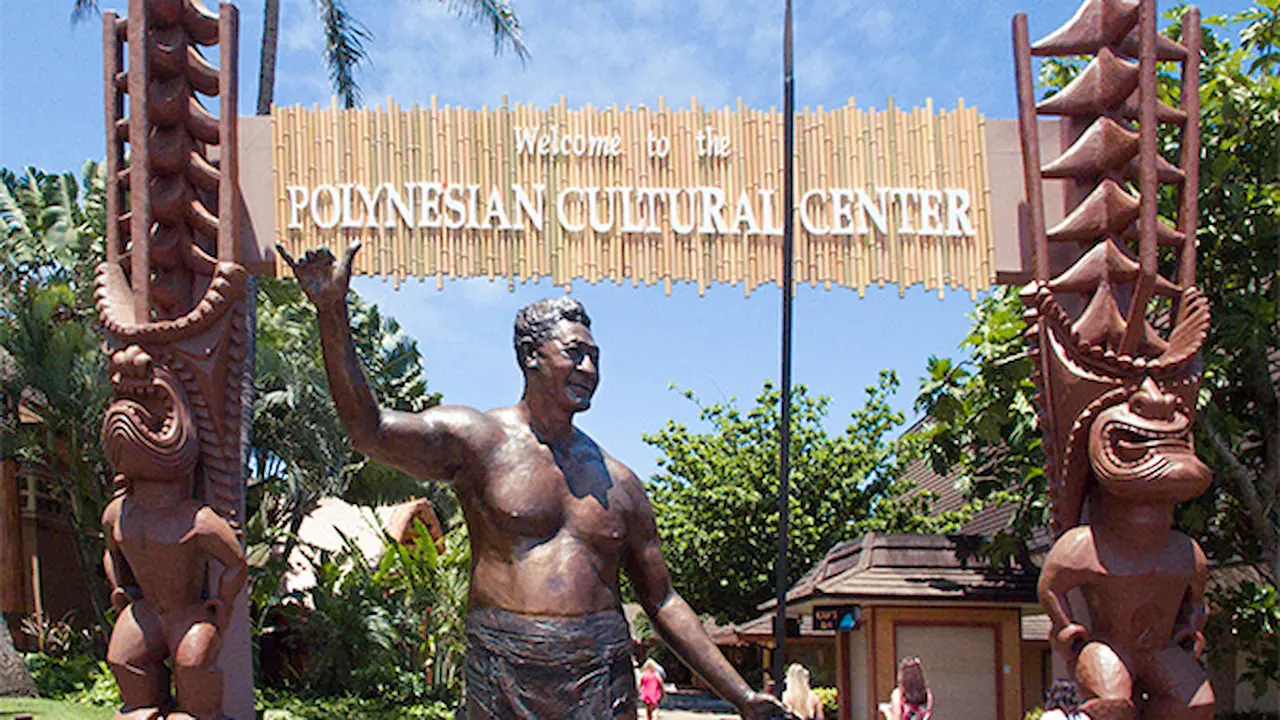
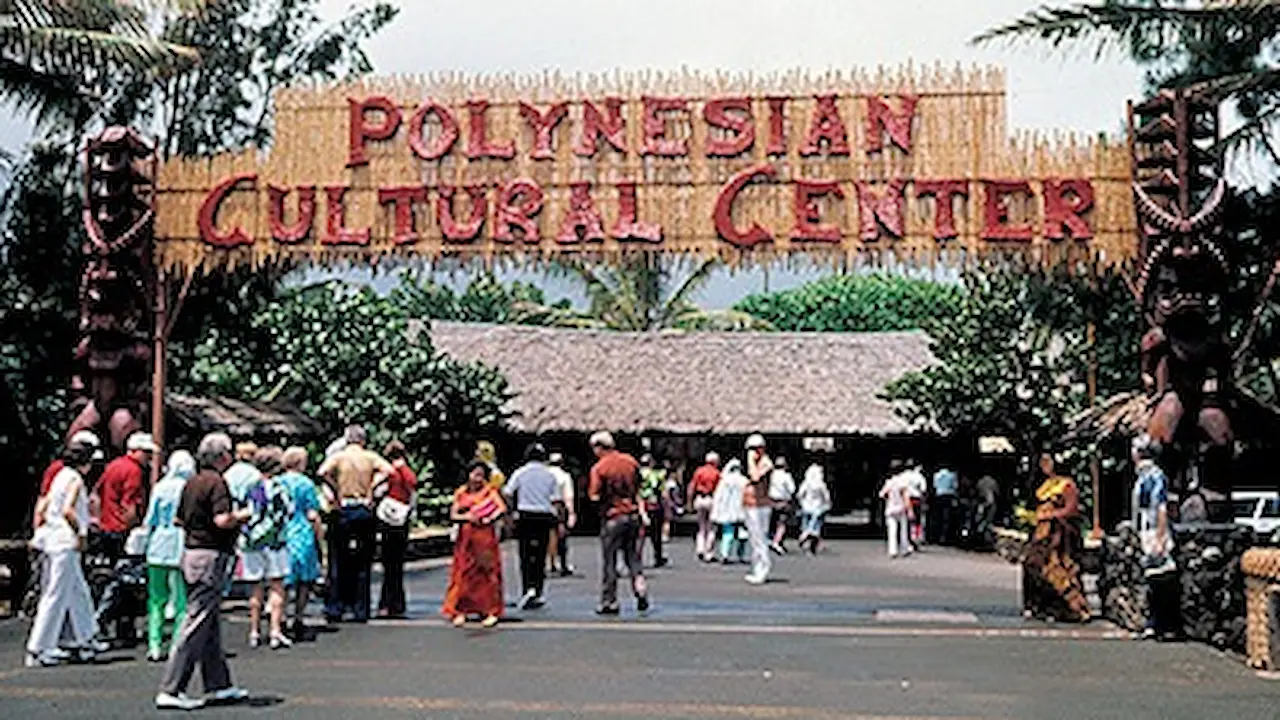
As guests stroll from the Polynesian Cultural Center’s new Hukilau Marketplace into the village area, they now pass through an impressive gateway arch that is over 30 feet tall. It is highlighted by the heroic-sized statue of Lāʻie-born Hamana Kalili, forever waving his world-famous Hawaiian shaka sign, and two more recently installed gigantic tikis created by PCC master carver Kawika Eskaran.

If that name sounds familiar, it is because Eskaran was featured in a previous PCC story about the Māori waka taua, or war canoe. His expert skills are widely used throughout the Polynesian Cultural Center, and in this feature, he gives an inside look into how he, along with Jared Pere, Tuione Pulotu, and others, created the newest iconic tikis.
How the statues were made
These tikis are very unique, and they were very difficult to do,
Eskaran said. They stand 26 feet tall on the pedestals, and they are about 5 feet wide. They are similar, but not identical. They both have wide mouths, big teeth, and bold expressions, but the headdresses and facial features are different.
He shared that they aimed for a Kona-style design, a classic style that would have been seen on the island of Hawaii, especially in the Honaunau area, reflecting what existed when the first European explorers arrived.
Each finished tiki weighs only around 400 pounds. This is because they are made from industrial-grade, high-density foam instead of wood, which would have been used in ancient times.
Eskaran noted that although he loves working with wood, large logs are difficult and expensive to obtain today. He explained that a single foam block costs under $400, and they needed three blocks per tiki. A log of similar size would cost thousands of dollars.
Ironically, although carving wood would have been faster, the tikis would not have lasted as long. With Hawaiʻi’s moisture, salty breezes, and insects, the foam version is more durable. Eskaran explained that wood carving could have taken less than two weeks, but sculpting the foam took months.
Instead of chainsaws and chisels, he used hot wires, reciprocating saws, knives, razor blades, and grinders.
After shaping each one, we cut each tiki in half, hollowed out an area where metal piping provides structural integrity, welded everything together, and refoamed it,
he explained.
After shaping, the tikis were coated, painted, and mounted onto reinforced cement pedestals. A heavy anchoring system was added to withstand strong winds.
Eskaran estimates that each tiki is valued between $100,000 and $200,000 and claims they are unmatched in size and durability in Hawaiʻi. He believes they will last indefinitely with proper maintenance.
In addition to his carving work, Eskaran also captains the Iosepa, the ocean-going 57-foot, twin-hulled traditional Hawaiian sailing canoe in PCC’s Hawaiian Village, and teaches sailing classes.