






Huilua Fishpond in Kahana Bay: Explore the beauty and history of ancient Hawaii fishing practices
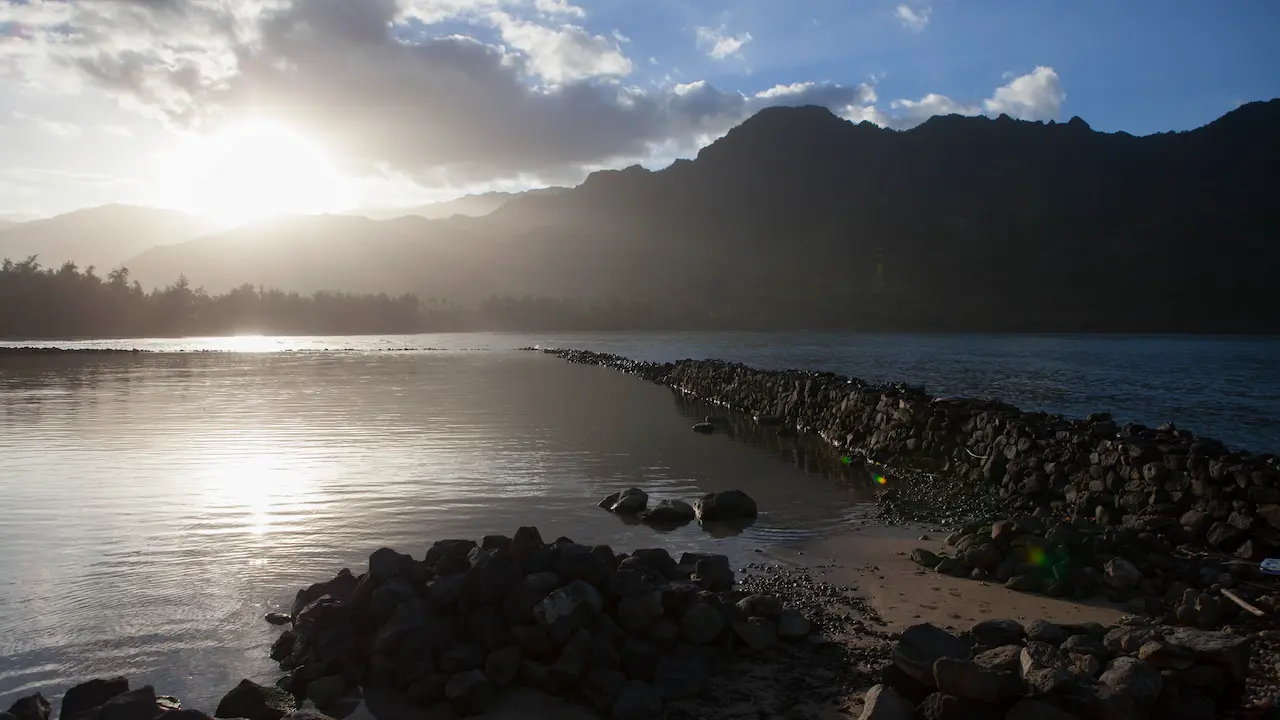
The Huilua Fishpond is an authentic example of ancient Hawaiian aquaculture. You will find the loko iʻa ("fishpond" in ʻŌlelo Hawaiʻi) as you approach the south side of Kahana Bay. The parking area just off the highway has only a handful of spaces, and you will need to take a short walk to reach the pond. The effort will be well worth your time.
The pond is not currently in working condition, but parts of the wall are still standing like an ancient jigsaw puzzle left by the Hawaiians from long ago. Fish still dart through the pond, creating muted wakes from their dorsal fins barely under the glassy surface. It is a sight to soak in as you travel up the east coast of the island toward Oʻahu’s famous North Shore.
Early Fishing Methods
Ancient Hawaiians used coral and stone to put the ocean and rivers in sync, creating a dependable food source. Nutrient-rich water flowed downstream from the mountains before emptying into the ocean. They built walls to collect both salt and fresh water in a pool at the confluence. This served as a home for algae. Mullet fish slipped through the mākāhā, or gates, to eat the algae. Eventually, the fish grew too big to exit between the slats in the mākāhā. This made it possible for the Hawaiians to have fish even when storms and ocean conditions made fishing less dependable, according to Paepae o Heʻeia.
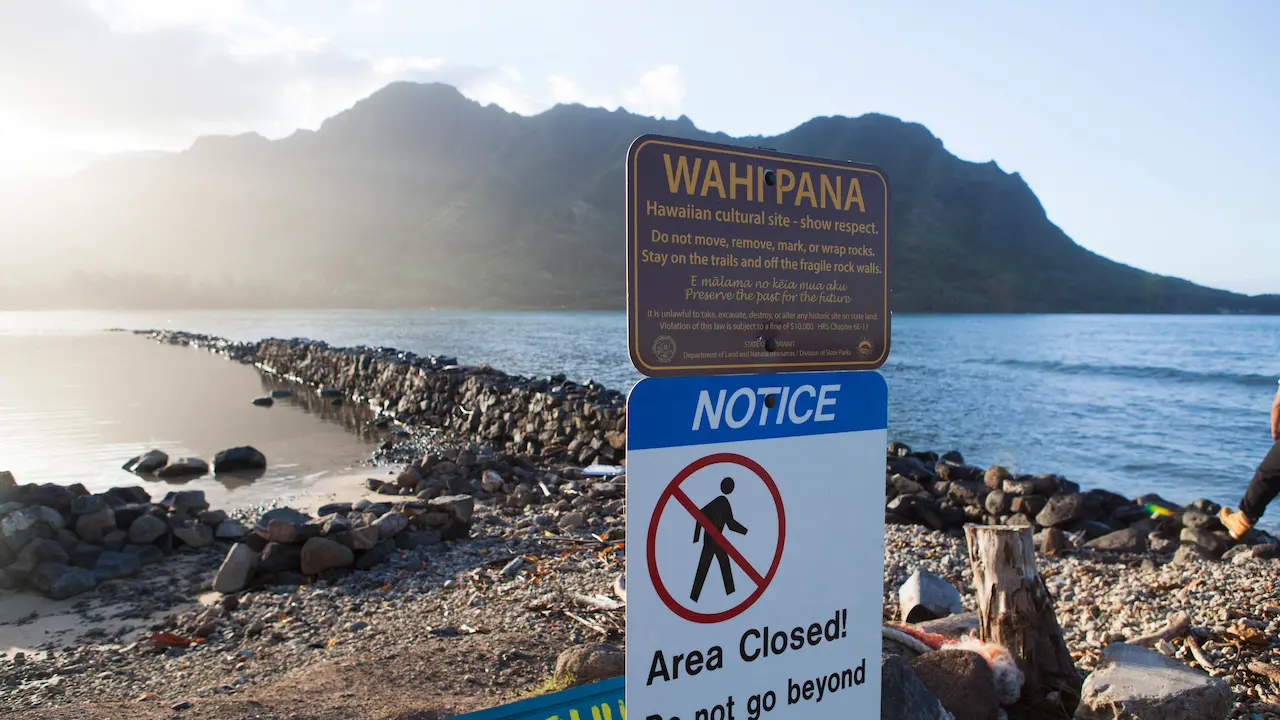
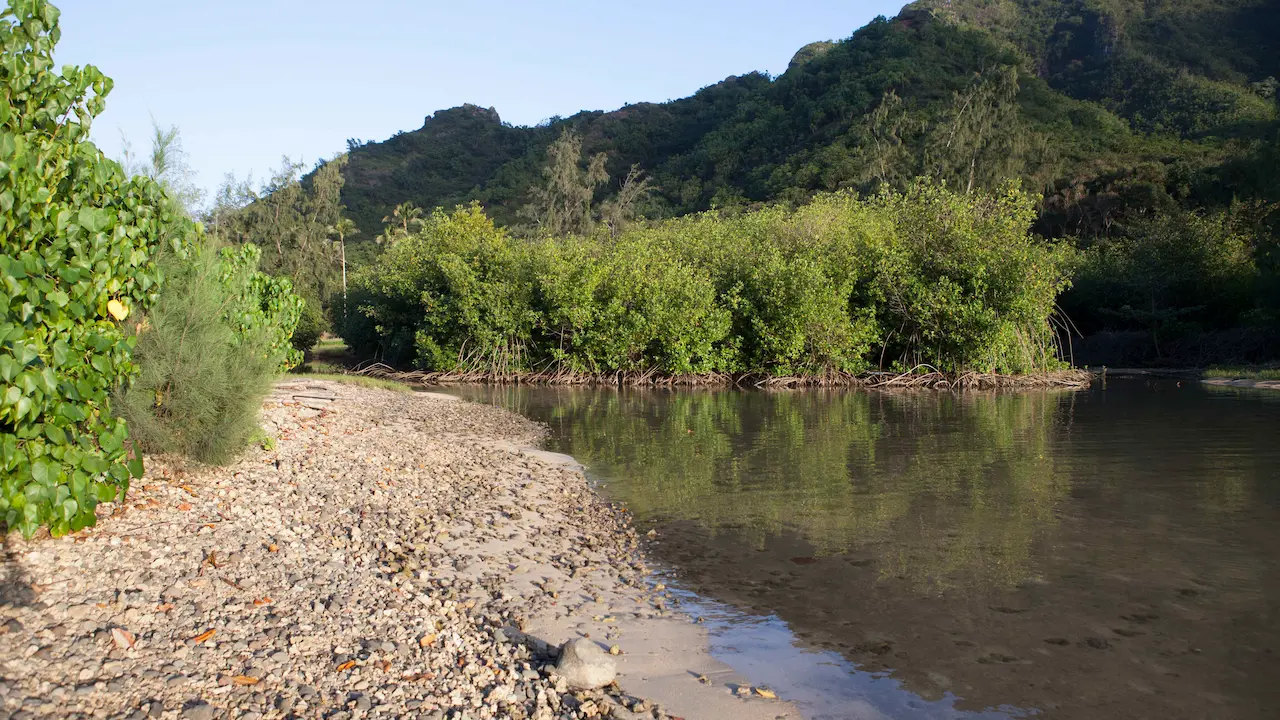
The Huilua Fishpond in Kahana Bay is a beautiful reminder of how Hawaiians used the technology of their time. Huilua literally means “twice joined.” It may refer to the two mākāhā in the fishpond. One gate is situated near the Kahana Stream to capture nutrient-rich water from the valley, and the other is located further out in the bay to bring in ocean water. The circulating nutrients in the brackish water are ideal for growing algae.
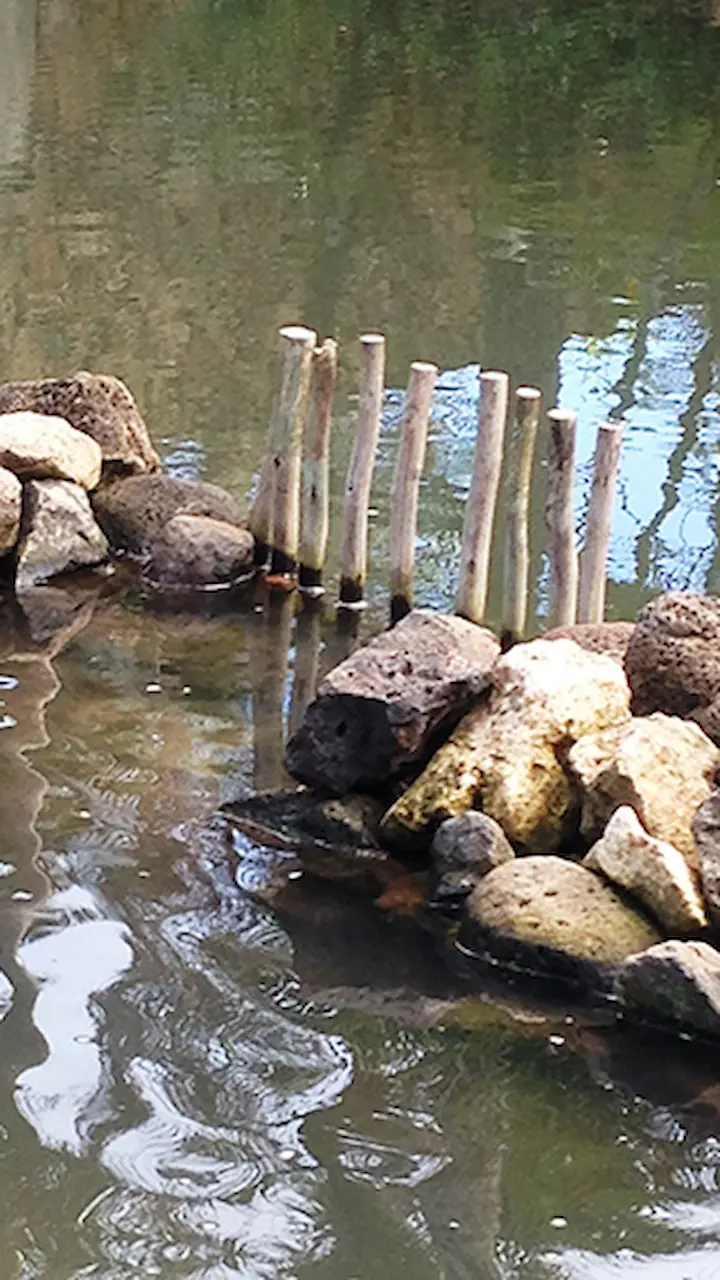
The mākāhā have small spaces between slats where fish and water could enter and exit the pond. The walls themselves were built without any cement to hold the rocks in place. Think of a three-dimensional puzzle that stands against wind, waves, and rain. The center of the wall was filled with smaller rocks or coral, and larger rocks were placed on the outside. The walls were thicker at the base and slightly tapered as they increased in height. This design helped keep them structurally sound, but they were not indestructible.
Over the years, floods and tsunamis have destroyed parts of the Huilua Fishpond along with other fishponds in Hawaiʻi. The Huilua Fishpond is currently undergoing restoration, but it remains clearly visible from the bay.
Praying for Fish
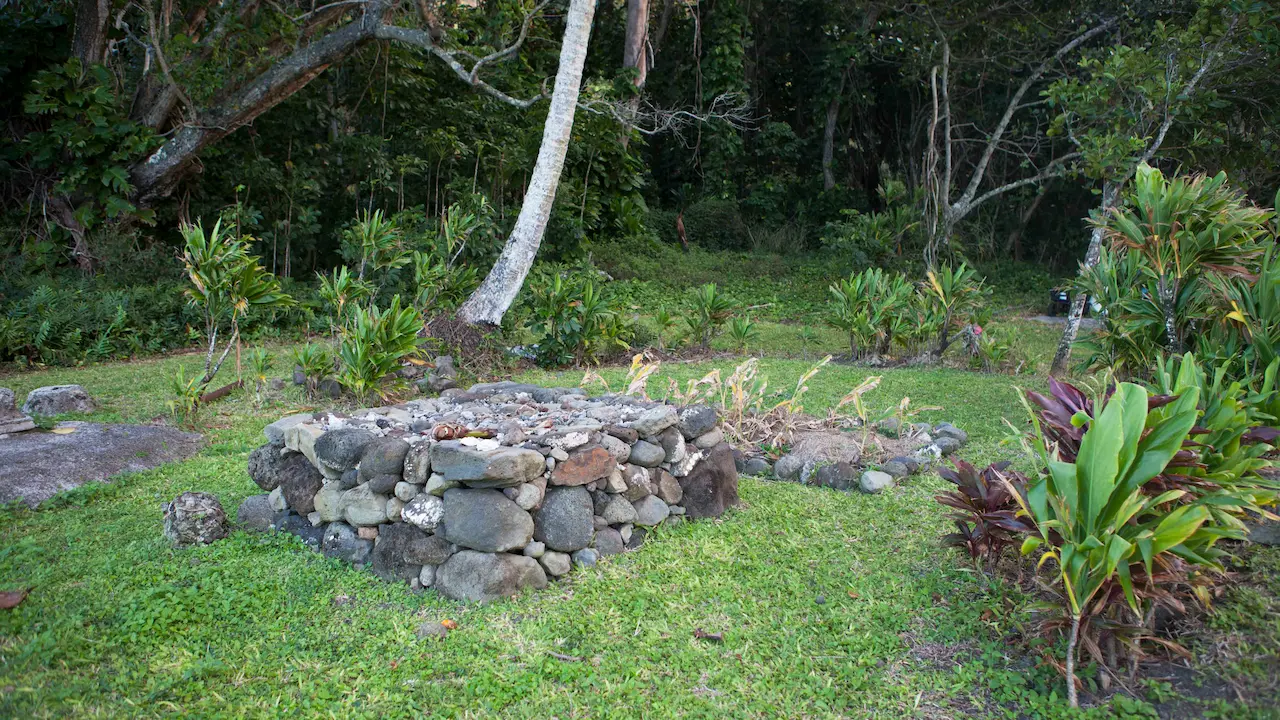
The people built stone shrines known as koʻa near the ponds, performed various rituals, and placed offerings to attract fish and ensure their procreation, according to Carol Araki Wyban’s book, Interpretive Materials for Huilua Fishpond, Kahana Valley State Park. You can see one at the Huilua Fishpond close to the Kahana Stream.
Teveta Kaʻili, assistant manager of the Hawaiian Village at the Polynesian Cultural Center, said these shrines were not unique to fishponds alone. Fishermen would use them wherever they set out to fish. Kaʻili added that Hawaiians also used stones as markers to triangulate their position so they could find their fishing locations again.
Building the Fishpond with Special Assistance
According to Wyban, Hawaiians believed the mythical Menehune people helped build the Huilua Fishpond. In Hawaiian mythology, these people came from their homes in the deep forest and brought rocks from the mountains to the ocean at night. They were known for helping build heiau (temples) and fishponds throughout Hawaiʻi. Wyban said the Menehune were a happy people who worked for free and were especially delighted if they were given food.
Learn more about ancient fishing techniques at the Polynesian Cultural Center.