








Huli Huli Chicken: Hawaiʻi’s Flavorful Grilled Specialty
by Nina Jones | 2022-09-16 | Eat Polynesia
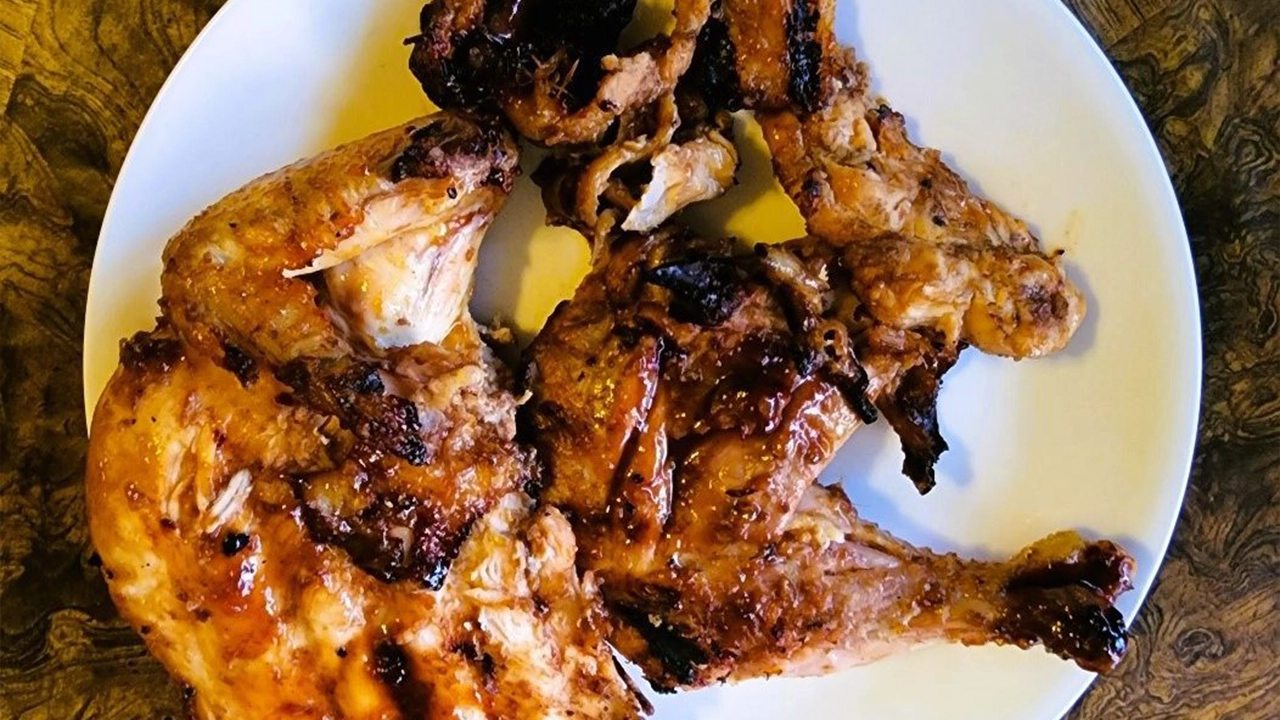
Huli Huli Chicken is a special blend of ingredients utilizing an open flame cooking method that is popular on our Islands. For many of our returning guests, it is the go-to meal sought immediately after landing on the island. Anyone who has had a chance to taste it knows how delicious it is, with its amazing combination of spices, sweet and sour elements, and a strong essence of smoky flavor.
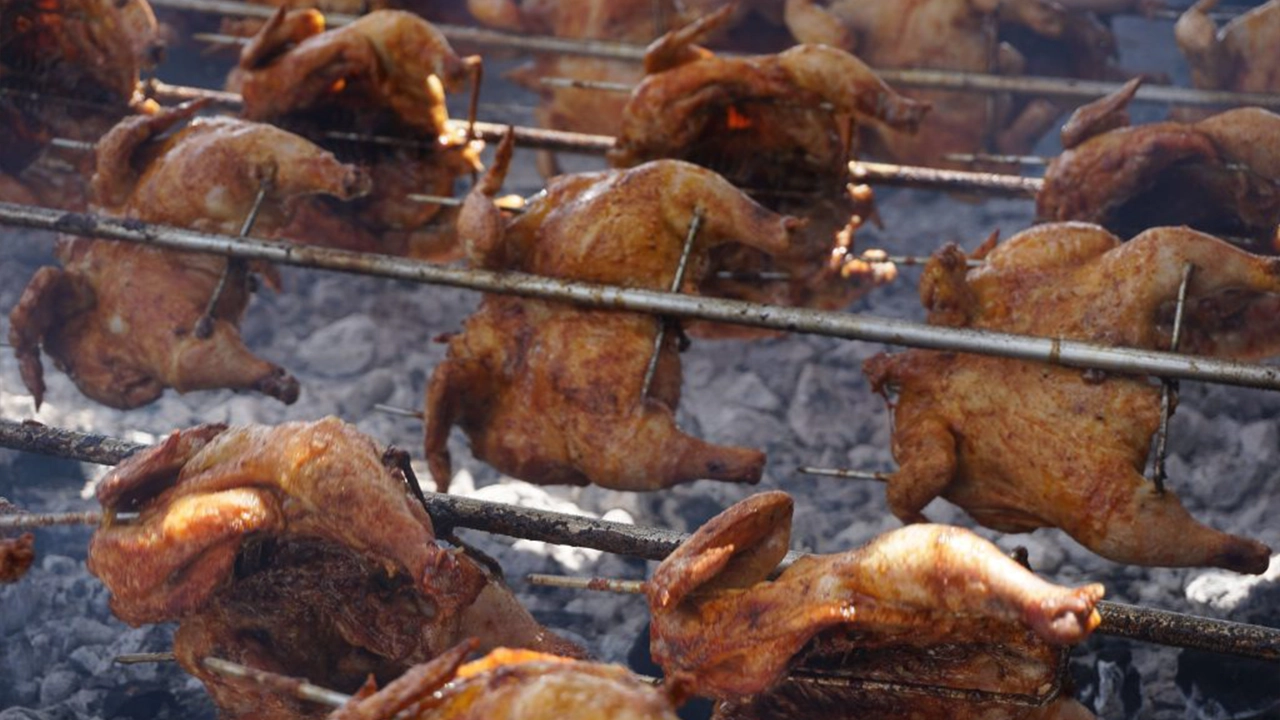
Traditional Huli Huli cooking method
But can it be replicated at home? Here’s your chance to find out!
With lots of trial, error, and success, here is an adaptable recipe that can be adjusted to be gluten-free, organic, and accomplished with or without a barbeque.
Backyard Party – Lūʻau Style

Homemade Lū'au Help
Looking to create a true Lūʻau experience? The Polynesian Cultural Center website provides useful advice, decoration ideas and RECIPES sure to help you create the most festive Lūʻau ever!
Click below to view recipes for each of the following Lūʻau favorites:
Kalua Pork Hawaiian Potato Salad Panikeke
Kalbi-Glazed Short Ribs Lomi Lomi Salmon Koko Alaisa
Shoyu Chicken Coconut Bread Tropical Pineapple Cake
Mac Nut Chicken Palusami Banana Guava Pie
Mahi Mahi Vaifala (Pineapple Drink) Mango Otai
Experience the Authentic Lū'au
The Polynesian Cultural Center offers multiple lū'au options where all your lū'au favorites are freshly prepared!
For lunch, visit the Center for the Hukilau All-You-Can-Eat Lunch and enjoy a buffet style meal before a day in the Islands of Polynesia or around the North Shore of Oahu.
Our evening options include the Gateway Buffet and the Ali'i Lū'au that have more than just the huli huli chicken to offer. The menu includes all your island favorites from kalua pork to freshly mashed 'ulu.
Stove, Grill, or Oven: Your Guide to Easy Huli Huli Cooking
“Huli” is Hawaiian for ‘turn’. Therefore, “Huli Huli” means many turns. This references the method of cooking a well-marinated and glazed chicken while it is constantly turning on a barbeque spit, or within a specialized “cage” over an open flame.
Although marinade and glaze ingredients vary wildly from recipe to recipe available online, the basic elements generally include pineapple juice, garlic, ginger, ketchup/tomato sauce, wine or broth, vinegar, and some form of sugar.
Understanding that most households will have difficulty finding a way to accomplish the ‘spit style’ cooking method, I have worked hard to find techniques that can replicate the taste and texture while utilizing more common cooking methods, such as the stove or a gas/charcoal barbeque.
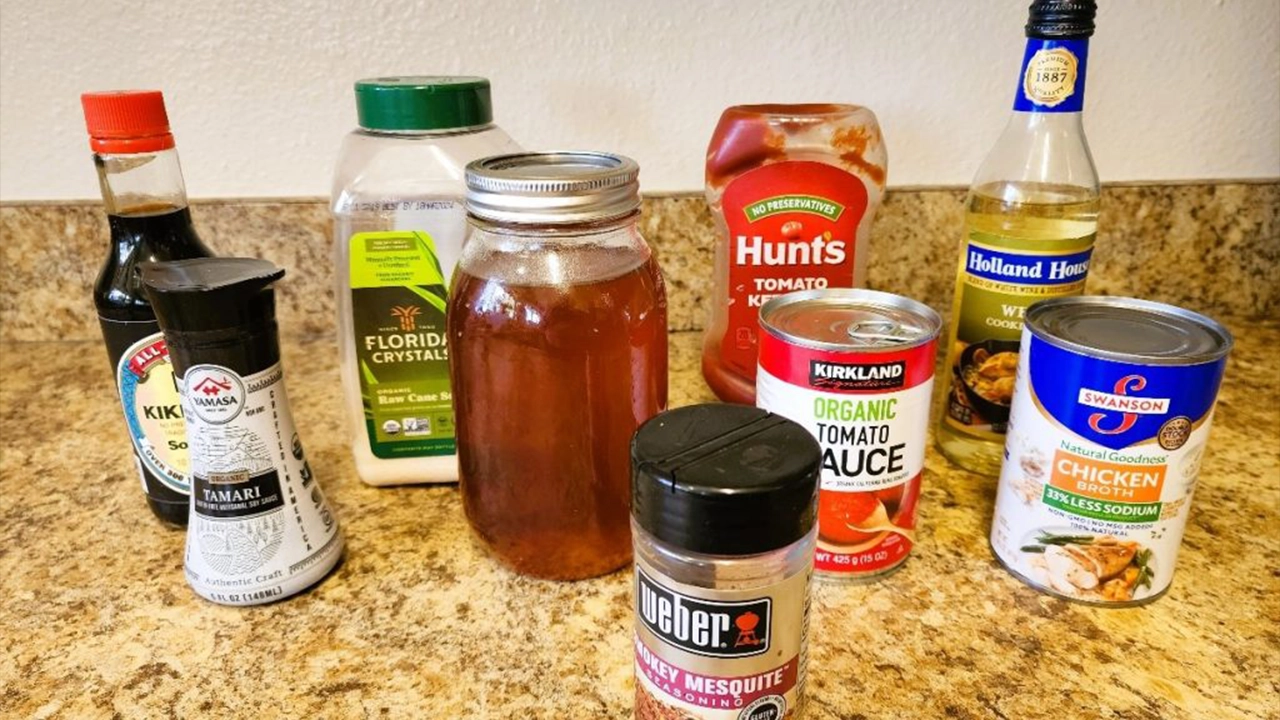
Various items can be substituted to create your own unique version of Huli Huli Chicken
Substitutions
There are many things you can use to create that crispy-skinned, smoky, sweet/sour taste that makes Huli Huli Chicken so popular.
If you avoid soy sauce, Delish.com suggests the following substitutes:
- Gluten-free soy sauce
- Worcestershire sauce (they suggest the all-natural version – however, please note that it is probably not vegan as most use anchovies as an ingredient)
- Coconut aminos (contains no soy, making it gluten-free)
- Liquid-smoke (not soy-free, however)
- Fish sauce (obviously not vegan)
For a working replication of smoky meat, use one of the following ingredients:
- Liquid smoke – no more than 1 – 2 drops! (NOTE: If you are vegan, gluten sensitive, or looking for all-natural, read the label carefully)
- Smoked paprika
- Smoked seasoning (my favorite is Weber's Smokey Mesquite Seasoning)
- Or any number of other items found through Google Shopping
Ketchup
- No reason you cannot use tomato sauce since all the ingredients used to make ketchup is in the sauce.
Cooking wine/sherry
- Trust me, the substitution is chicken or vegetable broth
Brown sugar
- Pure cane sugar
- Honey (I throw a bit more in there, rather than less, just to make sure the sauce gets syrupy)
To brine or not to brine
Several recipes just start marinating the chicken in the sauce. Others insist that you brine for 12 – 24 hours first. I used the brine method (shown in the recipe) and I’m very pleased with the results
Fresh or canned pineapple
I was very confused. Some recipes insisted on fresh pineapple, others said DON’T DO IT, since fresh pineapple contains enzymes that break down the chicken meat. I’m a fan of all-natural, so I went with fresh pineapple. All I can say is that my hubby could not stop talking about how tender and moist the chicken was. I’m going to go with YES on fresh pineapple juice. I used a pineapple that I had cut and frozen a few days earlier because I didn’t have a fresh pineapple to get juice from. I simply placed a big handful of chunks in my blender, added barely enough water to get the pineapple to break down, and let it go until it was well liquified. I then spooned the slushy-like pineapple into a glass and placed it in the fridge for ½ hour, which allowed time for the liquid to separate. I used the liquid in the recipe, and ate the solids right then and there, a double win for me!
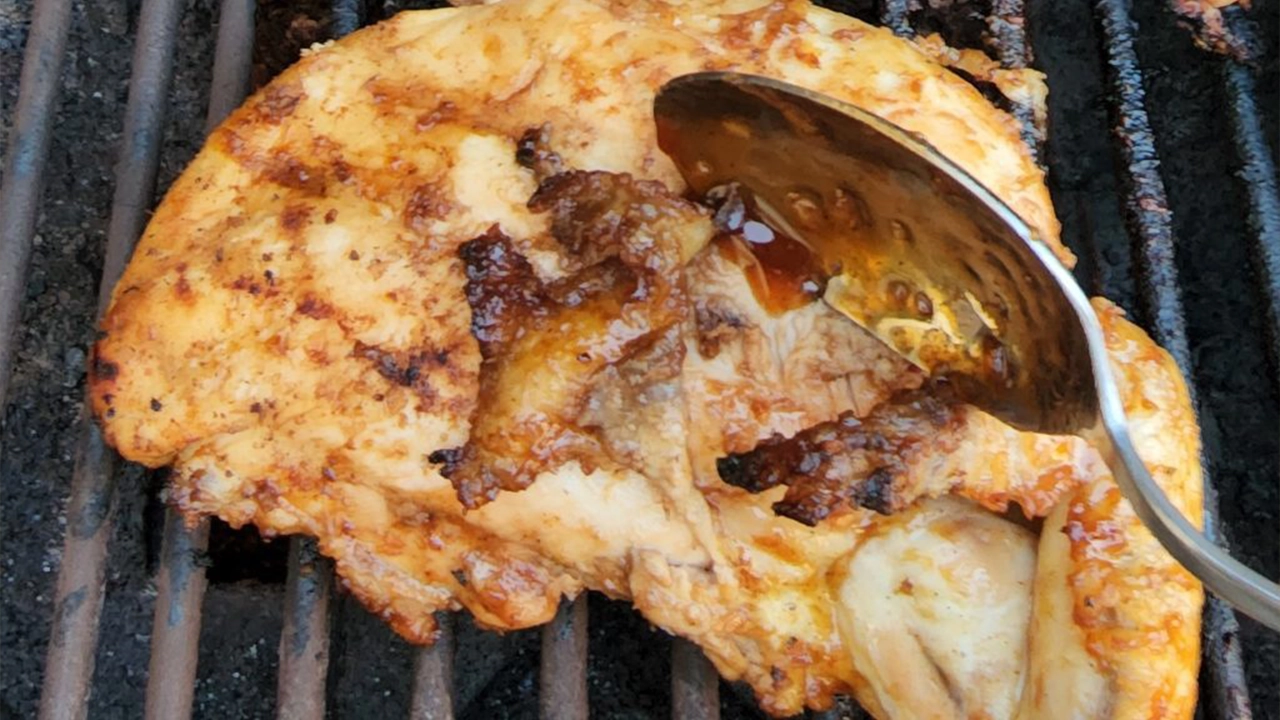
Spoon or brush chicken with some sauce every time you turn it
Huli Huli Chicken Recipe
Brine:
- Water
- Sea salt
- 1 cup apple cider or rice vinegar
Instructions:
- Half your chicken or cut it up in pieces (I suggest half a chicken if using the oven and cut up pieces for the barbeque).
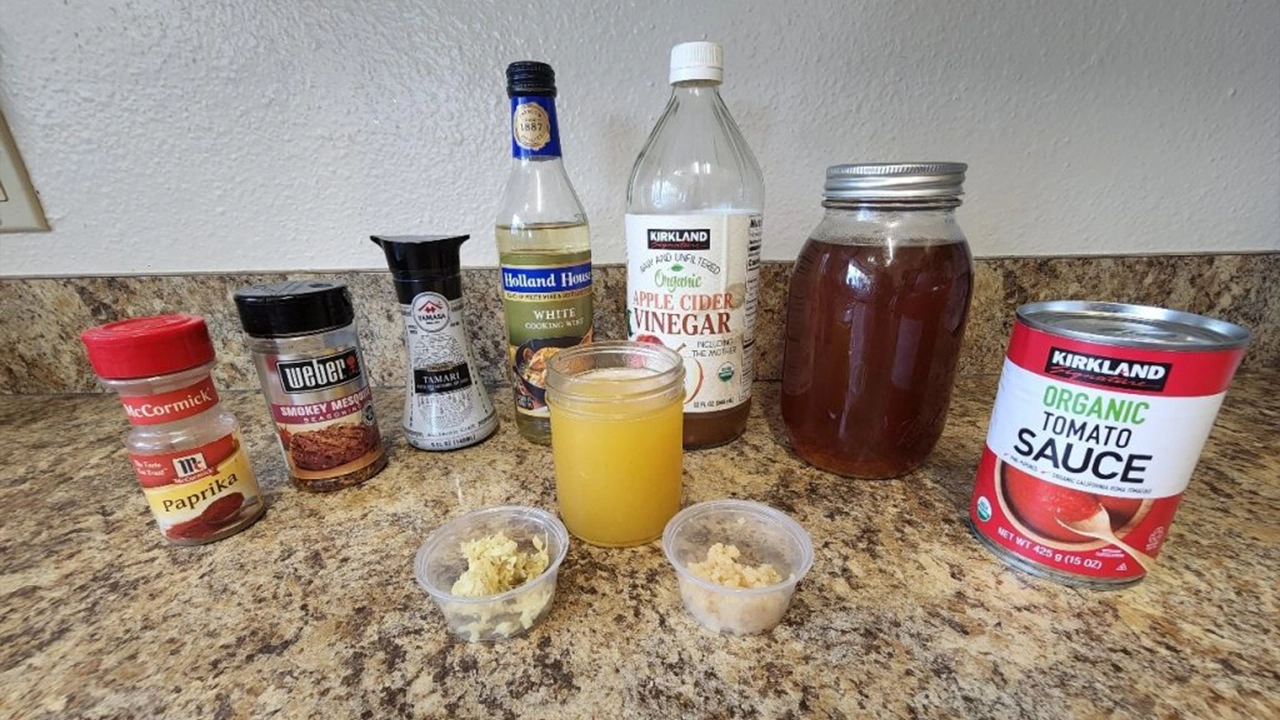
Sauce
- 1 cup of pineapple juice
- 1 ½ tablespoons freshly grated ginger
- 1 tablespoon freshly chopped garlic
- ¼ cup tomato sauce or ketchup
- ¼ cup honey or brown sugar
- ¼ cup apple or rice vinegar
- ½ cup cooking wine or chicken/vegetable stock
- ¼ cup soy sauce or substitute (see substitution section above). I used Tamarin
- 1-2 drops of liquid smoke or 1 tablespoon smoke seasoning
- ½ teaspoon paprika
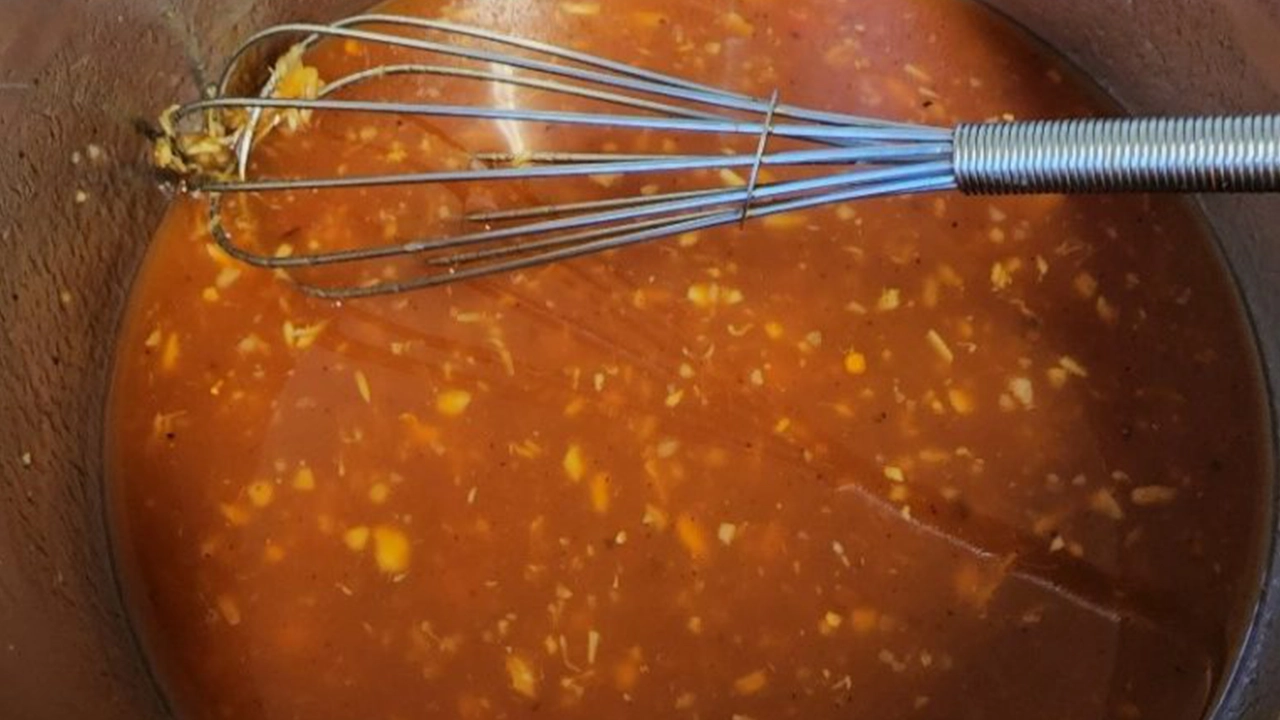
Simmer sauce until it thickens
Mix in a saucepan on medium for 20 – 30 minutes, stirring occasionally and checking that it does not burn. You are looking for the sauce to thicken. Let cool for at least ½ hour.
Take the chicken out of the brine, rinse thoroughly. Now, place in a clean bowl or Ziploc bag and pour half of the sauce on it. Mix, then place again in the fridge for 3 hours.
Once you’re ready, take the chicken (do NOT rinse this time) and brush it generously with some of the remaining sauce. I like to then add a generous shake of my Weber smoked seasoning, which helps to coat the skin and add a bit more of that smoky flavor right where you want it.
Keep a bowl of the remaining sauce and brush more sauce on every time you flip the chicken during the cooking process.
Oven Method:
Heat oven to 375°.
Line a baking pan that is large enough to allow the meat to be separated to obtain that crispy skin that makes it so amazing. The results will be even better if you have a wire rack to place the chicken on over your baking sheet that is built to withstand high heat.
Cook for approximately 30 minutes, remembering to flip (huli) the pieces every 15 minutes and adding another generous coat of sauce to each piece. Turn the temperature up to 400° for a crispy finish for 15 minutes.
Barbecue Method:
Set grill to medium.
It is strongly suggested that you pre-clean and oil the grill before starting. Loose chicken skin combined with the sticky sauce will cause the skin to adhere to the grate. This is not something you want to have to deal with later. (Another suggestion would to be using chicken thighs only, since the skin will surround the meat, making it less likely to break away on a hot grill)
Make sure that you close the lid throughout the cooking process. Try to keep the temperature at 400°F, which I was able to accomplish by keeping the burners on medium. Place the chicken evenly spaced across the grill, turning each piece every 10 minutes. Add a brush of sauce with every turn. Grill until it registers at least 120 degrees in the deep, bony area of the thigh, or when cut open, it shows no redness in the meat nearest the bone.
Your beautiful Huli Huli Chicken is ready to serve!
Experience an Authentic Lū'au and More with a Free Trip to Hawai'i!
Enter now to win a dream trip to Hawai'i and expereince the ultimate vacation in paradise! From July 1, 2026, to October 31, 2026, enter the giveaway for a chance to explore Oahu's top attractions. No purchase is necessary, so enter now before time runs out!
Frequently Asked Questions
What does "Huli" mean in Hawaiian?
"Huli" means "turn" in Hawaiian, so "Huli huli" means many turns. This references to the traditional method of cooking the chicken by constantly turning over a flame.
Is the oven or barbecue method better?
The barbecue method is closest to the authentic way of cooking Huli Huli chicken, which is over an open flame. Both methods will give you a delectable dish!
Can I use fresh pineapple juice for the sauce?
Yes! Most recipes explicitly say no, but it is your personal preference. Either one will give you a tasty result!
What are the best sides to serve with Huli Huli chicken?
Anything pairs well with this delicious dish, but you can't go wrong with a couple scoops of white rice and classic Hawaiian macaroni salad.