








Kalo & Poi Making with Lono Logan: Tradition, Process & Cultural Meaning
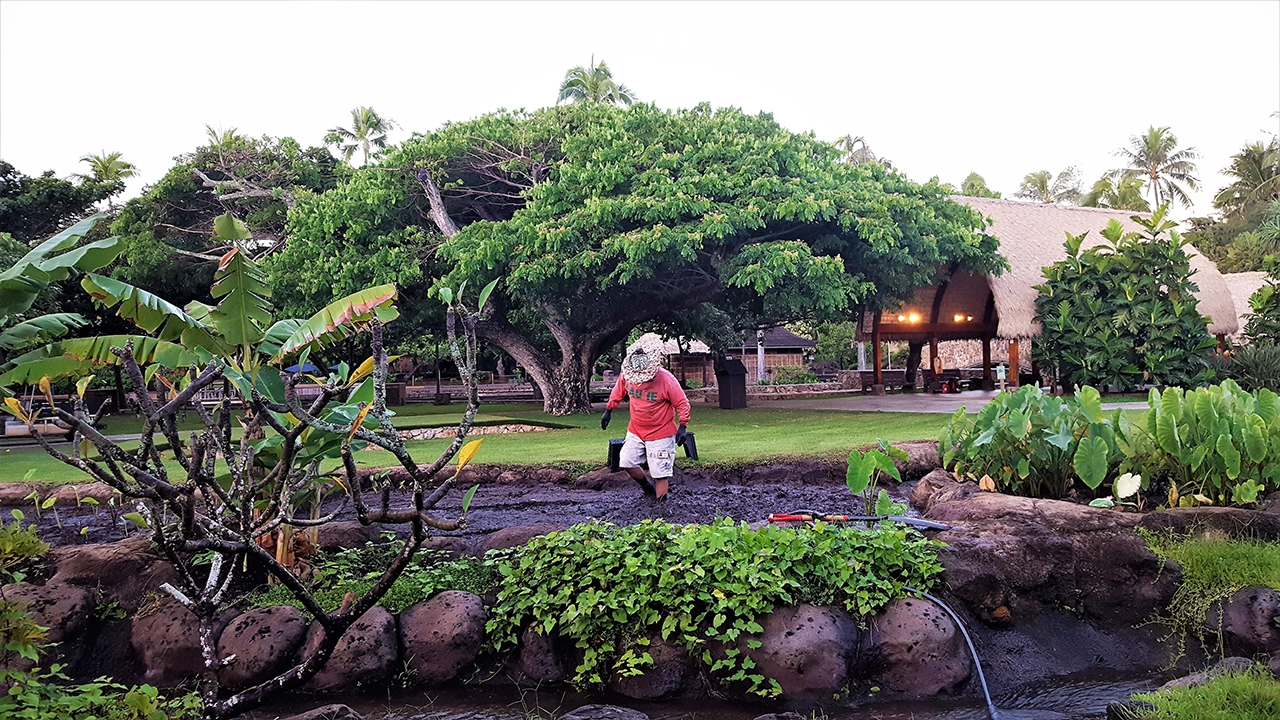
Lono Logan: The Polynesian Cultural Center’s Kalo Consultant
The significance of poi in Hawaiian culture cannot be understated. It is still a very important and favorite food for many modern Hawaiians and can be purchased in most local grocery stores.
Meet Lono Logan, a member of a prominent Hawaiian family in Lāʻie, Hawaii. Some might say he literally grew up at the Polynesian Cultural Center. It turns out his grandparents, the late Jubilee and Eugenia Logan, helped build and man the Hawaii Village at the Center. Little Lono could often be found here back in the 1960s and 70s hanging out with a few other staff kids and helping his grandma.
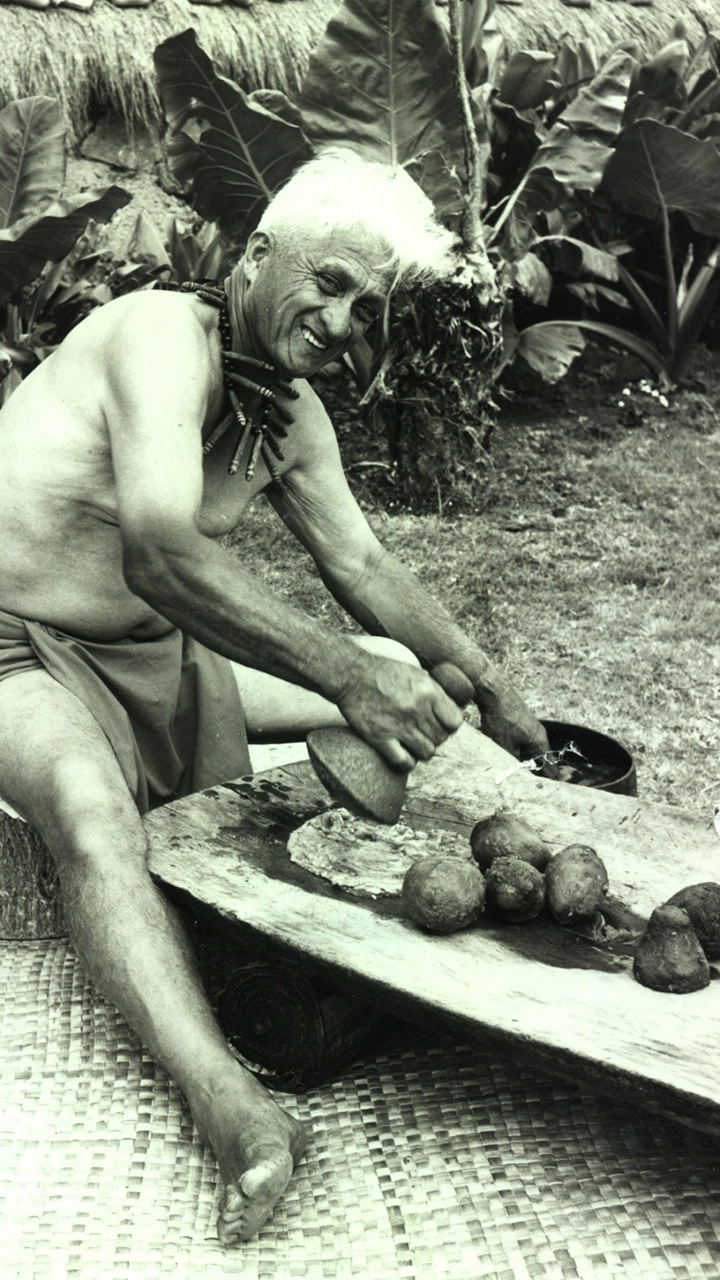
In fact, he says one of his earliest memories is of his tutu placing his hands on a poi pounder, wrapping her arms around him from behind, and guiding him in how to mash boiled kalo (taro) roots into the traditional Hawaiian food staple poi.
Lono’s grandparents have long since passed away, but their influence in his life remains strong. At one point, he wanted to be a commercial photographer, but about 10 years ago, he says, his grandma’s example led him back to kalo farming and making poi.
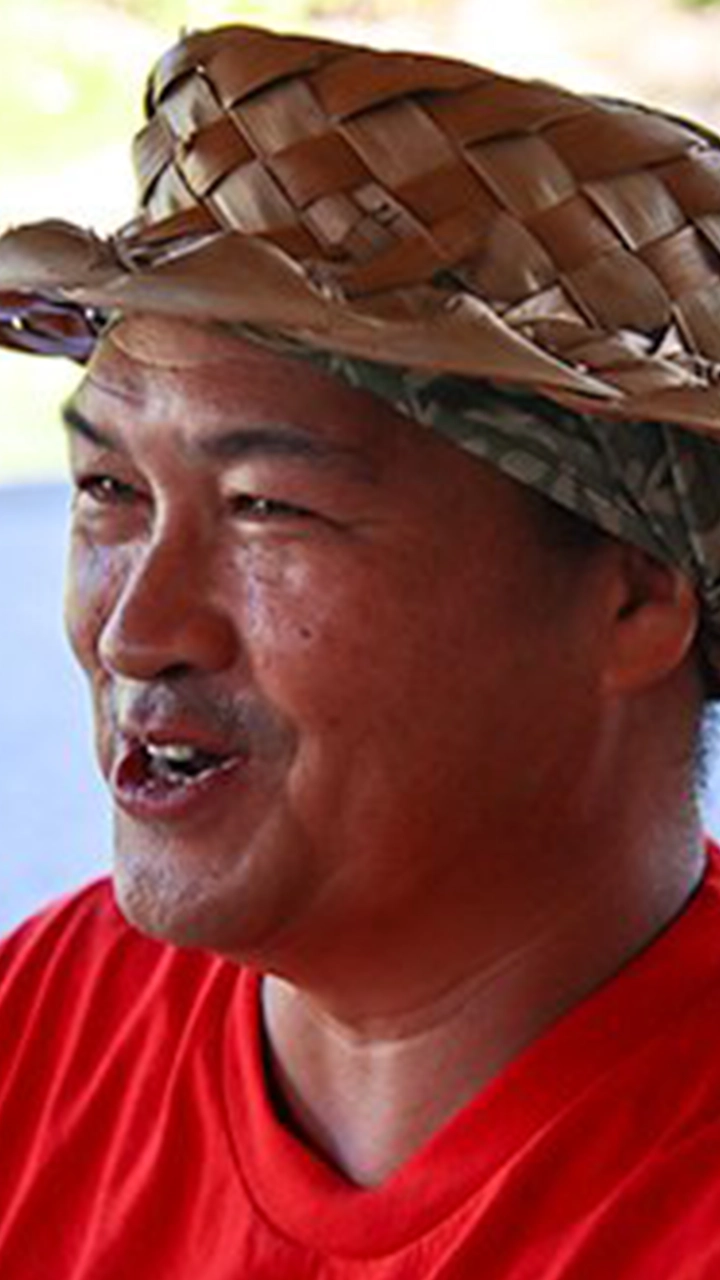
He recalls that about four or five years ago, he started to help demonstrate poi pounding at a couple of sponsored events, but adds he still wasn’t thinking of working at the Center at that point.
“Then I started to feel the pull of our ancestors. I heard my grandmother's voice saying, Sonny, you need to kōkua [(help with the)] kalo in the Hawaiian Village.
Since this past December, he has done an impressive job as the Center’s kalo consultant and loves it.
A week after I started doing this at the Polynesian Cultural Center, I felt my grandma again, and I knew I was doing the right thing here,
said Logan.
During that time, he has worked with the leaders and the BYU–Hawaiʻi student workers in the Hawaiian Village to plant 30-plus varieties of the approximately 60 varieties of kalo now commonly grown in Hawaiʻi.
Guests can see these thriving in four loʻi (taro patches) alongside a small stream in the village. He made sure some of the water upstream flows through the loʻi. Lono says this makes all the difference, and his freshly pounded poi, as the Hawaiians say, is ʻono (very delicious).
Kalo’s origins in Hawaiian legend
For Hawaiians, kalo is part of our existence.
Wākea, Sky Father, and Papa, Earth Mother, have a daughter, Hoʻohōkūkalani. Later, Hoʻohōkūkalani and Wākea have a stillborn son, Hāloanaka. They bury the fetus, and over time the mother's tears shower that area, and the original kalo plant grows. Its name is Hāloanakalaukapalili, which describes the young plant from its hā [breath, stem], loa [long breath], nakalau [young leaf unfolding], and kapalili [opened leaf that bends down and quivers in the wind].
Hoʻohōkūkalani’s second child is a healthy baby boy, Hāloa — the first kanaka [man], the first male. We all stem from him. For Hawaiians, kalo is not just some pretty plant; it’s our ancestor.
On growing Hawaiian kalo
So, how do we treat grandparents?
he asks. You give them the best! And when you grow kalo, it should be with that same attention and care.
Lono explains that kalo growing in loʻi prefer cold, flowing water. Ideally, I would like to have the water in our Hawaiian Village loi be fed from a pūnāwai [spring].
He notes there are several in the area, and the Center was built on top of an ancient loʻi.
When conditions are ideal (depending on the variety of kalo, its health, care, and available resources), it generally takes about seven-to-12 or more months for kalo to grow in a loʻi,
starting from about ankle-high when it’s first planted, hip-high at about five months, and as much as head-high at about 10 months.
Lono adds that because the earth is warmer, dry-land
taro varieties (i.e., planted in the ground without water flowing past it) may take two to three months less time to mature, depending on environmental factors such as elevation, prevailing temperatures, etc.
You want to pull it at the peak of its starchiness–too long, and the starch turns to sugar. Normally, you would just eat that kind. Otherwise, when you go to pound it, it’s too lumpy. Quality control comes through trial and error,
he says.
How To Make Poi
Directions
Because the Center's Hawaiʻi Village staff make poi and share samples every day with hundreds, sometimes thousands of guests, they usually purchase large bags of kalo from outside farmers as often as needed.
-
Pressure cook the kalo
Logan brought out about a two-pound tuber root he pulled from the loi and washed the day before. Leaving the skin on, he cooked it earlier that morning in a pressure cooker (at about five pounds or psi) for about 75 minutes. Otherwise, he says it might have taken over two hours of regular boiling to cook it, and he stresses several times that others may have different ways of preparing their kalo and poi.
-
Peel off skin and put the waste back in the loʻi
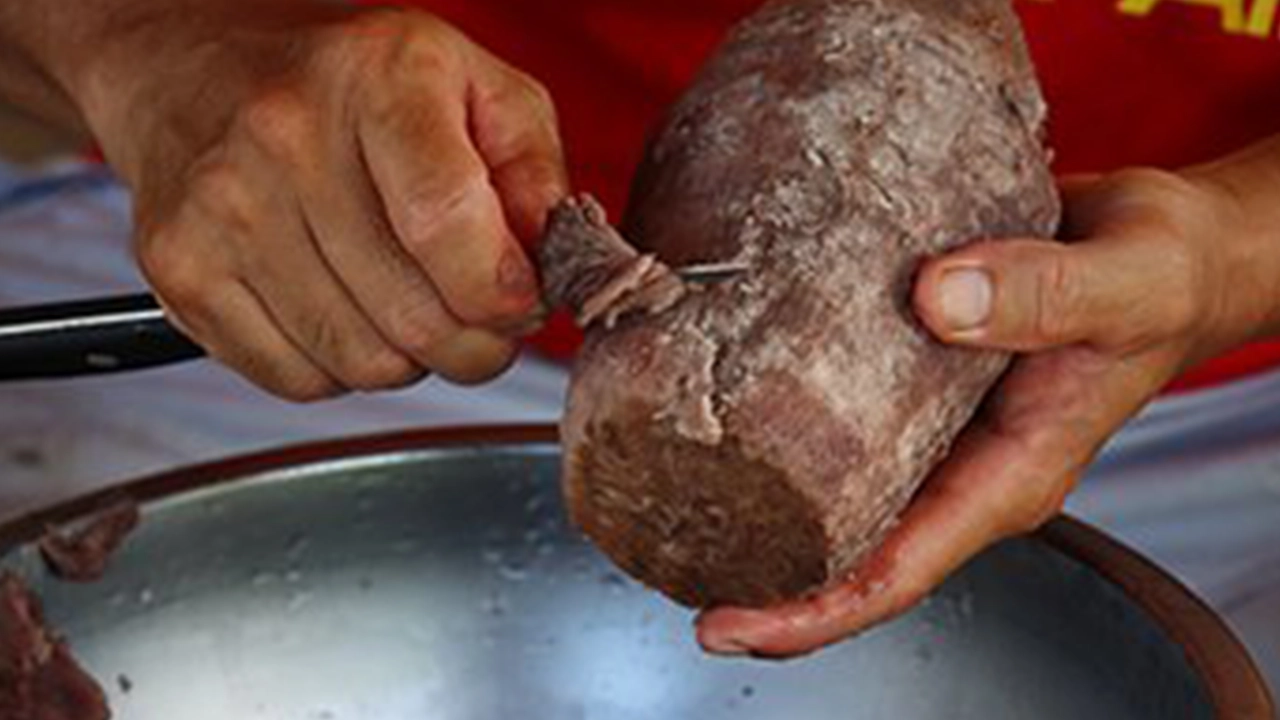
After the kalo cools, he places it in a bowl of cool water. The skin easily sloughs off in his hands. He says the skin will get thrown back into the loi to provide additional nutrients. “Also, when I was pulling this out, I stomped the roots back into the loi to add back micronutrients.”
-
Scrape the outer flesh of kalo and cut into pieces
Next, he lightly scrapes the kalo with a knife twice.
The old Hawaiians used an ʻopihi [limpet] shell.
The first scrapings, while digging out any imperfections, are saved to feed to chickens or pigs. The second scraping goes a little deeper.This is what we call koena. Some people eat this or use it like a thickener [similar to using corn starch] in stews.
Then he cuts the kalo into manageably sized pieces and puts them on the pounding board. Now he’s ready to begin pounding. -
Pound the kalo
Logan uses a pohaku ʻai fashioned out of lava rock, plus a modern innovation, a plastic scraper. He points out that he uses very little water when he makes his poi, but wets the pounder occasionally so that the poi doesn’t stick to it and build up.
At first, he gently breaks the kalo up with the kaʻe (edge) of the pounder. At this stage, he has made lumpy paʻi ʻai, which some people prefer to eat. It’s more like the whole-cooked taro that other Polynesians usually eat.
Then, using the smooth, rounded mole (end) of the pounder, Logan pushes and presses all the lumps out, again wetting the pounder and the scraper. Finally, he starts vigorously pounding the poi, rhythmically pushing it into a lump with one hand before bringing the pounder down with the other. The resulting fresh poi is surprisingly thick, sticky, and a little sweet (optional).
While Logan likes it this way, he admits others may add more water, or even salt, soy sauce, or sugar. Older Hawaiians, he says, tended to like “sour” (fermented) poi, which might have been a natural result of no refrigeration back then.
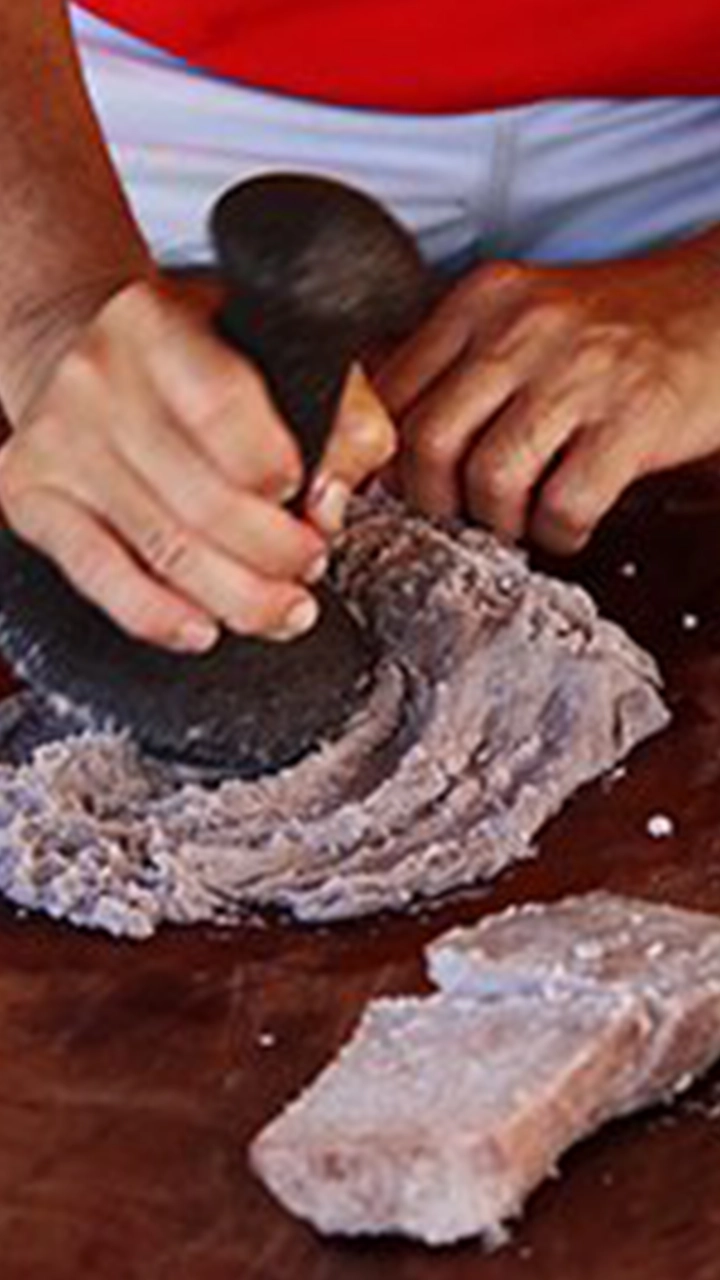
Sample freshly prepared poi, our staple of life
If you don’t know what kalo is, please come see our demonstration in the Hawaiian Village,
Logan concludes. We will explain how significant it is to Hawaiians and the rest of Polynesia. Ooi is very nutritious and safe. It doesn’t need refrigeration, and I believe sampling freshly pounded poi might remove any misconceptions you might have about it. We’ll do our best to educate you about kalo and poi and let you experience it for yourself.