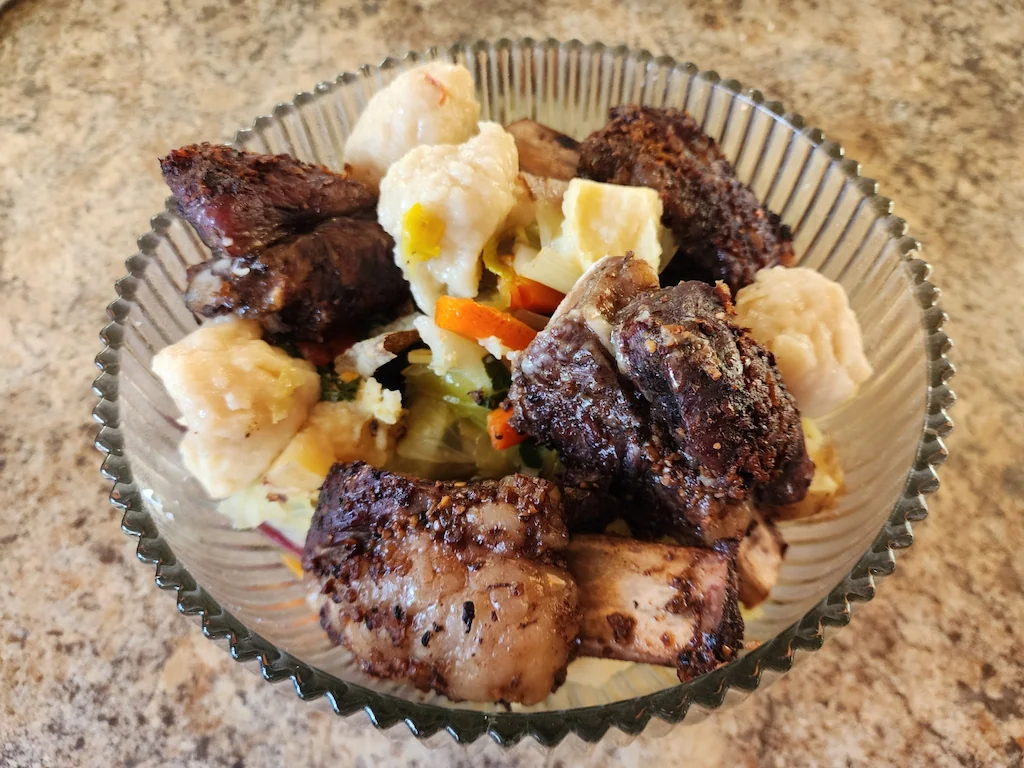







Traditional Māori Boil Up Recipe
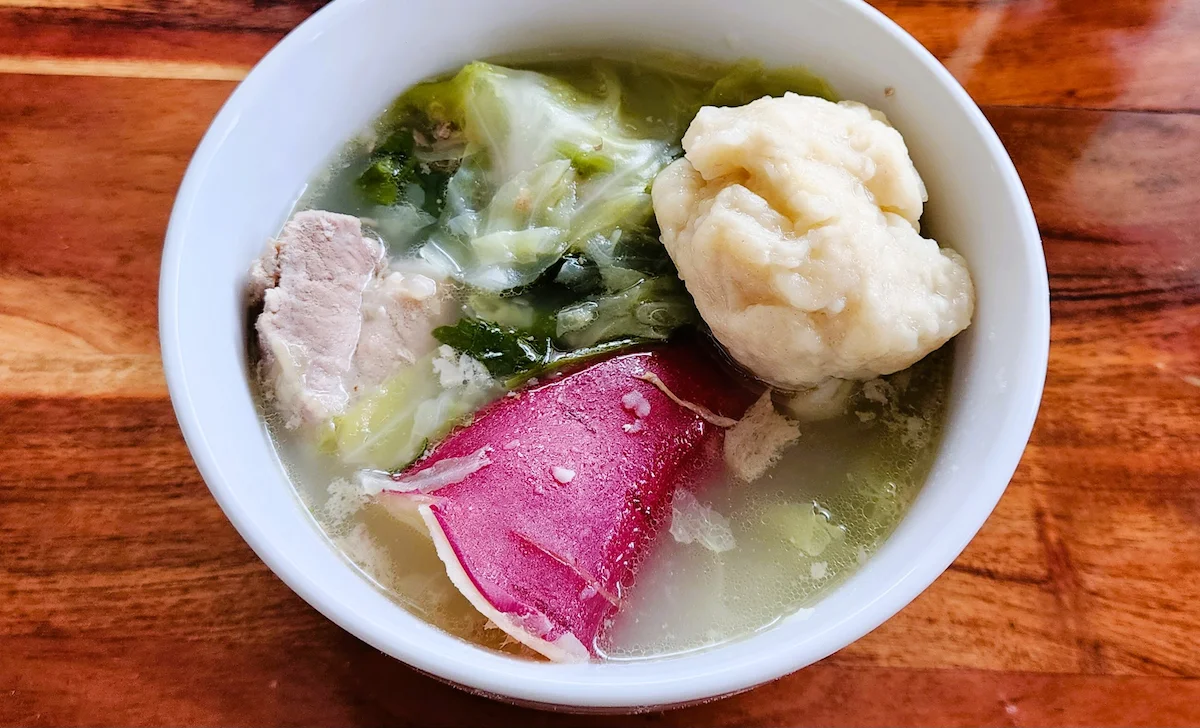
The Traditional Māori Boil-up is easy and delicious
The Polynesian Cultural Center is pleased to share this traditional Māori Boil-up recipe provided by Rahira Makekau, who is the Māori Cultural Performance Specialist and Advisor for the Center. Māori are people of Polynesian descent who came from Aotearoa, which translates to the “Land of the Long White Cloud.” You may know it as New Zealand.
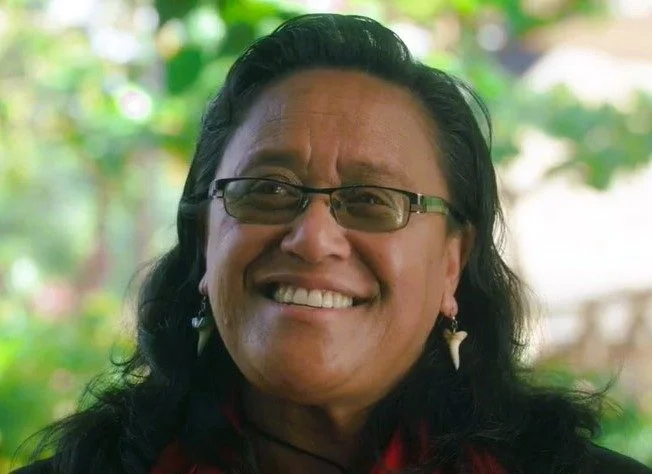
Rahira was born and raised in Aotearoa. It was there that she met her husband of 32 years, Kim Makekau, who is from Hawaiʻi. Together, they raised a family of five children. She moved with Kim to the island of Oʻahu in 2006 to honor her heritage through working at the Polynesian Cultural Center, where she has worked for the past 17 years.
The History of the Māori Cuisine
“Our indigenous Māori people were traditionally hunters, gatherers, and crop farmers, who harvested food from forest, stream, sea, and garden. Not surprising then that the ingredients that make it to our plates come from these sources.”
How to use a Hāngī
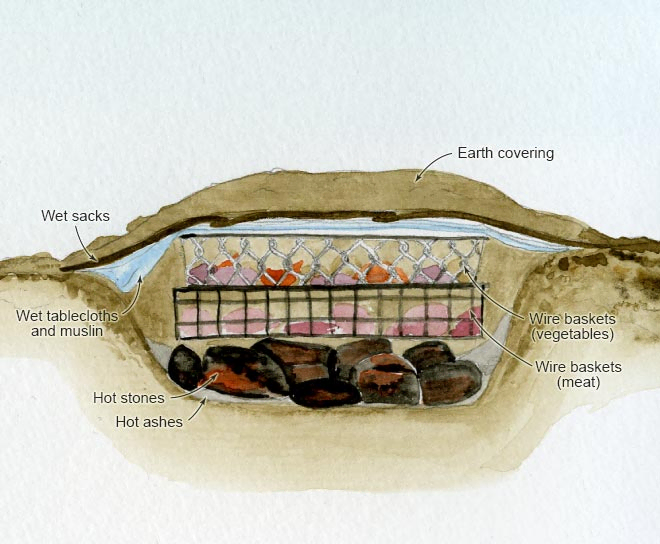
“As you move from one Māori iwi (tribe) to the next, ingredients and preparation style vary—driven purely by what is available close by. Freshness and natural flavors form the very essence of Māori cooking. Today, not only are Māori ingredients used in traditional style cooking such as a Hāngī, but also found in food that is prepared for the modern palate.”
Kai Māori – Te Ara Encyclopedia of New Zealand
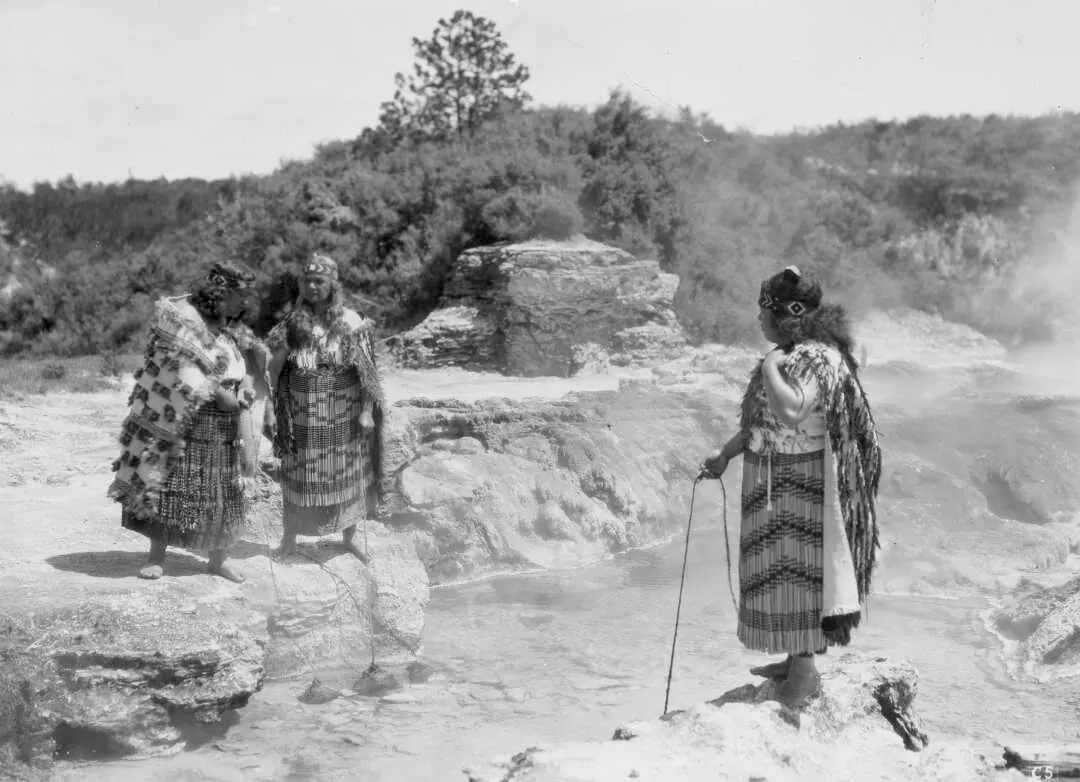
One of the regional influences on Māori cuisine comes from the fact that their lands, especially around Rotorua, are dotted with hot springs:
The geothermal region around Rotorua supplied endless boiling water and super-heated steam for cooking. These 1901 photos show residents of Whakarewarewa village cooking by two methods. Those on the left boil food by suspending it in baskets lowered into a hot pool on cords. On the right, a hāngī has been cooked by digging a hole in the earth and steaming the food with geothermal heat. Both methods are still used in this region.
Cooking food in hot springs, 1901 – Māori foods – kai Māori – Te Ara Encyclopedia of New Zealand
The significance of a traditional “Boil-up”
Rahira shared: The humble Boil-up is a staple in … I’m going to say it … all Māori homes, no matter where in the world we find ourselves living. All whānau (family) have their preferences when it comes to how to make a ‘good/proper’ Boil-up, but all Boil-ups have the same basic ingredients … meat, root vegetables, and greens.
Growing up, our Boil-ups mainly consisted of pork bones, bacon bones (cheap but with heaps of meat on the bones), mutton, or whatever other meat was on special; watercress and puha (sow thistles … which aren’t actually thistles). Mum often added silverbeet, turnip tops, or spinach to make it go further. We loved all variations of Mum’s Boil-up. During all my pregnancies, I craved Mum’s Boil-up. It comforted me, made me happy, and for some reason, it was extra reka (sweet/delicious).
I know it is a poor man’s meal, but looking back, I see it was much more than that — it was comfort, safety, and family in every serving … my ultimate comfort food.
Please check out this link. It just made me smile. I felt as though she was talking about my family: The Politics of Boil Up (debatemag.com) .
A review of traditional and alternative “Boil-up” ingredients
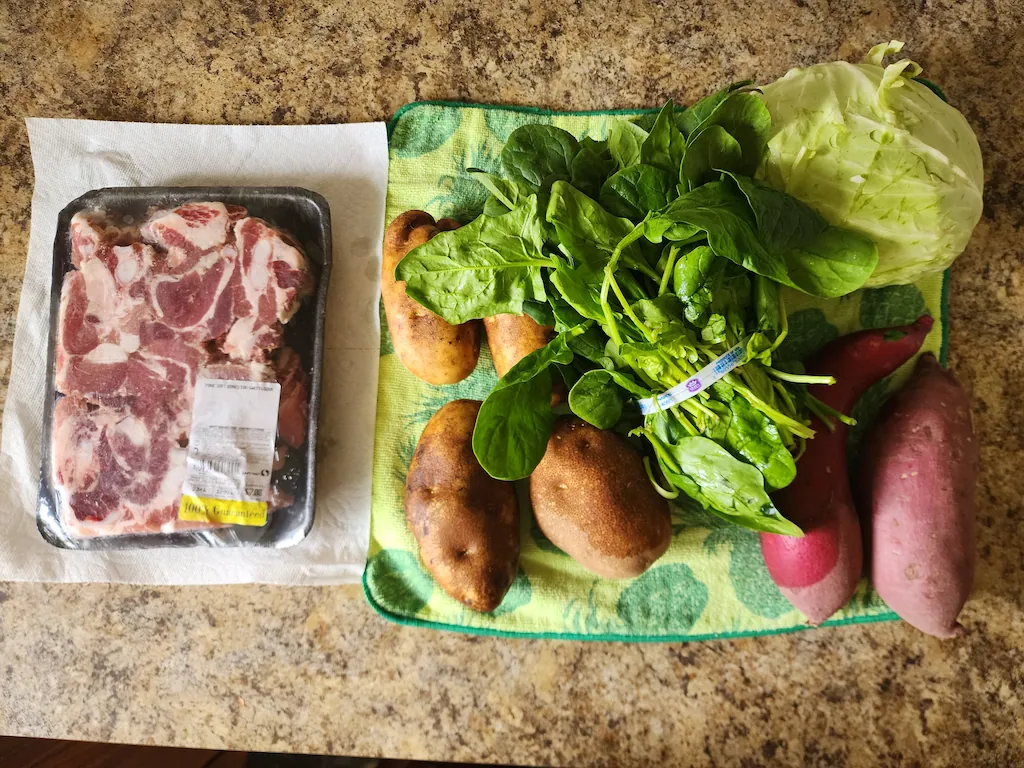
Meat – Your preference. I’m partial to neck chops or pork bones, but any meat that can be boiled is great. Here in Hawaiʻi I usually use pork strips or even pork back ribs. I just cut them up and it’s like having pork bones.
Silver-side (corned beef) is also good, but cook it whole and slice it when you’re ready to eat.
Root vegetables – I always have potatoes and kumara (our variation of sweet-potato) in my Boil-up. Sometimes I use pumpkin, less often carrots. Another popular addition is watercress.
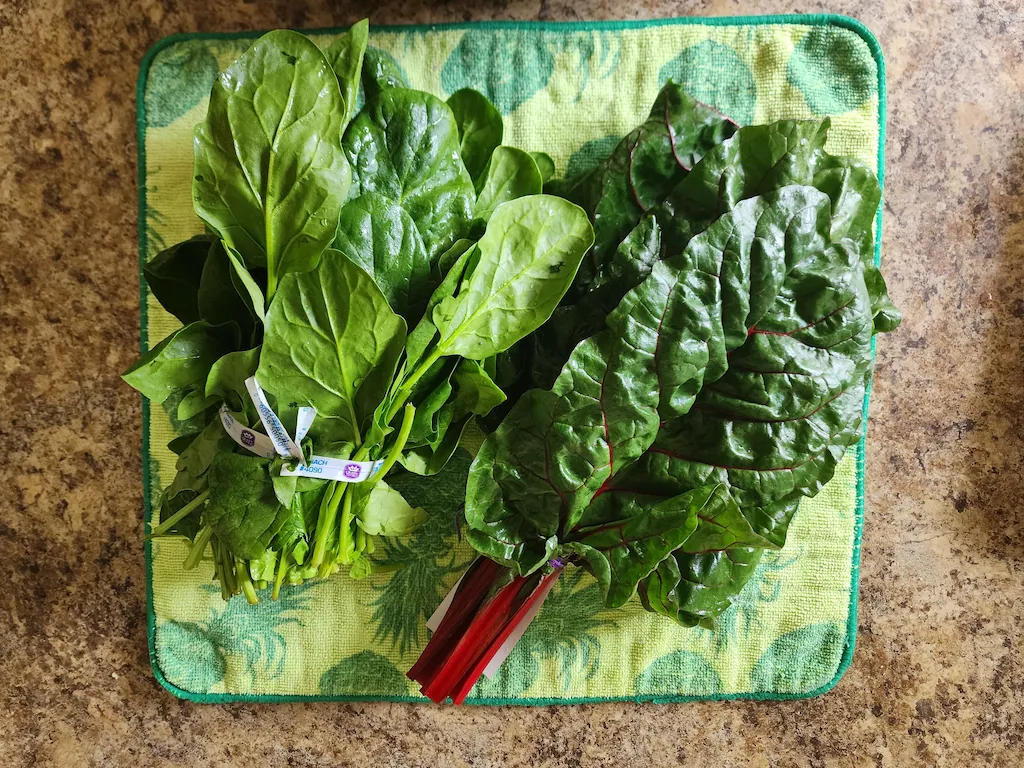
Greens – These days I generally use cabbage. I sometimes add spinach (to trick myself into thinking it’s puha, hahaha).
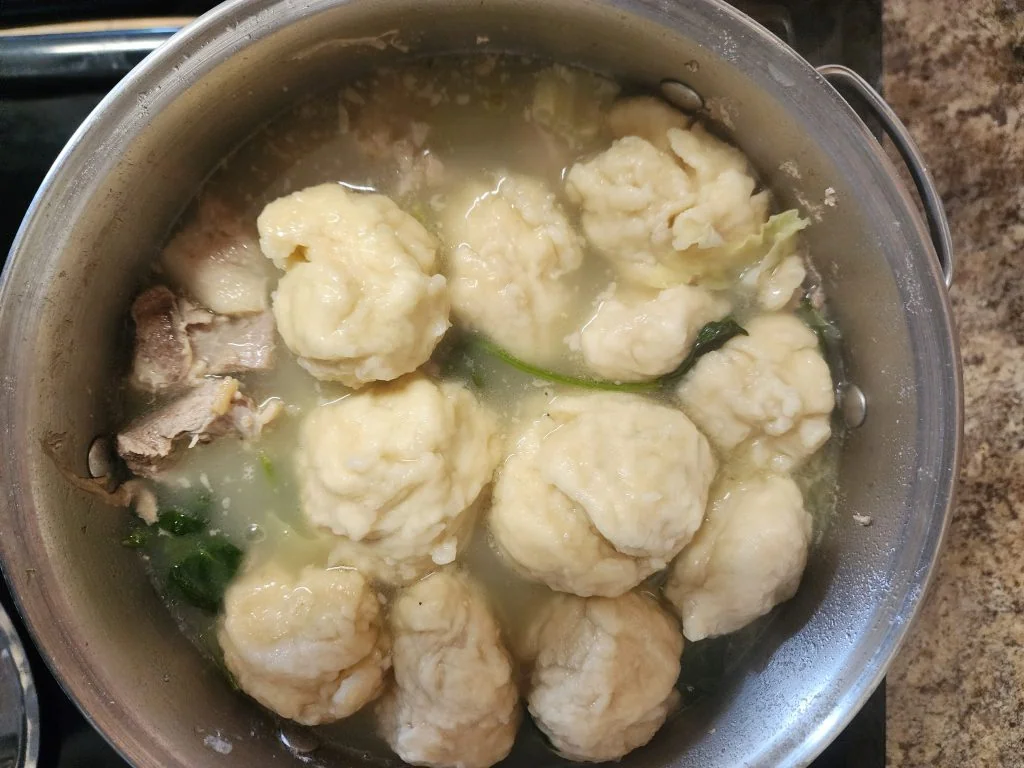
Doughboys (dumplings) – A family favorite!!
Recipe for Māori “Boil-up”
For whānau (family) of 6
Ingredients
- Pork: 1–2 packs of soft bone ribs, or any meat as mentioned above
- Potatoes: 6 to 8 small potatoes
- Cabbage: 1
- Kumara: 1 large or 2 medium
- Salt: to taste
Doughboys Ingredients
- 3 cups flour
- 3 tsp baking powder
- Dash of salt
Optional: You can substitute with self-rising flour, simply leaving out the baking powder.
Directions
Meat
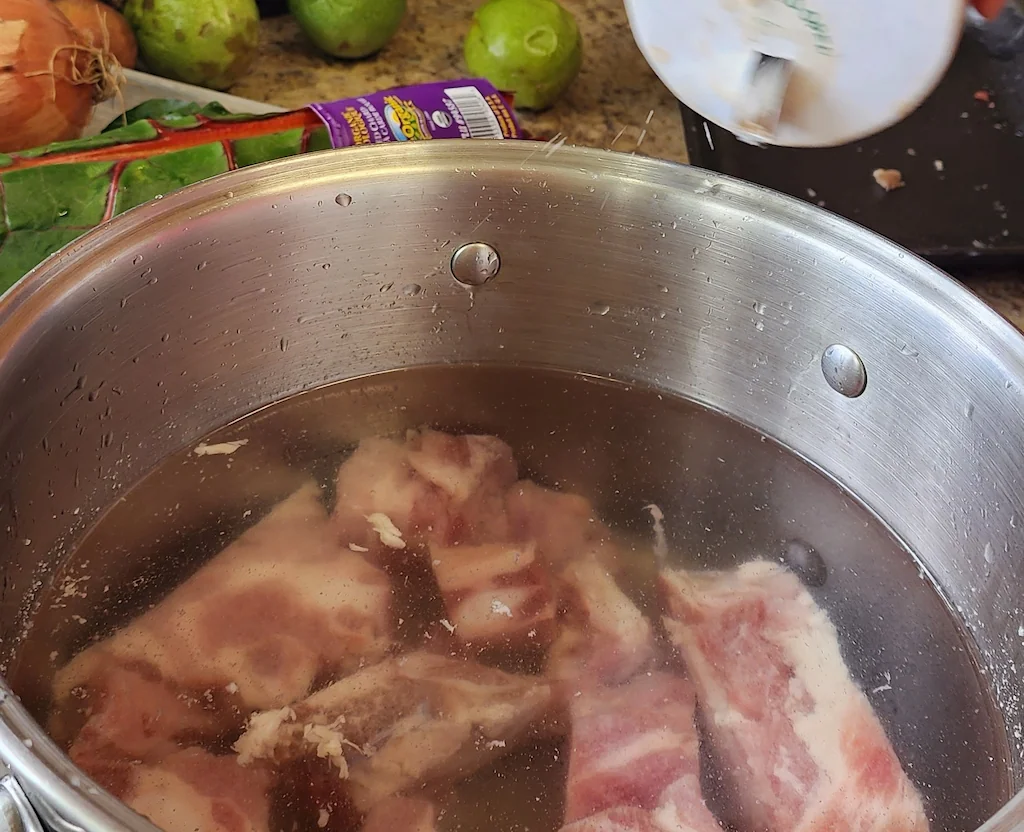
- Rinse and prepare your meat. If using pork bones, no preparation is needed. If using pork back ribs, cut into individual ribs. For pork butt, cut into chunks. For silverside or corned beef, leave whole.
- Slow cook your meat. Salt well (except the corned beef). Rahira likes her meat tender but still firm when cut, so 1½ to 2 hours is usually good. Other whānau prefer to slow cook for hours until the meat falls off the bone — personal preference applies.
Root Vegetables
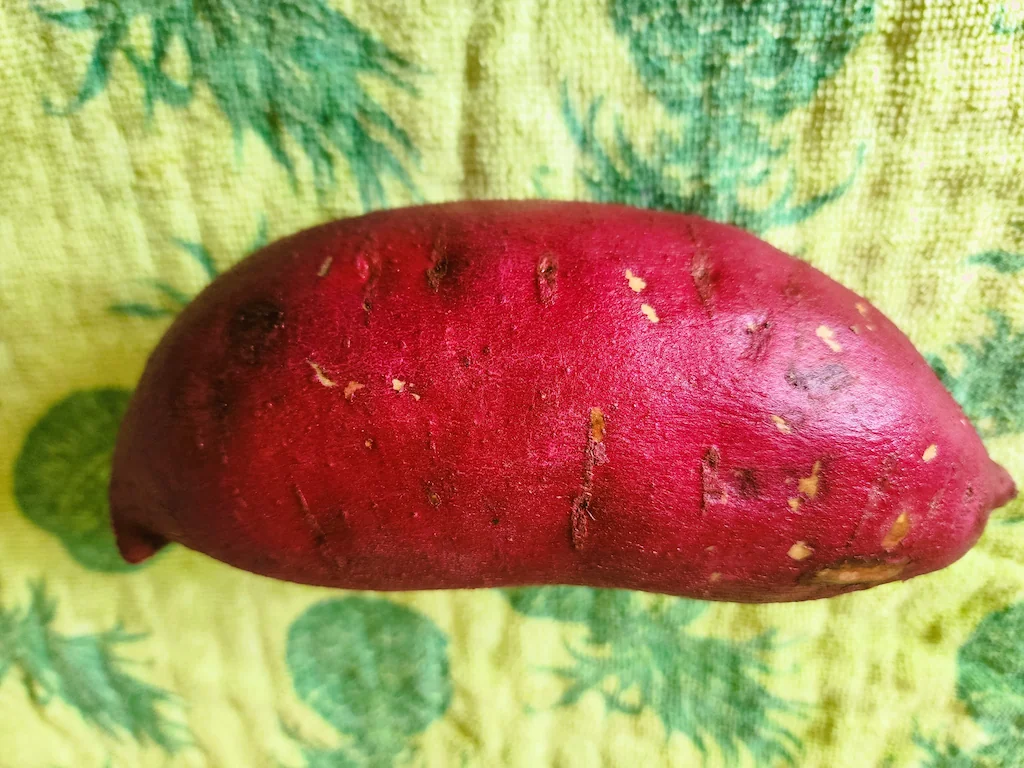
- Many whānau cook them together with the meat so the flavors fuse. Some cook them in a separate pot to avoid them getting mushy. Rahira does both. Try different methods to find what works for you.
Greens
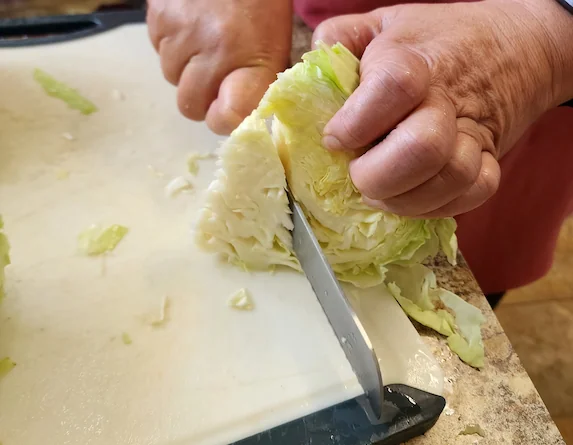
- About 20 to 30 minutes before the meat is done, add your greens first, then place your doughboys on top of the greens.
Like Rahira’s mum, sometimes the meat is taken out before adding the greens. This depends on pot size or if you don’t want the meat cooked further. The meat is returned once everything else is cooked. Again, do what works best for you.
Doughboys
- Add flour to a mixing bowl.
- Add water.
- Use a spoon to stir water into flour until it begins to form. Wash, dry, and flour your hands. Continue mixing with your hands until soft dough forms, being careful not to overmix. Add more flour if needed, but the less you handle it, the better.
- Squeeze dough between your thumb and forefinger to make small to medium size ‘dumplings’.
Finishing Up
When the doughboys are cooked, everything else will be cooked too. Turn your pot off.