








Polynesian Symbolism at PCC: Meaning, Origins & Cultural Insights
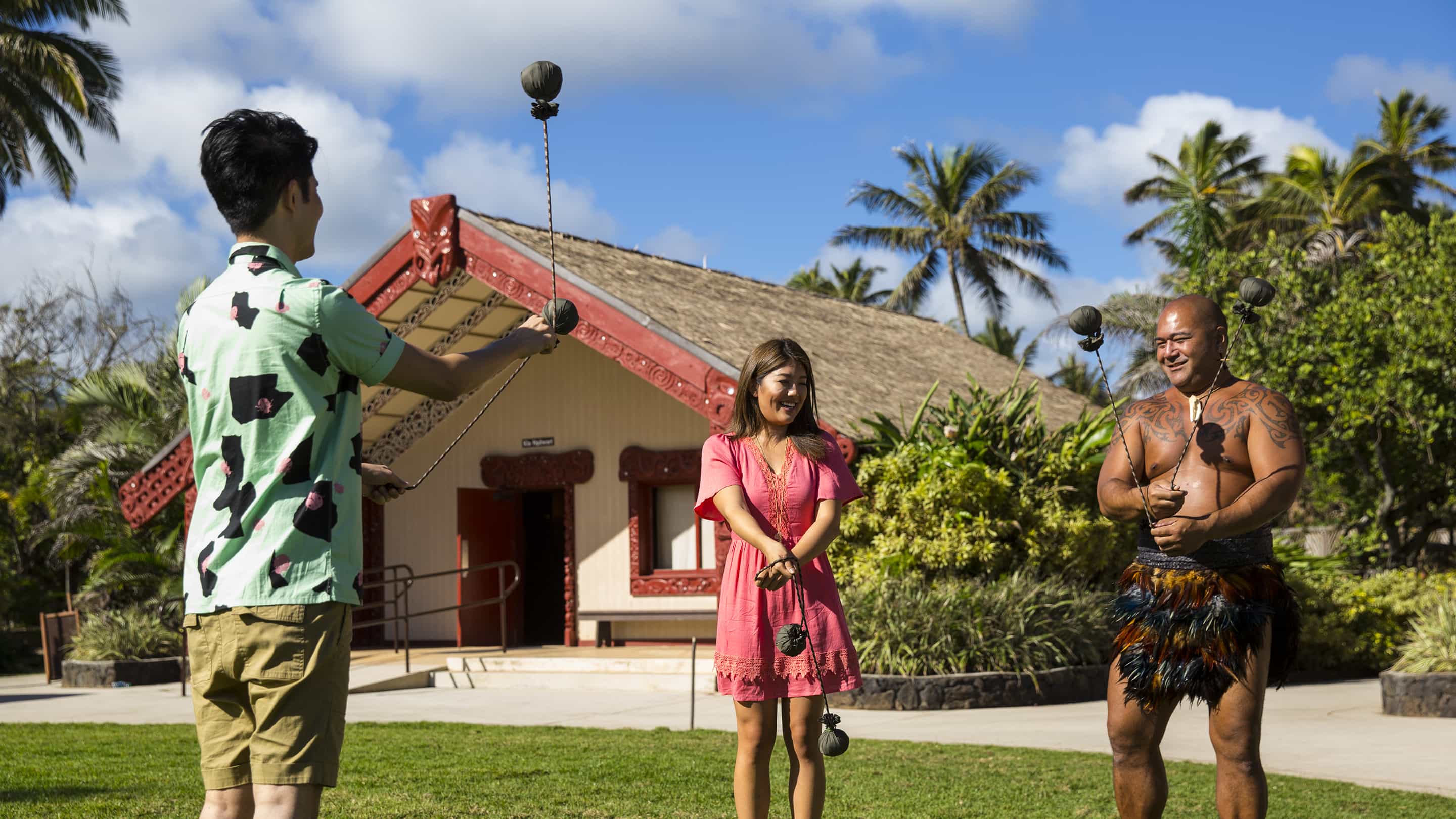
Polynesians use symbols to represent ideas, emotions, states of mind, phrases, movements, memories, loved ones, and much more. The symbols can be embodied in words, names, carvings, lei, designs, dance, music, and so on.
Hawaiians say many such representations have kaona, expressions with deeper meanings, concealed references, or innuendos. The kaona might be beautiful or romantic, others sarcastic or pejorative. Many might appreciate an island song for its surface meaning, not realizing that those who understand the kaona get a different meaning from the metaphorical words. Some kaona are very closely held by a few individuals or families, and others have faded into history, while still more are widely understood.
Buildings: Foundation Height Matters
There’s a prominent bit of physical symbolism at the Polynesian Cultural Center visitors see in several of the villages.
The higher a house’s foundation, the more prominent the person who lives there. All other traditional houses usually have minimal foundations or are at ground level.
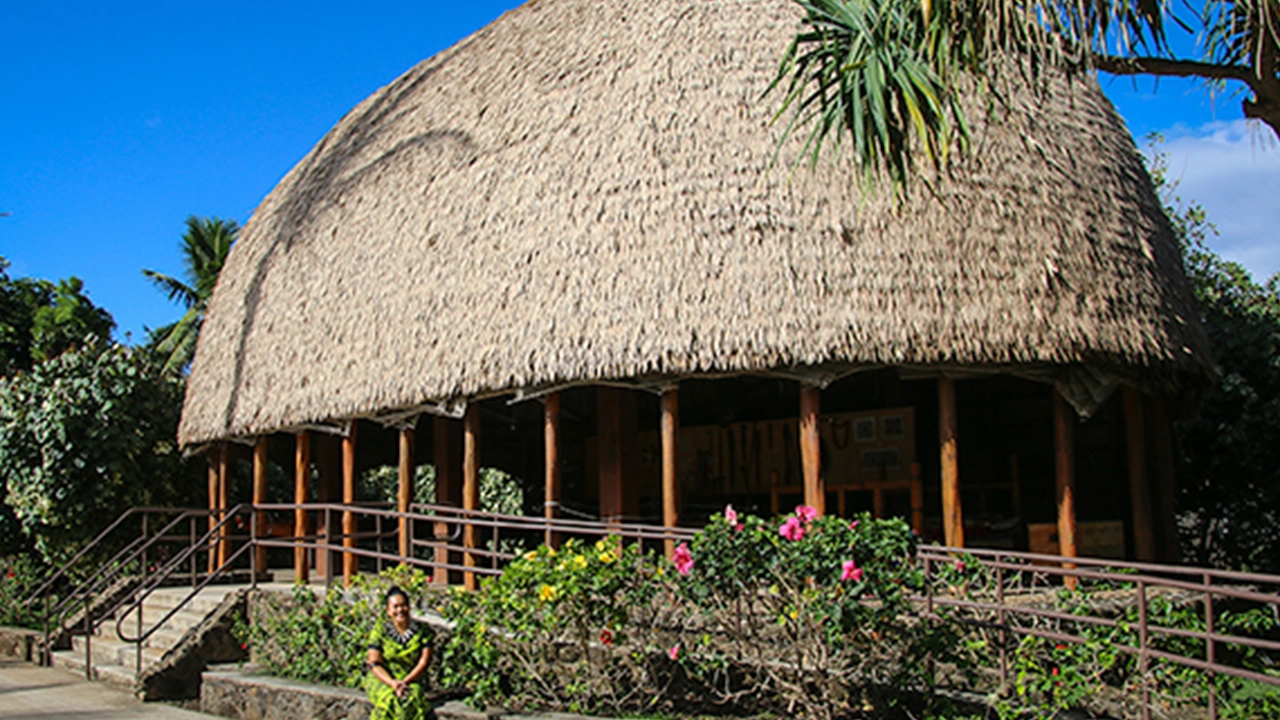
- The chief’s house in the Samoan Village: The maota aliʻi is built on a higher foundation than any other structure there, as befits the chief’s status.
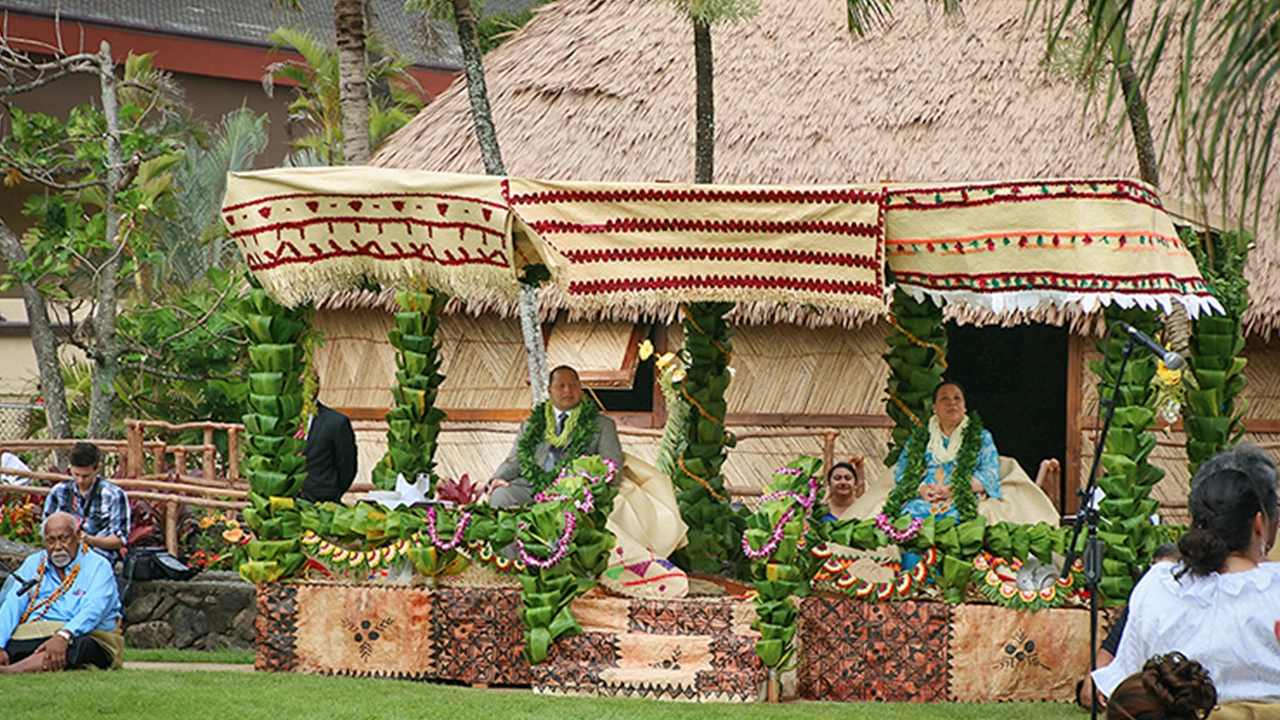
- The scale-model replica of Queen Salote’s summer palace in the Tongan Village: Its foundation also elevates the fale fakatuʻi above all the others.
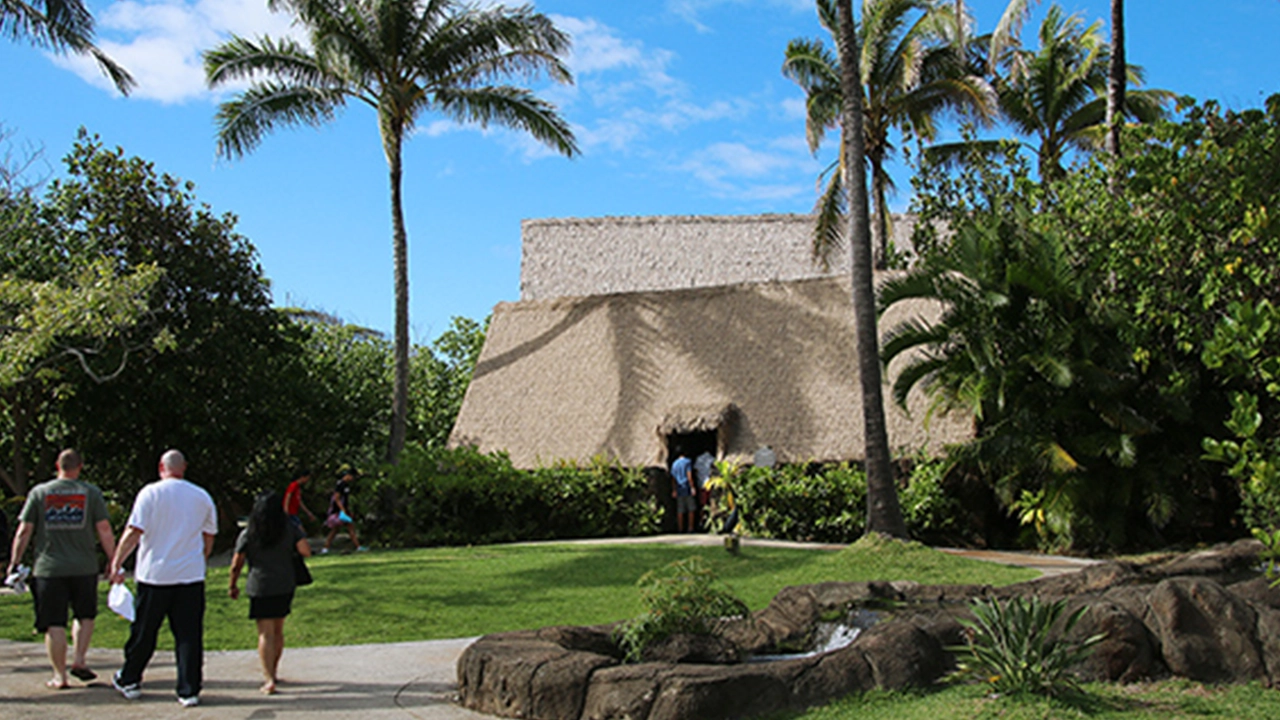
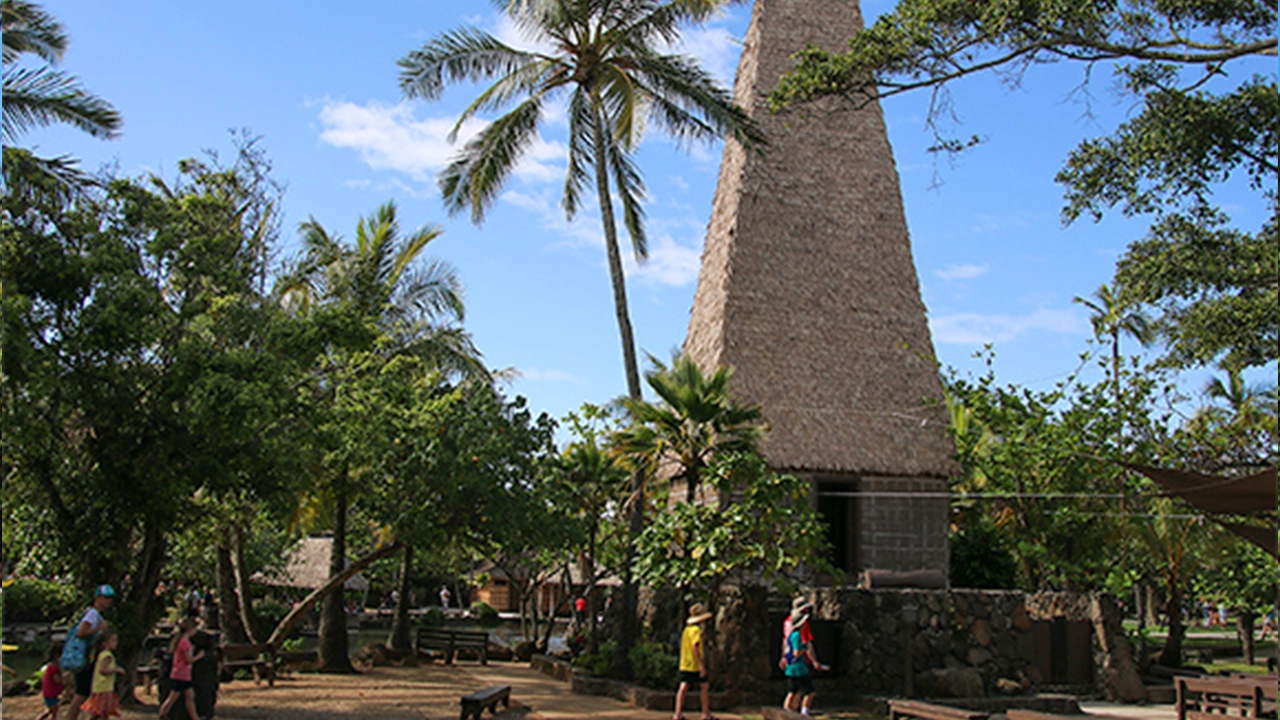
- When you look at the foundation of the hale aliʻi or chief’s house in the Hawaiian Village, it’s not particularly elevated in comparison to the other buildings; however, the entire structure is built on the highest point of the village. (The structure with the roof line showing behind the chief’s house is the halau waʻa; built tall to accommodate the BYU-Hawaii/PCC sailing canoe Iosepa.)
- And finally, while the chief’s house in the Fijian Village has distinctive differences from the other structures, it’s not particularly higher. That honor goes to the bure kalou or “spirit house,” which has the highest foundation in the entire Center.
Expressions of Love and Life in Polynesian Greetings
Polynesian greeting words are another good example of expressing deeper feelings than a casual English “hi” or “hello.” People around the world understand that aloha can mean hello or goodbye in Hawaiian, but the word literally means “love.”
The Samoan greeting, similar to Hawaiian, uses the compound word tā + alofa — tālofa — which literally means “you and I love” [each other]. Sometimes Hawaiians who speak Hawaiian greet each other this same way by saying aloha kāua, which means the same as the Samoan greeting.
Other Polynesians greet each other by wishing the other person “life,” or “good health” by extension. Māori greet each other with “live!” — kia ora [literally the imperative kia + ora meaning “life”]. Tahitians say almost exactly the same thing, ia orana.