








Toa O Samoa: Samoans in the Armed Forces
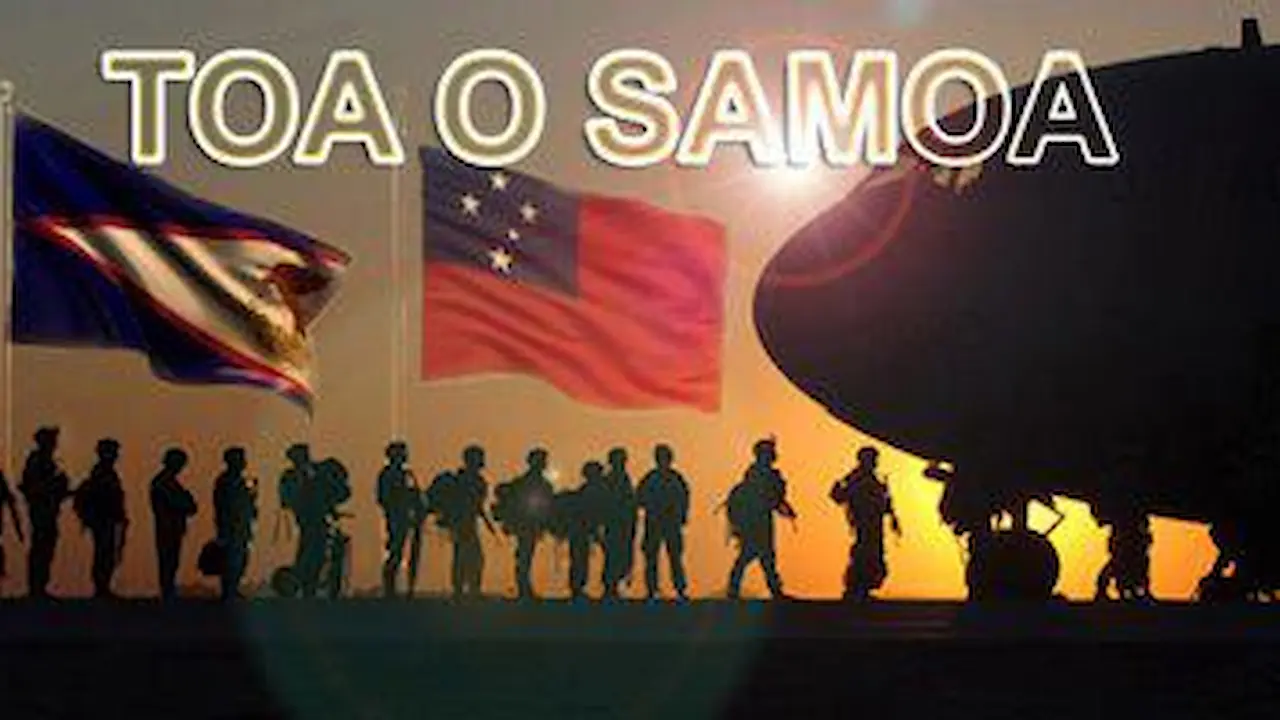
Guest Blogger J.M. Levi is half-Samoan (afatasi) and grew up in Missouri. We are pleased to feature her thoughts on Toa-o-Samoa – Samoans who serve in the military in honor of Memorial Day.
In 1872, Samoa agreed to allow the United States of America to build naval bases at Pago Pago, Tutuila, in return for military protection. (American Samoa became a territory of the United States in 1900.) Later, during World War II, males 14 years and older trained for the opportunity to serve in the U.S. Armed Forces. My grandpa, Atonio Fuimaono, served in WWII and was stationed at Wake Island in Hawaiʻi on the island of Oʻahu.
Although my grandpa did not die during his time of service, I still find myself thinking about him as Memorial Day approaches. Memorial Day is a day set aside to remember and honor those who died while serving in the United States Armed Forces, whereas Veterans’ Day is the day set aside to remember all veterans.
My grandpa died a veteran. He was able to come home and continue his life. But I find myself wondering how he came to serve. Was it something his parents encouraged, or did he enlist on his own accord? And what if he had died while serving? Would he have been surrounded by friends and loved ones as he was when he passed away at home? Or would he have been in a strange land surrounded by strangers?
Pieces of this make-believe scenario are unanswerable, but after talking with a friend and co-worker at the Polynesian Cultural Center, Chance Meredith, I know my grandpa would have been surrounded by friends and loved ones no matter where he died. The Samoan culture provides a natural brotherhood and sisterhood among those who are willing to accept their love and friendship regardless of ethnicity.
When I picture a military base, I imagine strict rules, punishments, and only enough energy to eat and train. It has always felt like a recipe for loneliness to me.
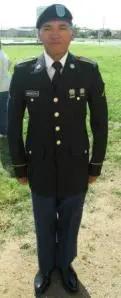
However, Meredith, who serves in the U.S. Army Reserves, tells me that while in military service, the bonds strengthen as Samoans and other Polynesians reminisce about their upbringings. He says they talk about how they overcame the odds and how they suffered to get to where they’re at. And it makes them appreciate what they have become, unifies them, and makes them fight for the same cause.
Unity within the ranks is an important factor for success and helps ease the sense of isolation for those serving. To emphasize the idea of unity and family when there are no blood relatives around, Meredith states, We get together as families when we’re off duty. That’s all we have when we’re off the clock. We usually all get together, play volleyball, and have a BBQ.
Although serving in the U.S. Armed Forces is not all fun and games, it is comforting to know that there is time to reflect, connect, and reminisce. As we concluded our conversation, Meredith said, We all know how Samoans run our families, so we run all of our families together so we don’t miss home as much, because we still need to be there to fight for freedom and gain for our families back home.
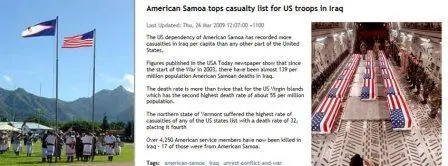
Even though Samoa is only a territory of the U.S., the patriotism of Samoan nationals is as strong as that of any American. In an article for the Samoa News, Aumua Amata said, Sadly, we have suffered disproportionately greater combat casualties than any other U.S. state or territory, but although I do not have statistics to prove it, I believe American Samoa also provides a disproportionate number of Army enlisted leaders as well.
Toa o Samoa means Warriors or Heroes of Samoa.
The Samoans serving in the U.S. Armed Forces welcome all their fellow soldiers into their circle. As long as there are Samoans (and other Polynesians) serving, others will always have a brother or sister for life. Your loved ones did not die alone, and those serving are not alone.
Thus, I understand that whether my grandpa died during service or not, he would have been surrounded by people who loved him and would have mourned his death. Sure, he would have missed home and his family, but his enlisted family would have been close. He would have known he was loved. He would not have been isolated because they would not have allowed it. That comes with the Samoan and Polynesian culture, I suppose.
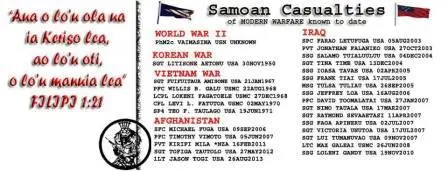
As we remember those who have given their lives in service for the freedom of the U.S., remember also that they were likely surrounded by friends and loved ones. We are still free in the U.S.; their deaths have not been in vain. Let us honor their sacrifice by making the most of our days right now. Tomorrow is not promised, but thanks to our brothers and sisters in service, we have our freedom today.
Faʻafetai tele lava loʻu aiga Milikeli. Thank you very much, my military family.
Sources and References