








Tongan Funerals & Weddings: Traditions, Meaning & Family Unity
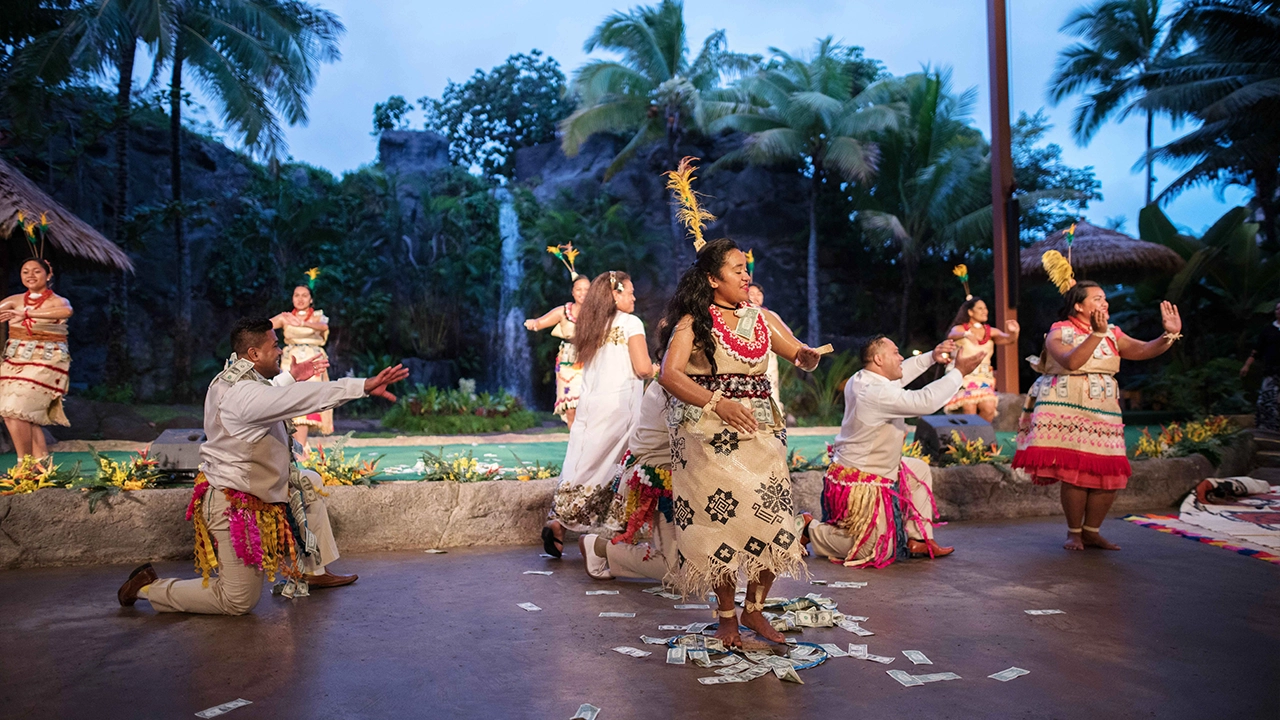
Photo provided by permission by the Sonatane and Lauren Falevai Family
As explained on the official website of the Kingdom of Tonga...”family is the central unit of Tongan life.”
“Tongan society is guided by four core values, all of which combine to ensure a generous and genuine welcome to visitors to the Kingdom; Fefaka’apa’apa’aki (mutual respect), Feveitokai’aki (sharing, cooperating and fulfilment of mutual obligations), Lototoo (humility and generosity), and Tauhi vaha’a (loyalty and commitment). Older persons command the most respect and each family member knows their role. A typical family unit may consist of adopted children, cousins and other distant relatives, alongside siblings and grandparents.”
“The two biggest occasions for Tongan families are weddings and funerals, both characterised by the giving of gifts including traditional tapa cloths and woven mats,” (from The Kingdom of Tonga website)
Responsibilities for weddings are divided up between the bride’s and groom’s families. In each family, the men take care of the food and the women take care of dowries and gifts. When family members meet together, they ceremoniously exchange gifts, which will be used for the wedding celebration. Women bring the tapas and mats, while the men reciprocate with pigs, yams and other food. The dowries are worn as a costume, or type of dress. The wedding couple is paraded around the village in a very festive celebration.
Photo provided by permission by the Sonatane and Lauren Falevai Family
Every bride dances for her husband and his family. As she performs, her husband joins in the dance. Her brothers also join in, but the husband is forefront. While the bride’s movements are polished and gentle, her husband’s movements are boisterous and rough, in order to highlight his wife’s grace and beauty.
Tongan funerals are also times of great respect and love. The type of mat worn, referred to as ta’ovala, indicates how one is related to the deceased. Someone wearing a colorful, finely woven mat to a funeral suggests they have high status. The highest status goes to the father’s oldest sister, called the Fahu. A younger brother would wear the dirtiest, worn-out mat.
Immediate family members might choose to wear worn or frayed ta’ovala to show respect and love for the deceased. They’re grief may also be represented in the size of the ta’ovala.
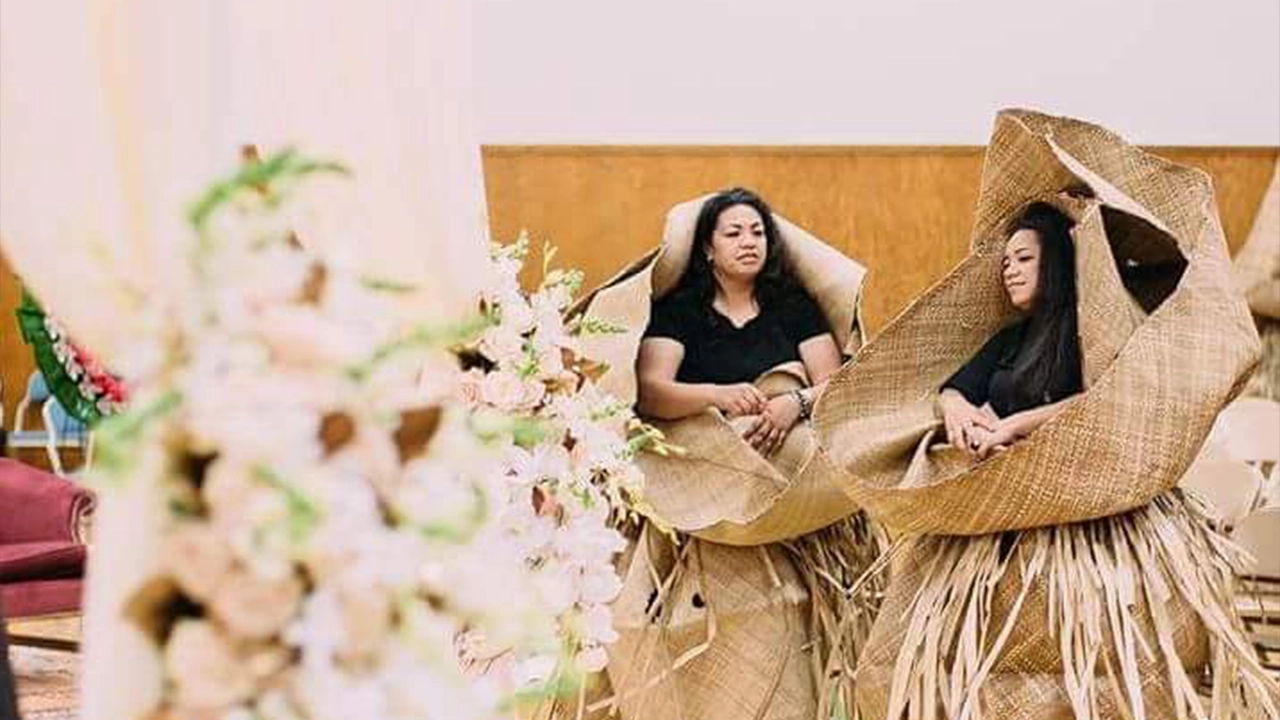
Photo provided by Telesia Tonga and the Afeaki Family
The late Queen Sālote Mafile‘o Pilolevu Tupou III of Tonga was a beloved ruler who emphasized family love and unity. She was also a renowned poet. The following tender verses were written after the death of her beloved husband, Viliami Tungī Mailefihi.
‘Oketi
Gone is that dear dawn
To which, as wings, clung my remembrances
Of the orchid, the bloom of the dew,
(Which I) Adorn till the end of time
This body has become a thing of no worth
Overcome by all-conquering love
For your image of precious stones
I will string them for my garland
The shade of evening beckons
To which I direct my lamentations
If the magnitude were only known
Of the love (I bear) for the bouquet of langakali
Alas that this body, sweet enticement to gossip
Is only poison to your mission
Yet do you not see, Gladiola
This love of mine may never end.