








Kampachi: Hawaiʻi’s Yellowtail Fish Recipe
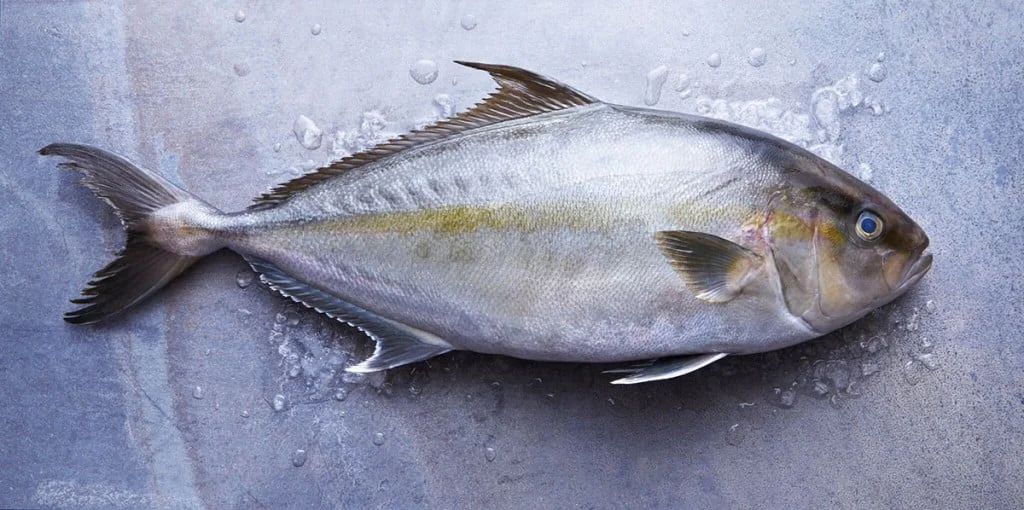
Hawaiian Kampachi/Kanpachi, also known as Almaco Jack (Seriola rivoliana), is prized by chefs for both sushi and cuisine due to its extremely high fat content and rich white flesh. The fish is marked by a dark blue-green upper body with a lavender-tinted belly and elongated fins.
Quote from todaysfarmedfish.org
Today’s recipe comes from our Hawaiian shores. Braxton Davis, former line chef with the Polynesian Cultural Center, gives us insight on how to prepare Kampachi perfectly.
What is Kampachi?
Kampachi is considered one of Hawaii’s delicacies. It contains a higher fat content than lots of other fish as well as a flesh that absorbs flavor far better than any other species of fish. Kampachi is popular in many Japanese, Malaysian, and Hawaiian dishes. Each dish is prepared a little differently depending on the region and culture.
How is Kampachi traditionally prepared?
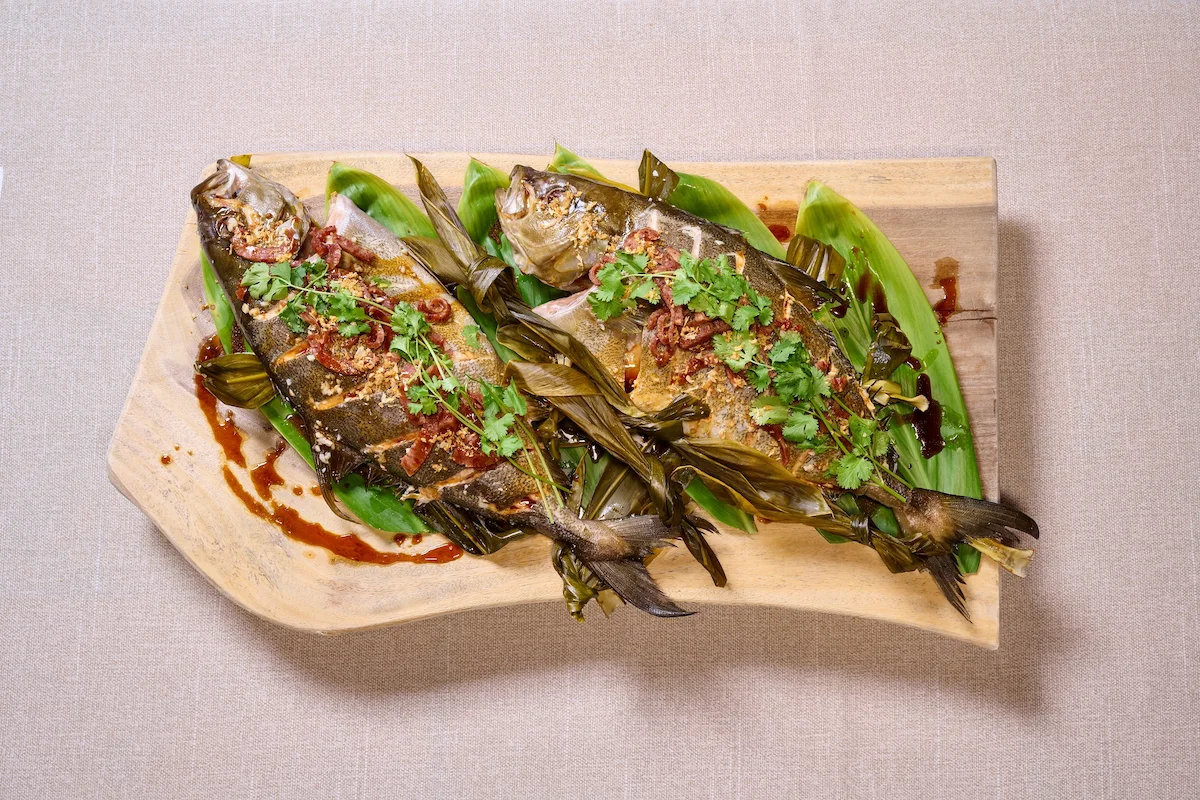
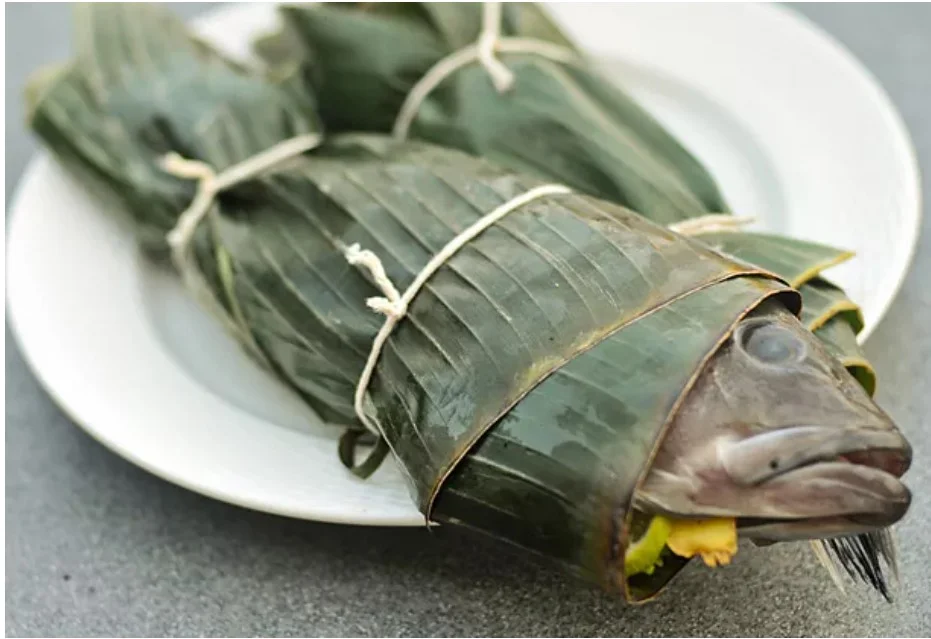
The popular Grilled Kampachi that you will find at the Polynesian Cultural Center and around the Islands of Hawaiʻi contains a mixture of ingredients from vegetables to various spices. The fish is wrapped in a banana leaf, which helps to keep it moist and to add flavor.
How does the Polynesian Cultural Center honor this tradition?
There’s no doubt that Hawaiian cuisine has its own differences and specialties, and that’s what makes Kampachi such a diverse and interesting plate. Here at the Center, our seafood is fresh from the Pacific, the banana leaves are chopped straight from our onsite farm, and the dish is grilled traditionally to honor the culture found in Hawaiian cuisine. In this dish, the fish is cooked with all of the ingredients mixed in to achieve that rich flavor that the guests of the Center have come to love.
Where can I try Kampachi?
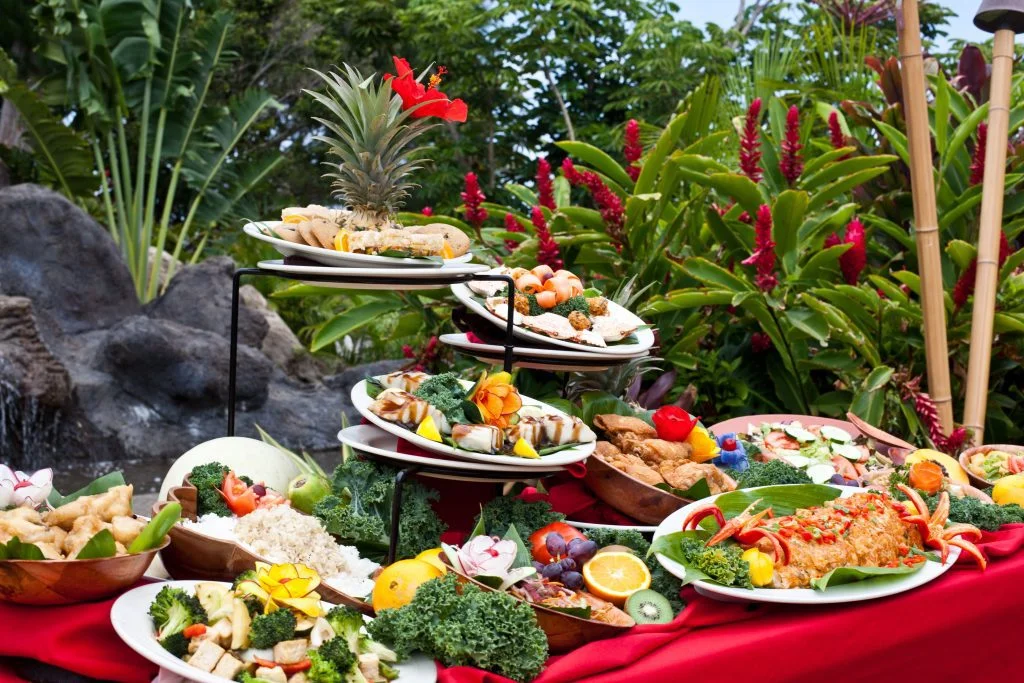
Kampachi is found all throughout the islands of Hawaiʻi as well as several Asian countries. You will discover that the grilled Kampachi found at the Center’s Aliʻi Lūʻau Buffet and Gateway Buffet is by far one of the best.
The attention to preserving the culture, flavor, and love that comes from Hawaii is what gives the Kampachi the best flavor on the island. Many restaurants will mass-produce food for tourists to feel like they are eating authentic food. But the Center doesn’t tolerate that.
After spending several months perfecting the cuisine, I learned how important it is to prepare Kampachi with care and respect. When you try Kampachi, you are partaking in Hawaiian culture. We at the Polynesian Cultural Center consider it an honor and a duty to make sure that our preparation is consistent and exact.
How can I replicate this recipe at home?
If you’re interested in trying to make grilled Kampachi on your own, here is the recipe I’ve used to provide thousands of guests with the best taste of seafood the island has to offer.
Hawaiian Kampachi Recipe
NOTE: Measurements are approximate and should be based on the size of the fish. Make sure that the amounts are generous and the products are fresh.
Ingredients
- ¼ cup chopped ginger
- ¼ cup chopped garlic
- ¼ cup chopped red onion
- 1 banana leaf per fish (ti leaves or aluminum foil may be used as substitutes)
- 1 tsp saimin soup base
- ½ tbsp fried shallots
- 10 kalamansi (or substitute limes or lemons)
- 1 tbsp lime leaf (optional)
- 1 tbsp fish sauce
Directions
Preparation
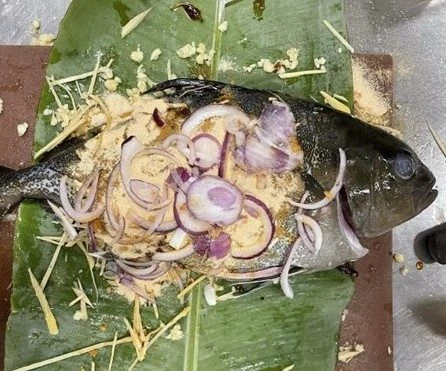
- Gut and clean the whole fish. NOTE: It is not traditionally trimmed, beheaded or scaled, which helps to maintain the flavor and consistency of this popular fish.
- Split the banana leaf and set it under the fish (this is used to wrap the fish).
- Cut the fish four ways down vertically and four ways horizontally.
- Stick the chopped ginger and garlic inside the cuts of the fish.
- Apply the saimin base and the fish sauce on top of the fish.
- Sprinkle the red onions on top of all of those ingredients and the fish.
- Wrap the banana leaf around the fish. Optional: secure with butcher's twine.
- If your fish is large, layer banana leaves so that they have a decent amount of overlap until you have enough to fully wrap the fish.
Cooking
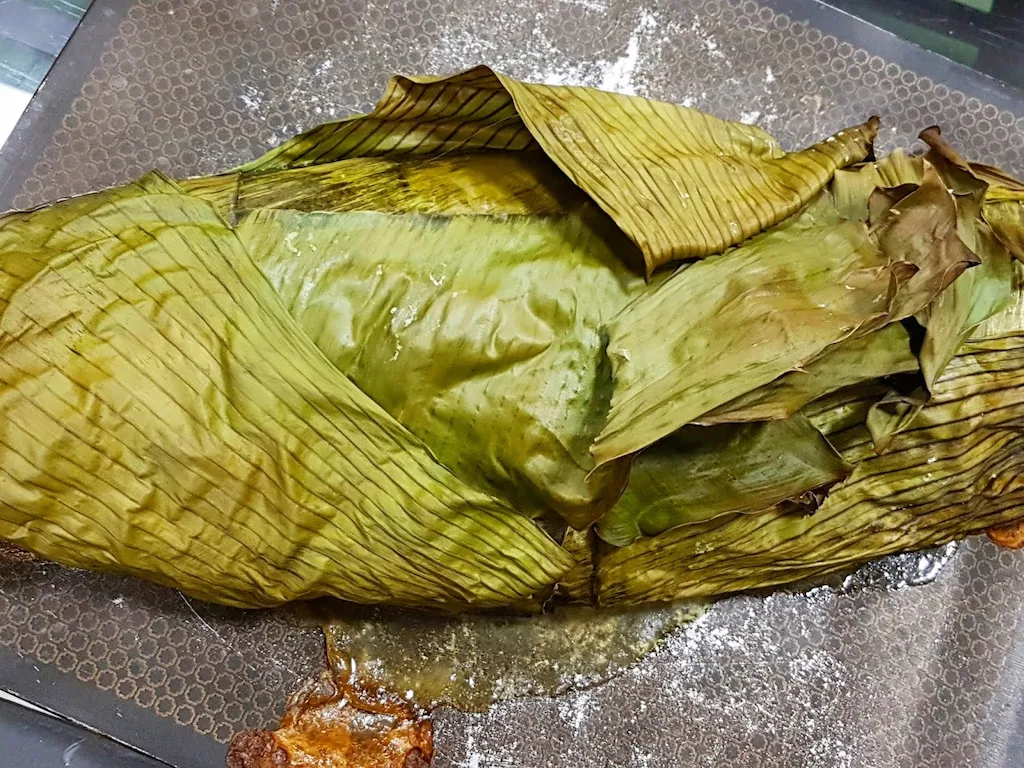
- At the Polynesian Cultural Center, the wrapped fish is quickly grilled on each side to lightly brown the leaves for presentation purposes.
- Place your fish on a baking sheet and cook in a 350°F (177°C) oven. Watch carefully. The important part is to not overcook it. The best way to accomplish this is by using a meat thermometer. You want the fish to reach between 145°F – 160°F (the Polynesian Cultural Center finds 145°F preferable).
- Unwrap and serve immediately.