








Sharing Loloma in the Fiji Village
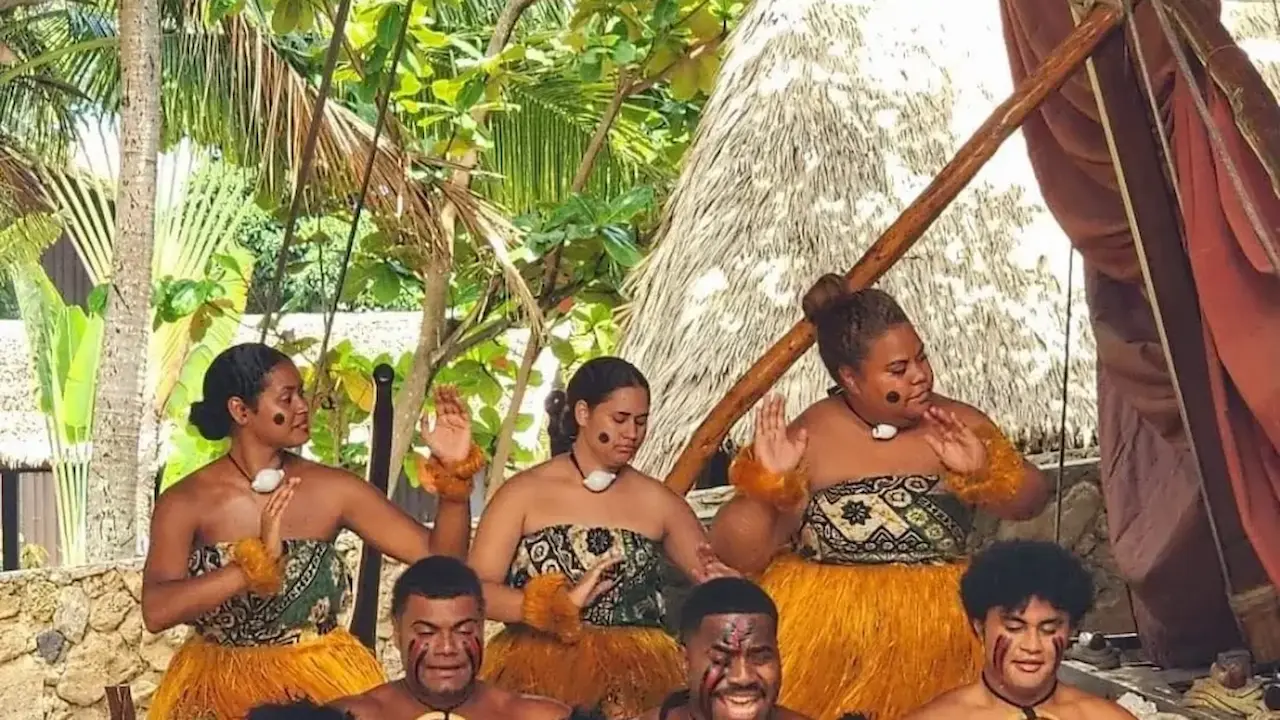
When one thinks of Fiji, the image of beautiful weather, lush jungle foliage, and stunning ocean often comes to mind. This vibrant country consists of more than 330 islands, 110 of which are permanently inhabited and rich in natural resources.
Among the rich natural beauty of Fiji lies the true heart of the country, the people. One of the most beautiful aspects of Fijian culture is the practice of sharing loloma (love) with others. This custom is also evident here in the Fiji Village at the Polynesian Cultural Center.
At the Center, students get to share their history, traditions, and living culture with visitors from around the world. Fane Koi from Suva, Fiji, a student who attends Brigham Young University–Hawaiʻi, is a wonderful example of sharing loloma at the Center’s Fiji Village.
Growing Up in Fiji
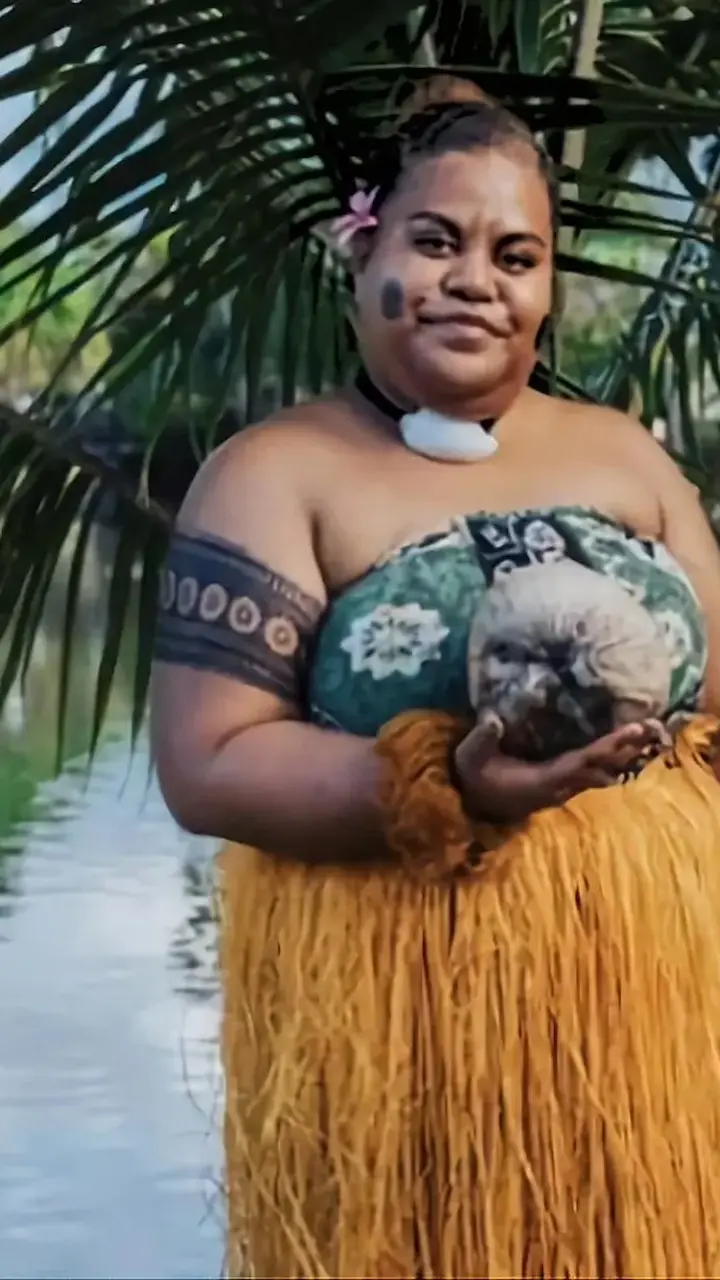
Fane is from the main capital city of Suva in the Pacific island nation of Fiji. She grew up moving around the capital.
Fane shares, Home to me is not the place, but the people. My family moves around the capital of Fiji a lot, so as long as we have made friends within our community, we are basically family.
I was the only sibling not raised at home. My aunt and my uncle’s family raised me. I grew up on a large piece of land, about the size of Lāʻie, which has been in the family for generations.
Sharing Stories is a Tradition
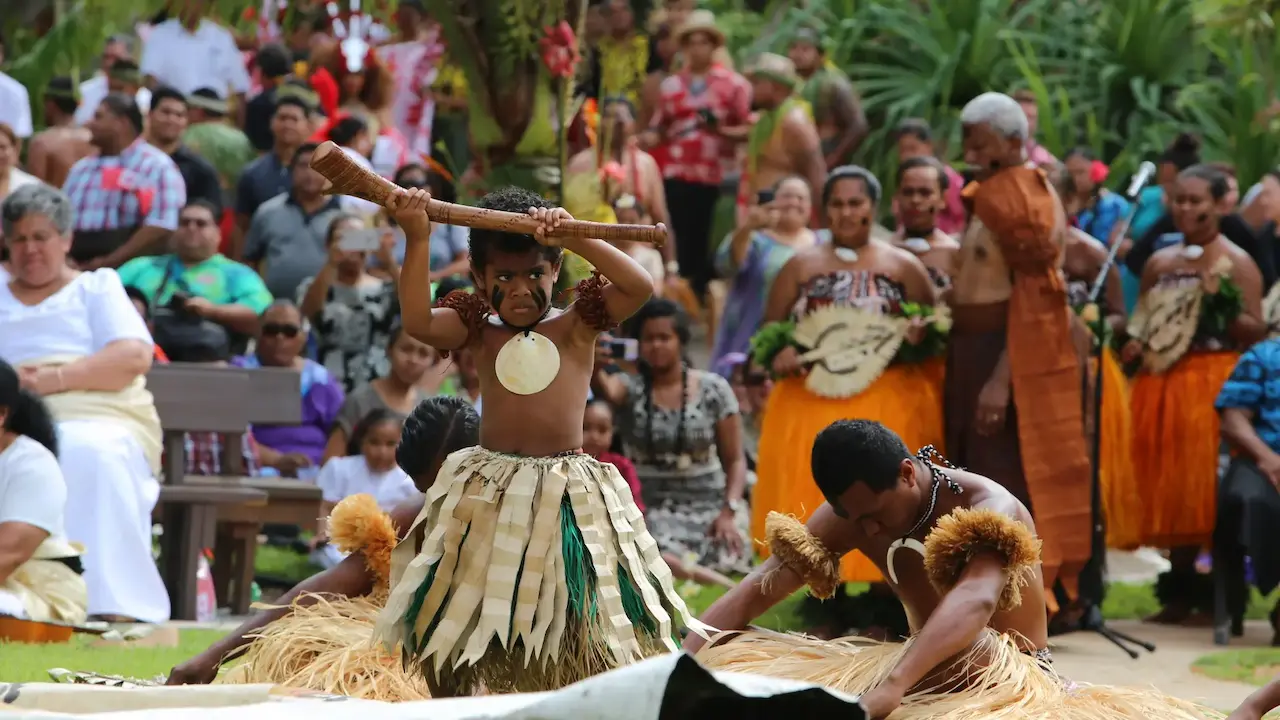
Stories are an integral part of Fijian culture. They can serve many purposes, including preserving family genealogy and traditions or teaching important lessons to the younger generation.
Fane explains, My grandparents would tell stories of things like the past, traditions, and cultures. My grandma was raised in a village and deeply rooted in her Fijian culture; she was the primary storyteller in our family.
I want to continue to share the same stories my grandma shared. She repeats the same stories many times, but I plan on switching up small parts to keep my future kids interested!
Language Connects Generations
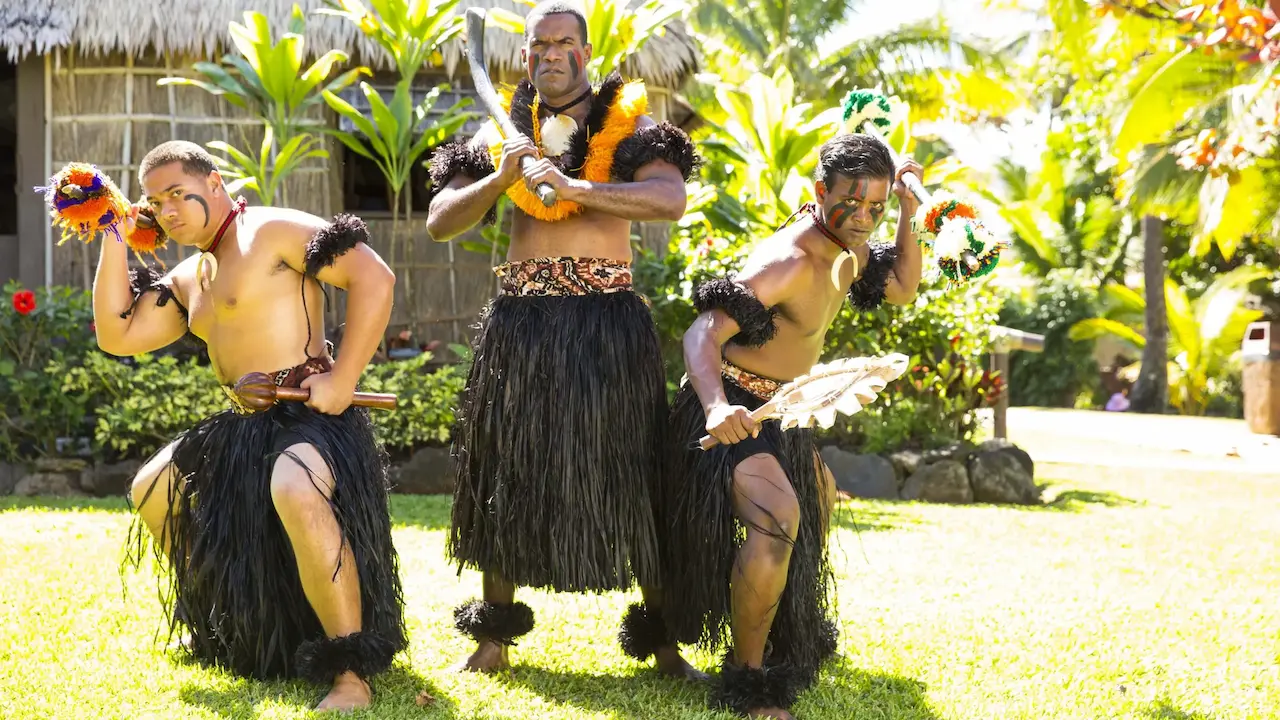
Before the arrival of European explorers, oral tradition was used to share important events, genealogies, and history. Even today, genealogies are kept and shared orally. Many of the young children are taught their bloodlines and can recite their family members’ names.
Fane shares, Language is a form of identity. It not only identifies who we are and shows us a glimpse of who our ancestors are and what they did. I have found that there are some similarities between other Polynesian cultures which shows that our ancestors met and there was a form of cultural exchange. We are more connected than I realized.
Traditions in the Fiji Village
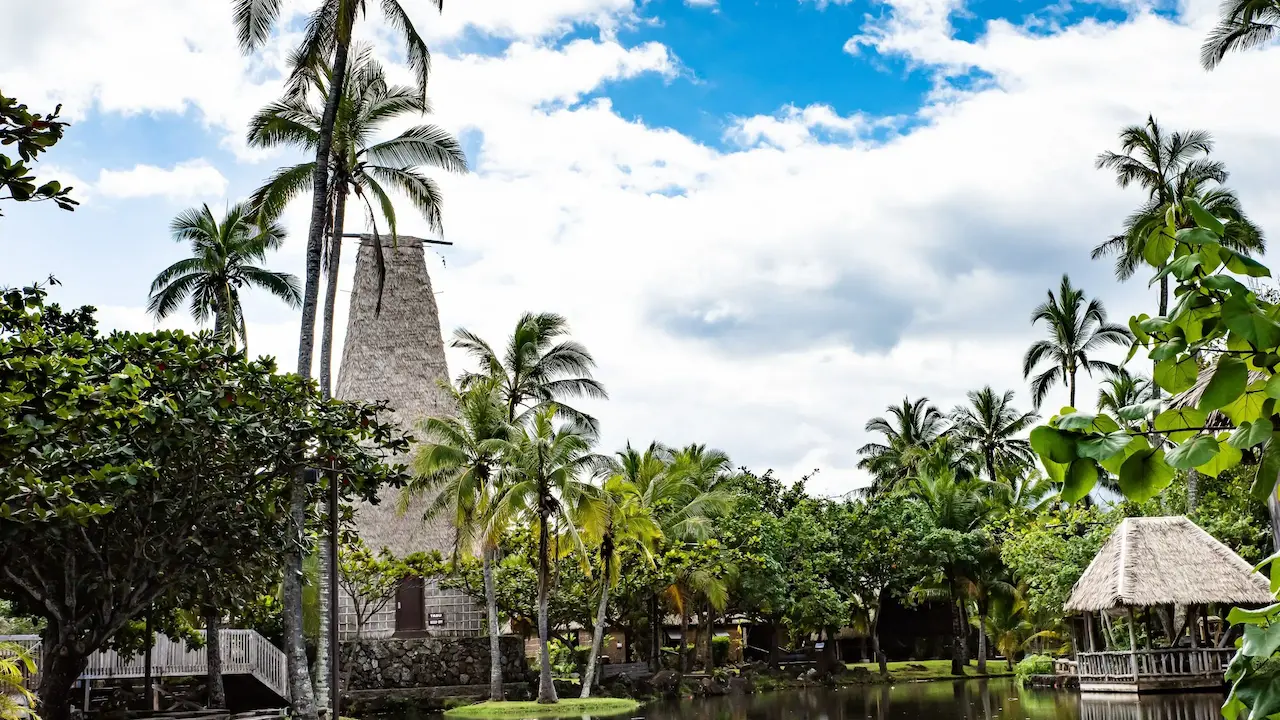
There is so much to explore in the Fiji Village at the Center. Fane has worked there for a year, along with other students who are eager to share their culture, language, and traditions with visitors from around the world.
Working in the Fiji Village has been home. It’s like living in Fiji where the relationship is like a family even if you aren’t related,
Fane explains.
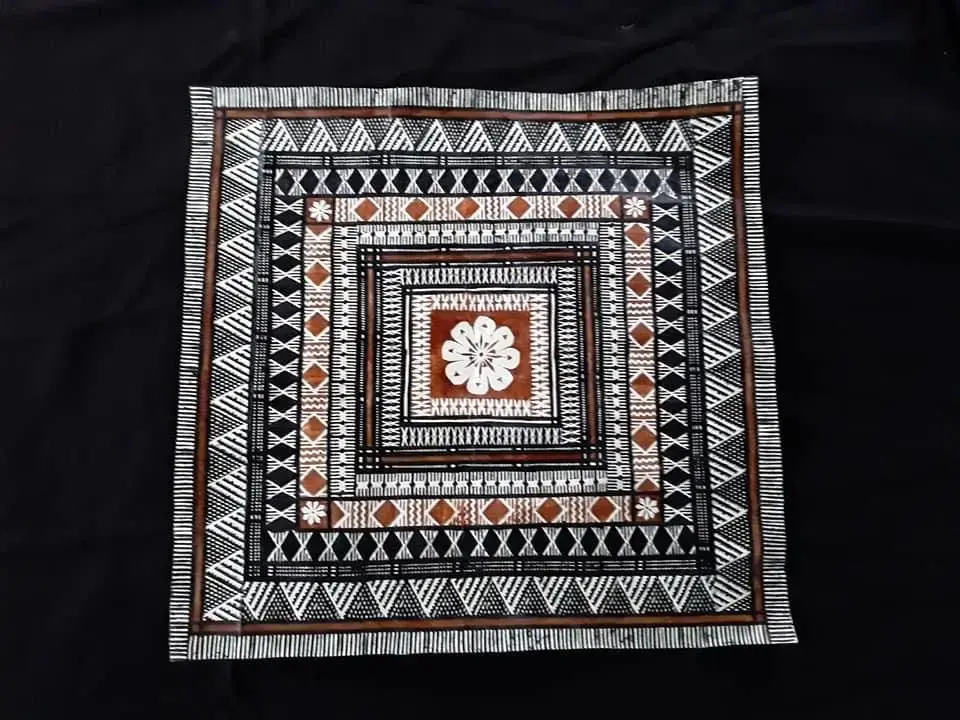
Fane’s favorite part to share in the village is the beautiful Masi (tapa cloth). Masi is made from the bark of the mulberry tree, which is stripped from the stem, soaked, and beaten with a mallet into sheets. They can then be decorated with symbolic patterns using natural dyes.
The patterns on the Masi are similar to tattoo patterns; this is a way that our ancestors share their story. There are some patterns on the Masi that identify the area or region you come from.
Learn more about all you can discover in the Fiji Village at the Polynesian Cultural Center.
Creating a Legacy
Just like Fane, many students from the Asia-Pacific region have the opportunity to study and gain their education at Brigham Young University–Hawaii through a program called I-Work. The Center was built so students can work, and the earnings go directly towards their tuition, housing, and meal plans.
As a Hospitality and Tourism Management major, Fane has been actively learning how she can pioneer sustainable tourism in her home country.
I come from a place where it is a privilege to work and attend school. Being able to both work and earn an education is a blessing. We are grateful because the school and the Center have looked after us.
Working at the village has allowed her to stay connected to her culture and continue to share her loloma from her home country with others.
About the Author:
Brooklyn MacDonald, born and raised in Canada, now calls the bright town of Lā‘ie home. You’ll find her reading, visiting, and learning all about culturally historic sites wherever she goes. Her hobbies include collecting shells, swimming, traveling to experience new foods and cultures, and musicals. Her blogs highlight the dynamic heritage, culture, and traditions of Polynesia. It is a privilege to share Polynesia’s living culture with others.