








King Kalākaua: The Merrie Monarch Who Revived Hawaiian Culture
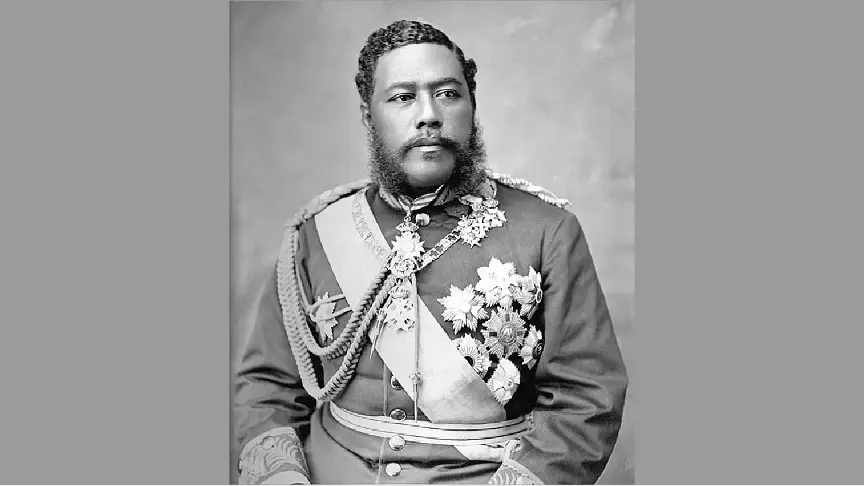
Whenever anyone hears the phrase “Merrie Monarch”, they may think of the hula competition held in Hawai'i every year.
The reason for the hula competition's title is because of King David Laʻamea Kalākaua, born November 16, 1836, whose joyful spirit and appreciation for music, culture, and celebration earned him the nickname “Merrie Monarch.”
Who was King Kalākaua and how did he get this happy nickname? His legacy lives on today beyond the Hawaiian islands, sharing love and aloha to all those who choose to experience the culture King Kalākaua preserved through his life.
The Beginnings of King Kalākaua
Kalākaua was born into the Hawaiian nobility and received his early education on O'ahu at the Chiefs' Children School, later renamed the Royal School. Every student there was considered eligible for the throne of the Kingdom of Hawai'i. Kalākaua studied alongside his royal cousins and several future monarchs under the American missionaries Amos Starr Cooke and his wife, Juliette, and the students grew up fluent in both English and Hawaiian.
As a boy, Kalākaua was sturdy, quick-witted, and strong-willed, and he was known for protecting his older brother, Kaliokalani, from the other boys. After completing his formal schooling, he studied law under Charles Harris, who would later become Chief Justice of the Supreme Court of Hawai'i.
Military Service Before the Crown
Kalākaua received top-notch military training and was appointed aide-de-camp and brevet captain by Prince Lot (the future Kamehameha IV). He rose quickly through the ranks until he became colonel in 1858.
He became a personal associate and friend of Prince Lot, the future Kamehameha V, who promoted the mission of "Hawai'i of Hawaiians".
Kalākaua traveled with Prince Lot to British Columbia and California, and worked his way through various positions including member of the Privy Council of State and the House of Nobles (the upper house of the Kingdom's legislature), Chief Clerk of the Department of the Interior, Postmaster General and King's Chamberlain.
After resigning to finish his law studies, he was hired as a clerk in the Land Office and later named a Knight Companion of the Royal Order of Kamehameha I.
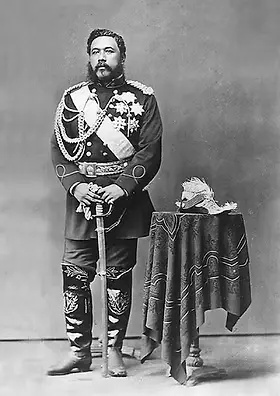
Mark Twain, working as a traveling reporter for the Sacramento Daily Union, visited Hawai'i in 1866 during the reign of Kamehameha V. He noted:
"Hon. David [Kalākaua], who at present holds the office of King's Chamberlain, is a man of fine presence, is an educated gentleman and a man of good abilities. He is approaching forty, I should judge - is thirty-five, at any rate.
He is conservative, politic and calculating, makes little display, and does not talk much in the legislature. He is a quiet, dignified, sensible man, and would do no discredit to the kingly office.
The King has power to appoint his successor. If he does such a thing, his choice will probably fall on [Kalākaua]."
Kalākaua and Kapiʻolani: A Royal Marriage
Kalākaua fell in love with Kapiʻolani, the young widow of Bennett Nāmākehā, who was the uncle of Queen Emma, wife of Kamehameha IV. Kapi'olani was Queen Emma's lady-in-waiting, a descendant of King Kaumuali'i of Kaua'i, and the nurse and caretakwer of Prince Albert Edward Kamehameha.
They married on December 19th, 1863 in a quiet ceremony conducted by a minister of the Anglican Church of Hawai’i. Because the wedding fell during the mourning period for King Kamehameha IV, it was criticized.
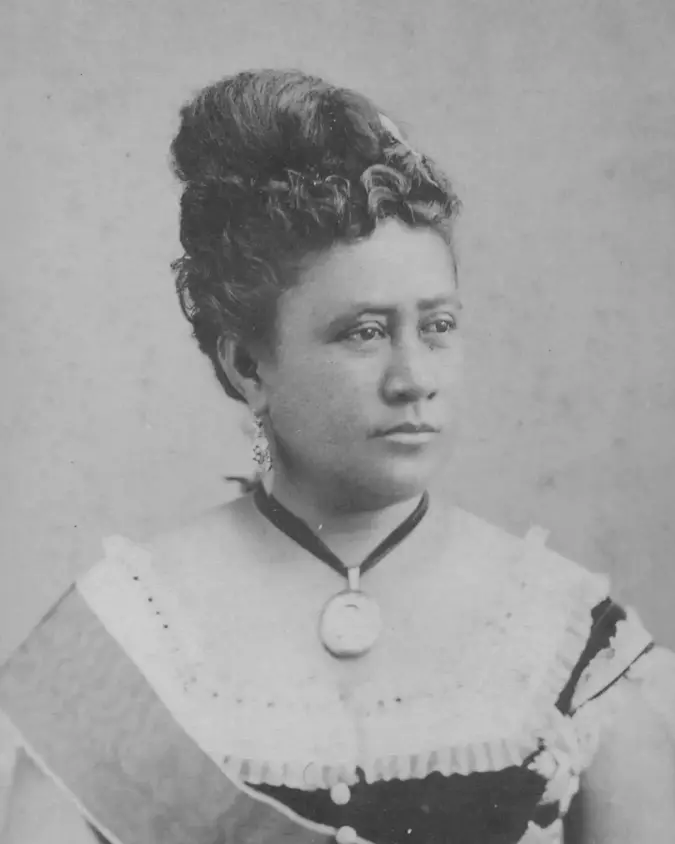
The couple never had children but became legal guardians of three boys the sons of Kapi'olani's sister Kekaulike, who were eventually given the titles of prince.
Kalākaua, the son of a high chief, was a candidate for the throne in 1873 but lost to Lunalilo by a landslide. Lunalilo died the following year and Kalākaua was then elected by the legislature. He maintained a pro-American policy and visited the U.S. mainland during his trip around the world.
He was a strong advocate of the native Hawaiian culture and endeavored to restore the ancient Hawaiian social order with all its customs and ideas of centralized power and divine sanction.
Why Was Kalākaua Called the Merrie Monarch?
Before Kalākaua's reign, hula had been banned after missionaries persuaded the Hawaiian monarchy that it was a pagan practice. Determined to restore pride in Hawaiian culture, King Kalākaua championed the revival of traditional arts, medicine, music, and especially hula.
He lived extravagantly, oversaw the rebuilding and expansion of ʻIolani Palace, and promoted a renewed appreciation for all things Hawaiian. His dedication to celebrating Hawaiian culture earned him the nickname "The Merrie Monarch."
The Merrie Monarch Festival, which honors him and his patronage of the arts, is held annually in Hilo, Hawai'i the week after Easter and draws hula schools from around the world.
Kalākaua died on January 20, 1891, while on a visit to the United States.
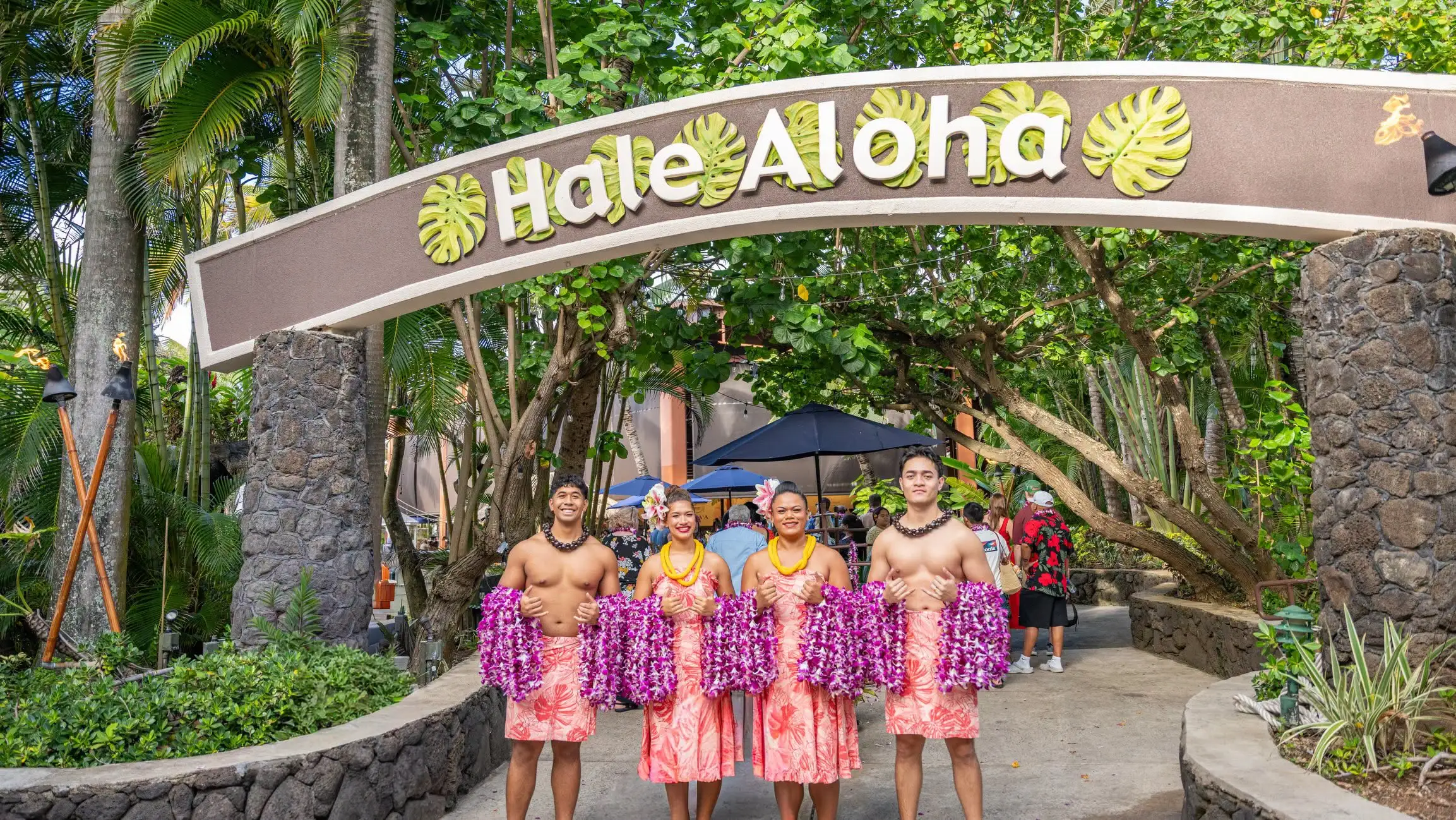
Experience the Culture of the Merrie Monarch
Visit the Hawai'i Village at the Polynesian Cultural Center to experience King Kalākaua's love of the Hawaiian culture through live cultural presentations.
As well as live performances, the award-winning Ali'i Lu'au gives you an immersive lu'au journey to explore the state's culture that King Kalākaua helped revive.