








The Origins of ‘Ori Tahiti
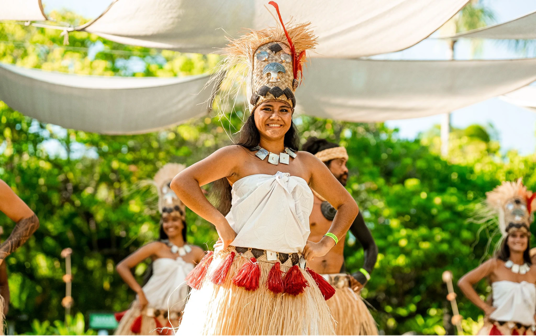
The beautiful islands of Tahiti, located in French Polynesia, are well known for their unique and lively entertainment. Tahitian dancing is referred to as ‘Ori Tahiti and is famous for their fast-moving hips and energy.
At the Polynesian Cultural Center, there are multiple live presentations of ‘Ori Tahiti that you can experience the love Tahitians have for their culture and heritage, their ancestors, and for anyone willing to be a part of their family.
The Legend of Arioi and Beginning of ‘Ori Tahiti
Entertainment became a tradition in Tahiti, originating from an ancient and special group of performers in French Polynesia called the “Arioi”. They sailed island to island on double-hulled canoes and would perform shows from vibrant traditional dancing to pantomime dramas.
The Arioi’s focus was to praise and honor the Tahitian god ‘Oro, who was known as the god of war, but at a time of peace, was a deity of agriculture and fertility.
‘Ori Tahiti is now used to honor the legacies of ancestors and the courageous people who came before.
Traditional Tahitian Costume Making
Traditional Tahitian dancing skirts are not made of grass, as they are commonly mistaken to be. It is actually made of the inner fiber of fau, or wild hibiscus trees.
Women would strip off the outer bark of the fau, soak the rest of the branch in water, strip off the inner bark, and let it dry in the sun. Then, they would shred the bark and bundle it into strips and tie multiple strips onto a waistband.
This added weight to the skirts, and they typically weighed around seven to eight pounds. Dancers believed the heavier the skirts, the better it would sway and emphasize their fast-shaking hips. The weight also helped to keep the skirt tightly fastened to the dancer's hips and prevent it from slipping during their powerful dances.
Instruments Used in ‘Ori Tahiti
Many Tahitian instruments contribute to the music of ‘Ori Tahiti. One of them is the Tahitian banjo or ukulele, which is an eight-string instrument that doesn’t have a hole at the front but at the back, differing from a regular guitar or Hawaiian ukulele. It is strummed quickly and has a higher pitch.
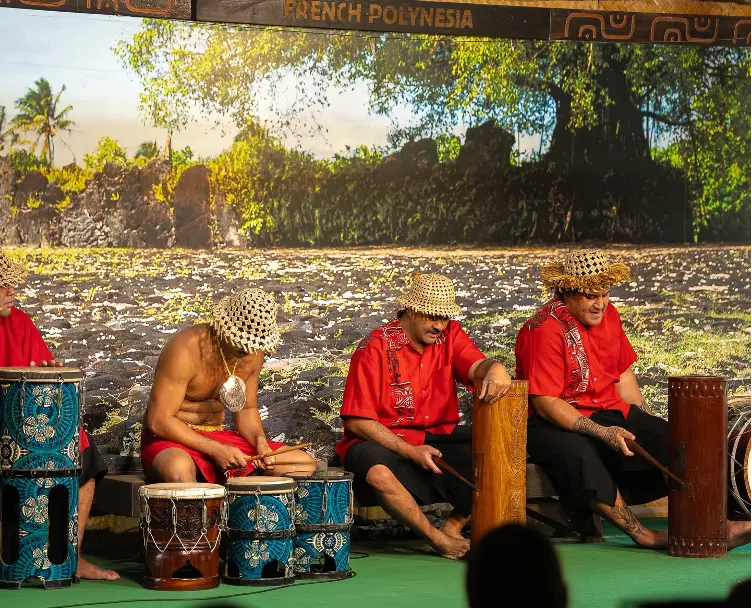
Tahitian drums carry the beat and rhythm of the music. Each drum is unique but differs in their importance and contribution to the performance. Some of the common drums include:
- To’ere
- Fa’atete
- Pahu Tupa’i
- Tari Parau
The To'ere is a horizontal slit-gong wooden drum that is beaten with a cone-shaped stick. The pitch of the beat depends on where the drum is hit, making it a tricky instrument to master. The To’ere is known as the lead drum of the music that drives the music, often representing the heartbeat of the islands.
The Fa’atete is an upright wooden drum. It is similar to a snare but usually covered with goat or sharkskin.
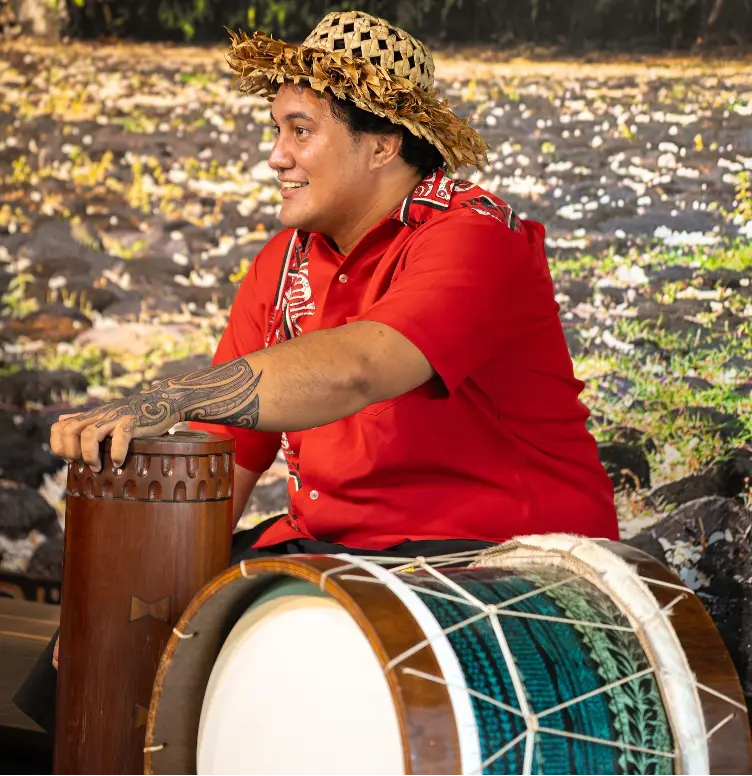
The Pahu Tupa’i is beaten by hands, and the Tari Parau is beaten using drumsticks, but both are made from cowhide or sharkskin. Discover more about the history of Tahitian drums and Tahitian ukelele.
Experiencing ‘Ori Tahiti at the Polynesian Cultural Center
Each instrument is uniquely designed with a distinct sound that blends into harmony, making Tahitian music and entertainment what it is today. Paired with meaningful ‘Ori Tahiti, Tahitian music and dance make an inspiring impact that not only makes you want to join in, but also embrace the culture and love the people of Tahiti have.
Plan your visit to the Polynesian Cultural Center and journey to the Tahiti Village to experience the heart of this French Polynesian island. To see more of what the Tahiti Village has to offer, book your tickets now and experience the love and beauty of Tahitian culture!